Serving Waukesha, WI & nearby
(262) 216-2775
Waukesha, WI

Attached or Detached: What Changes for Your Garage Door in Waukesha

How Waukesha's 1938-2004 housing stock and severe cold winters change what a detached garage door needs versus one attached to the house.

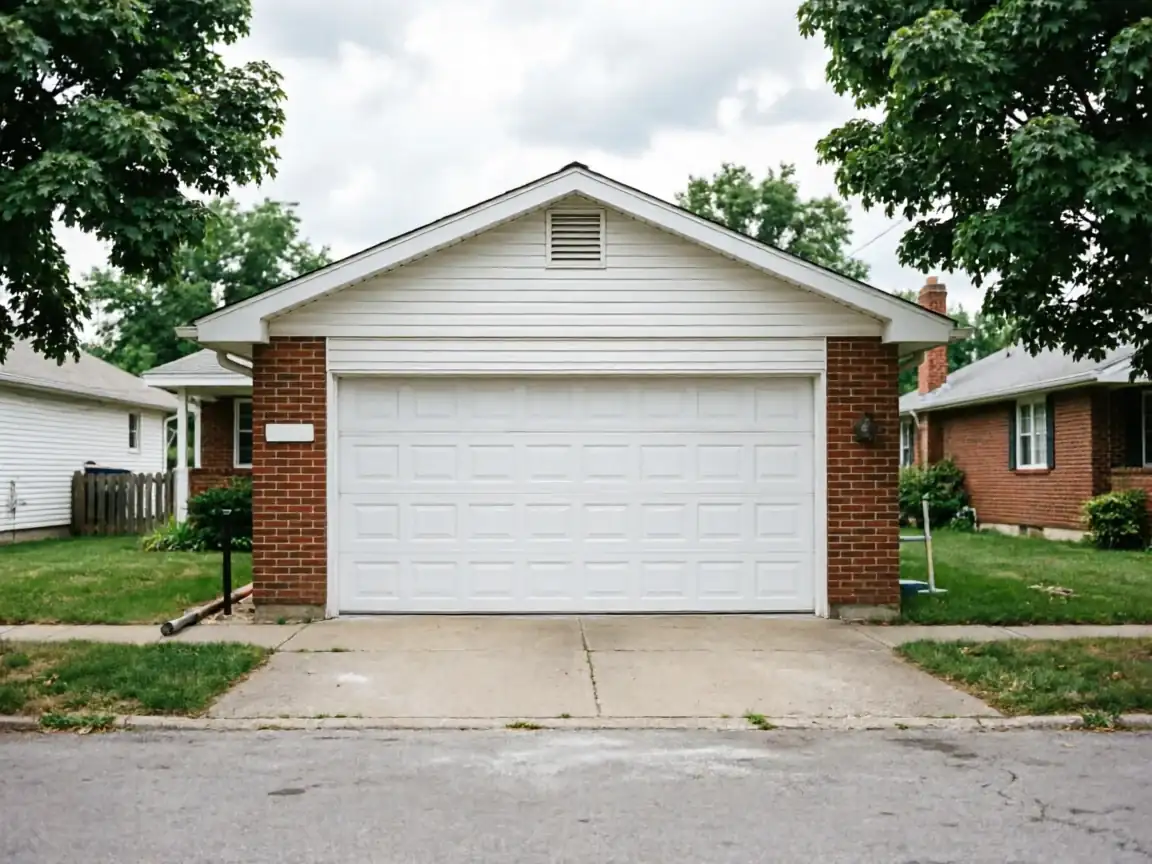
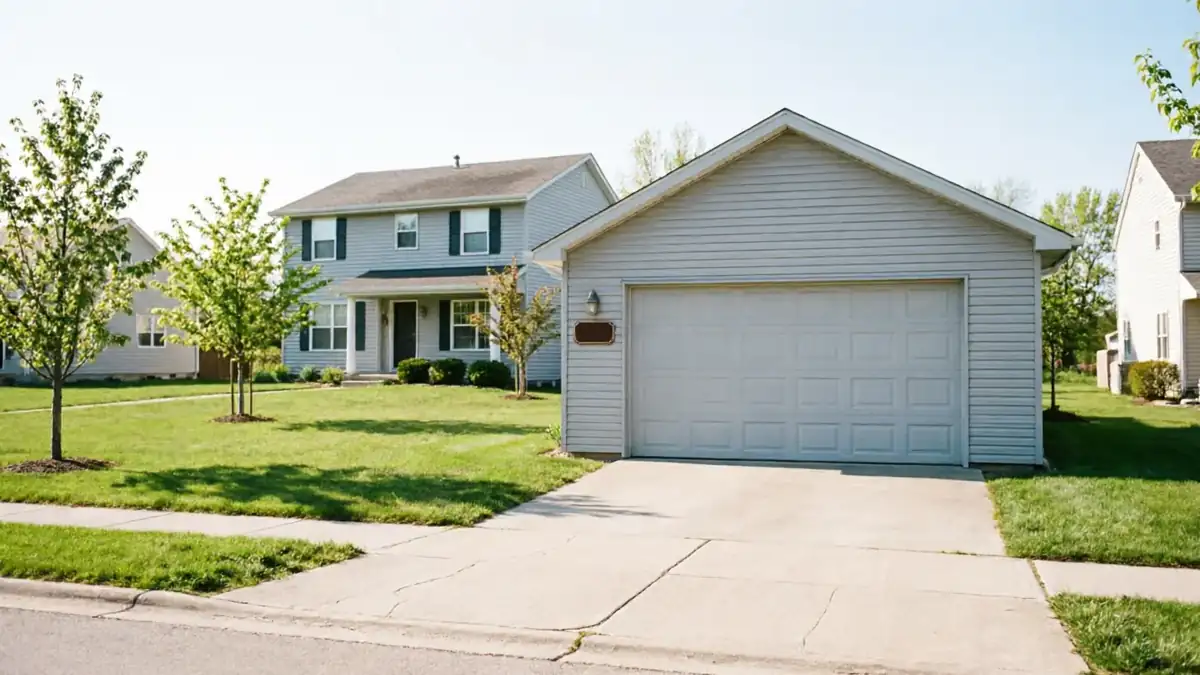
A white garage door is on a light gray house with a green lawn.

The Situation

Waukesha's housing stock runs from 1938 up through 2004, with the median build landing at 1979. That spread matters here because it's the exact window when detached garages were still the default in older neighborhoods but attached garages were becoming standard in newer construction. If your house went up in the '40s through the '60s, there's a decent chance the garage sits apart from the house, often with its own slab and its own door that nobody's touched since the original install. Houses from the later end of that range, especially anything built through the '80s and '90s, are more likely attached, sharing a wall and sometimes a ceiling cavity with living space.

Across the broader area - 54 named communities in this region - most of what's standing dates to the 1960s and '70s. That means a lot of original hardware: non-insulated steel sections, older torsion springs sized for a lighter door, and track that was never designed around today's heavier insulated panels. Whether that door is attached or detached changes what matters most when you're deciding to repair it or replace it.

What It Costs

I don't have pricing figures to quote here, so I won't guess at a number. What I can tell you is what drives the cost difference between the two setups. An attached garage door usually needs to be insulated, because that wall is doing double duty as part of your home's thermal envelope - a bare steel slab there costs you heat on the other side of the drywall. A detached garage doesn't have that problem, so a non-insulated door is often a reasonable, cheaper choice there.

Track length and headroom also differ. Older detached garages built in the 1938-2004 window sometimes have shorter headroom than code calls for today, which can push you toward low-headroom track hardware instead of standard - that's an added cost on top of the door itself. Attached garages built later in that range tend to have more standard framing, since they went up alongside the house under one code inspection rather than as an afterthought structure.

The honest limitation: I can't tell you what your specific door will cost without seeing it. Spring size, panel count, and whether the opener needs replacing too all move the number, and none of that is something I'll estimate sight unseen.

What to Look At First

  1. On a detached garage from the older end of Waukesha's housing stock

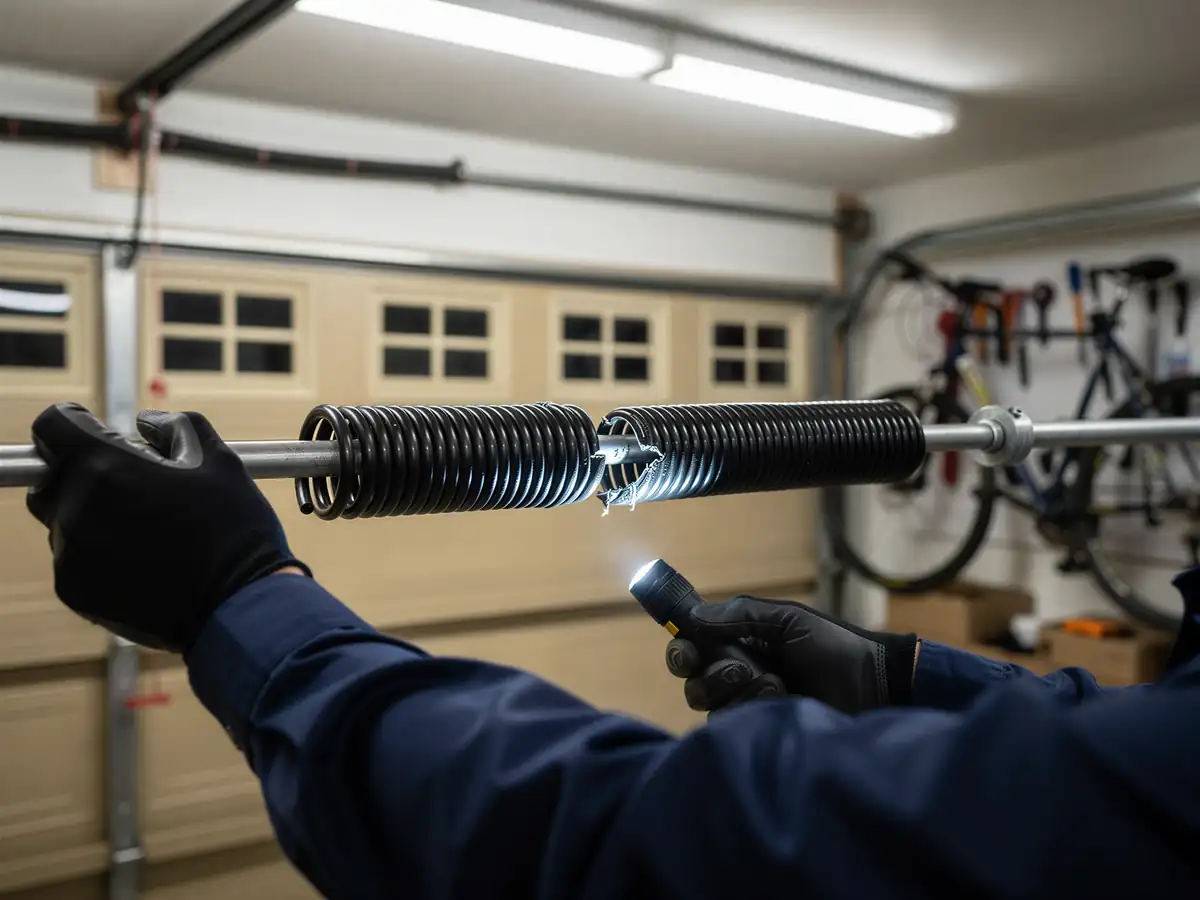
    Start with the spring and the panels. A lot of these doors were never upgraded, so you're looking at original torsion hardware carrying decades of cycles, plus steel panels with no insulation value and often some rust at the bottom seam where they sit closer to grade.

  2. On an attached garage, start with the seal between the door and the house

    The weatherstripping along the sides and bottom, and whether the opener's safety reversal still works correctly. Because that door shares structure with living space, a bad seal doesn't just let cold air into the garage, it lets it into the house. Check the bottom astragal first; it's the cheapest fix and the one that fails fastest.

  3. For both types, look at the rollers

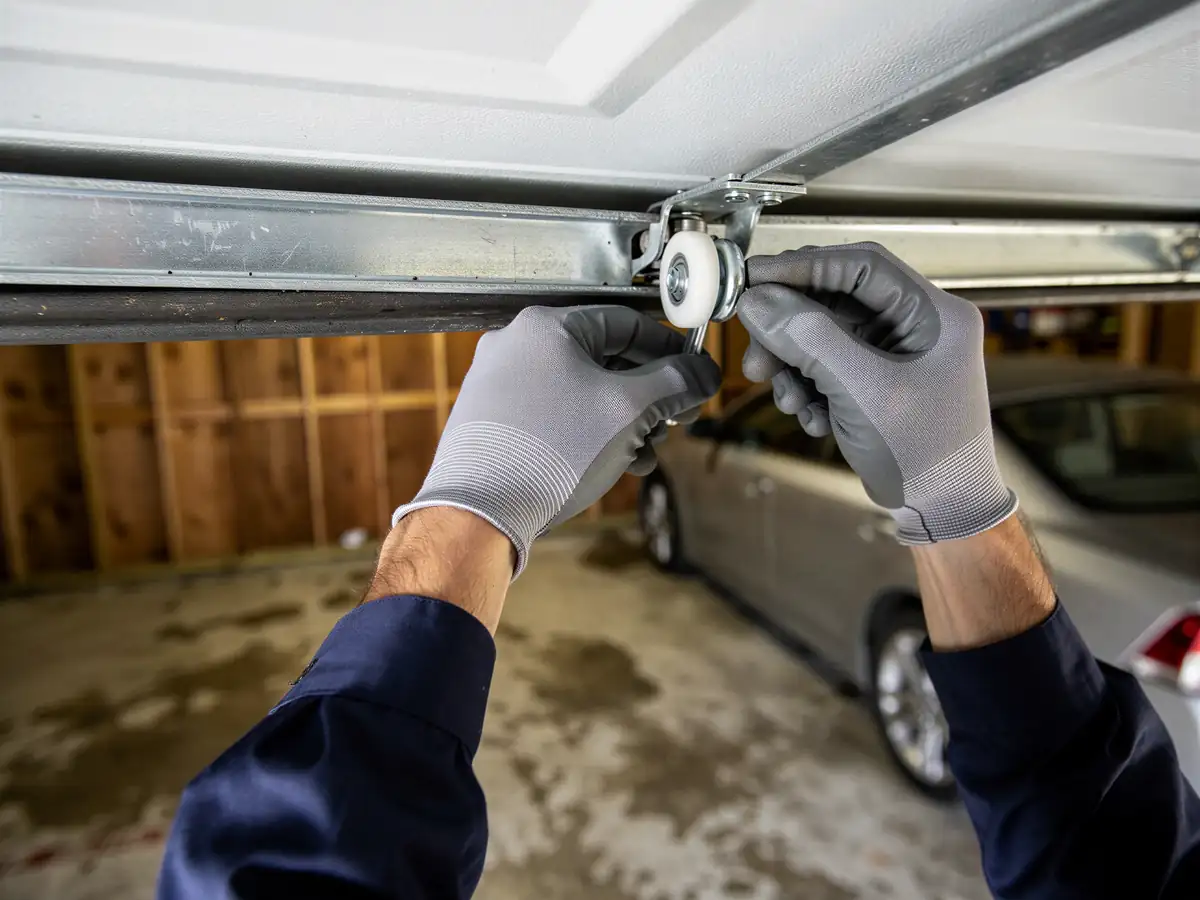
    In a stock built mostly in the 1960s and '70s, steel rollers on worn track are common, and they're usually the noisiest, cheapest thing to swap before you spend money on anything bigger.

How Local Conditions Play In

Waukesha sits in a climate band rated severe cold, and that lands differently depending on which garage you've got. A detached garage with no heat source swings through the full range of the outdoor temperature - every cold snap, the steel panels contract, the spring tension shifts slightly, and hardware that's already decades old takes the brunt of it. An attached garage, sharing a wall with a heated house, runs a few degrees warmer on average and sees less of that swing, which is part of why insulated doors make more sense there and non-insulated doors have survived longer on detached structures.

Across this service area, with roughly 106,001 owner-occupied houses and household income averaging $108,690, there's a wide range of garage setups, from older detached structures near the center of town out to newer attached two- and three-car garages further toward the edges, past Pewaukee and Wales and out toward Hartland and Delafield. The cold doesn't care which type you've got, but it finds the weak point faster in whichever one has the older hardware.
How it works

From “it’s stuck” to “it’s fixed”

A quick, honest process - no guesswork and no surprises, start to finish.

  1. 1
    A man in a denim jacket stands in a driveway looking at his phone.

    Tell us what’s wrong

    Describe the symptom - won’t open, loud bang, opener runs but the door won’t move.

  2. 2
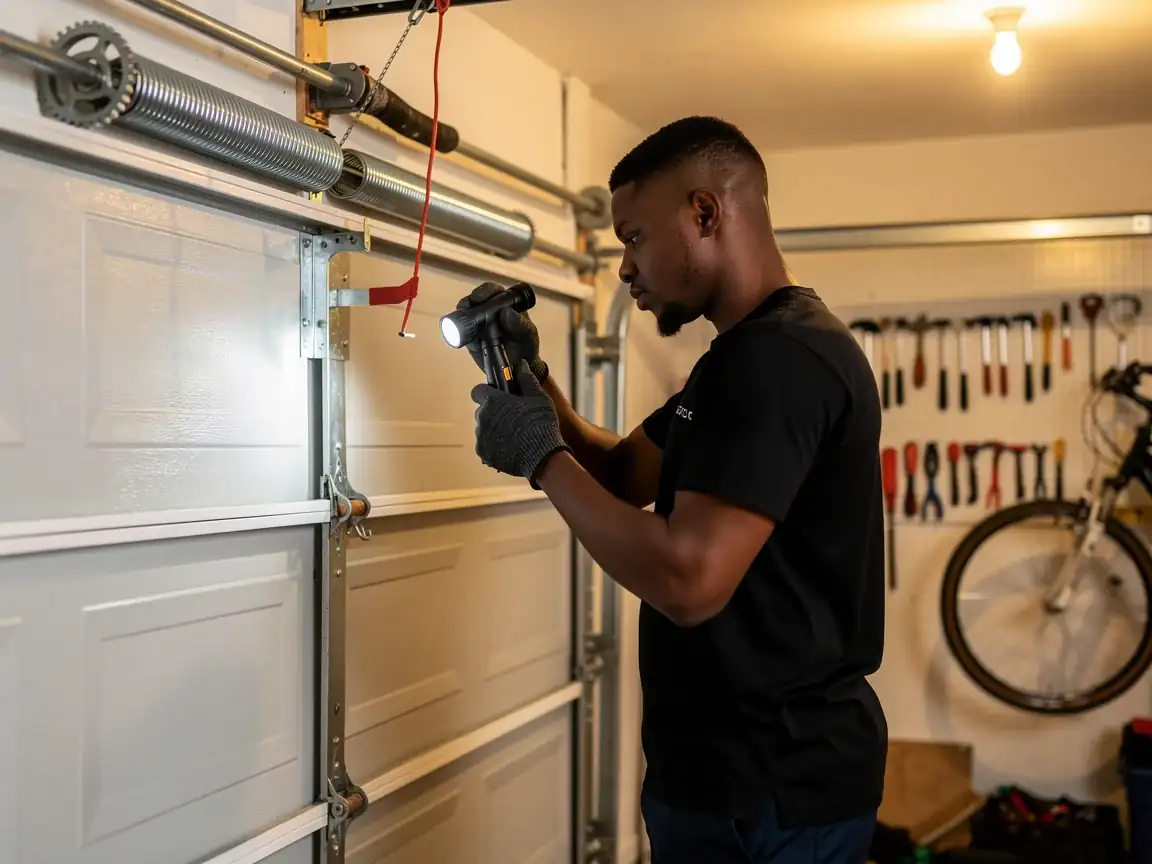
    A technician shines a flashlight on the garage door's top panel and roller.

    On-site diagnosis

    A technician tests the door under power and by hand and finds what actually failed.

  3. 3
    A technician in a gray uniform talks to a woman in front of a brick house.

    Clear, up-front plan

    You get the fix that’s needed and what drives the cost - before any work starts.

  4. 4
    A technician in a blue shirt is working on a brown garage door.

    Repaired & tested

    The repair is done, the door is set true and tested, and the work area left clean.

Next step

Not sure which repair your door needs in Waukesha, WI? Describe what it’s doing - every job starts with a diagnosis.

How we work

What to expect

Diagnosis firstEvery visit starts by finding what actually failed - not a pre-written parts list.
The right part for the doorSprings and openers matched to the door’s weight and age, so the fix holds up.
Straight answersWhen a repair makes more sense than a replacement - or the reverse - you hear it plainly.
Clean, careful workTension released safely, hardware set true, the door tested under power before we leave.
What we do

Garage Door Services

Repair and installation work for Waukesha homes and businesses.

A technician in gloves adjusts the metal track of a brown garage door.

Garage Door Repair

Garage door repair for Waukesha homes built 1938-2004, where cold-climate torsion springs and original openers wear out together. Same service area as Pewaukee, Hartland.

Learn more
A technician in a blue shirt is working on a tan garage door with windows.

Garage Door Installation

Most Waukesha homes were built between 1938 and 2004, many in the 1960s and 70s, and cold winters wear garage doors fast. Here's what installation involves.

Learn more
A white garage door on a brick house with white siding and a driveway.

Garage Door Service

Waukesha homes built mostly in the 1960s-70s see specific spring and track failures from cold winters. Here's what causes it, what you can fix, and what takes a call.

Learn more
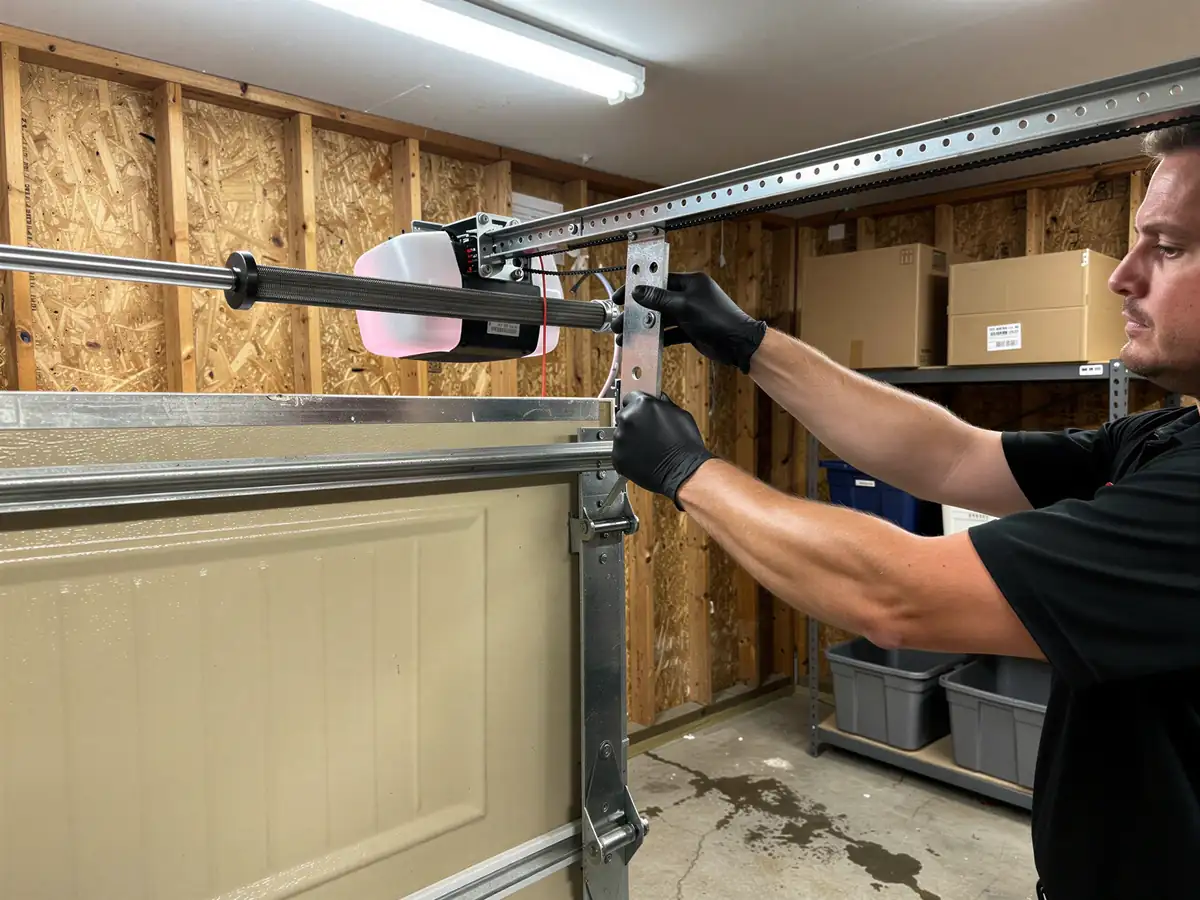
A technician in black gloves adjusts the garage door opener rail.

Opener Installation

Opener installation for Waukesha-area homes, where 1938-2004 housing stock and severe cold winters wear out old chain-drive units faster than owners expect.

Learn more
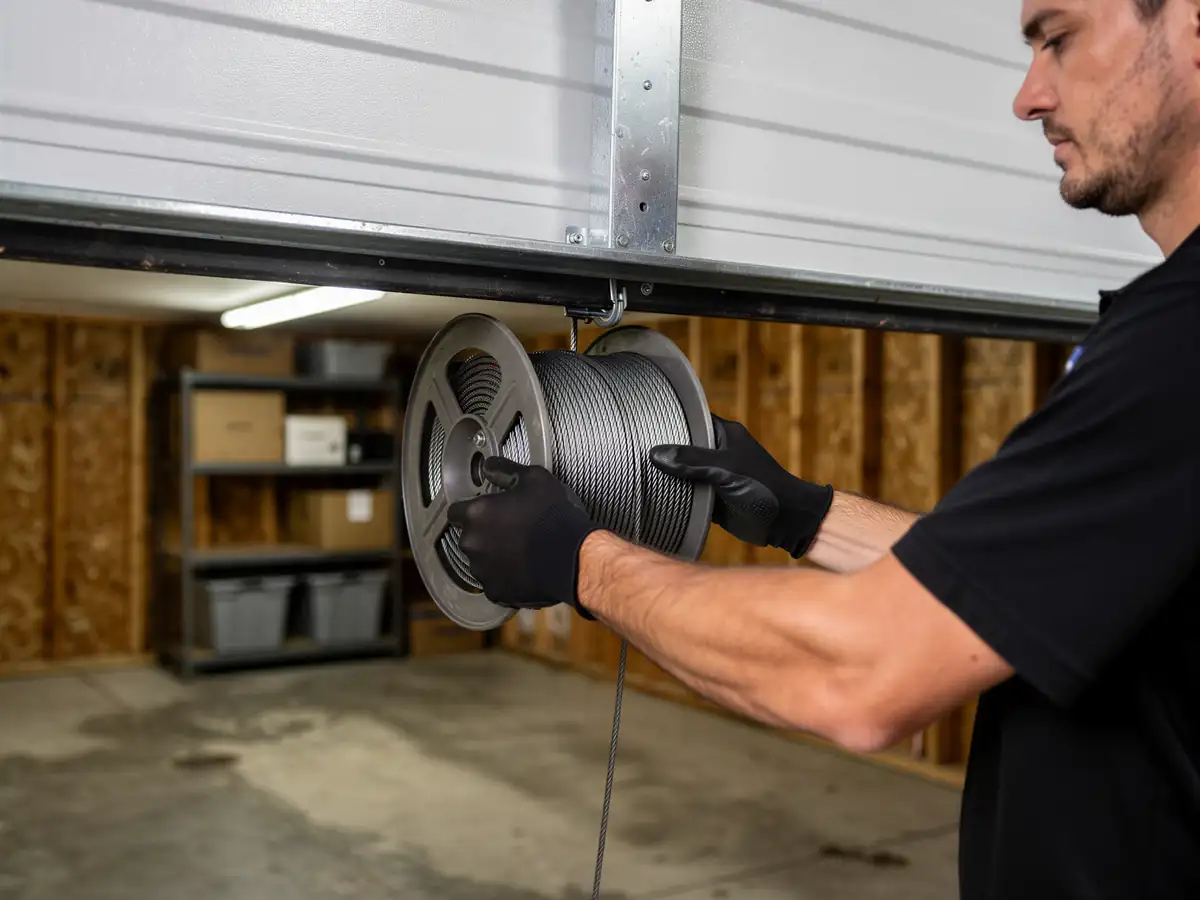
A technician in black gloves holds a spool of cable under a white garage door.

Cable Repair

Snapped or frayed garage door cable in Waukesha, WI? We fix broken cables on torsion and extension systems common in area's 1960s-70s housing stock, fast.

Learn more
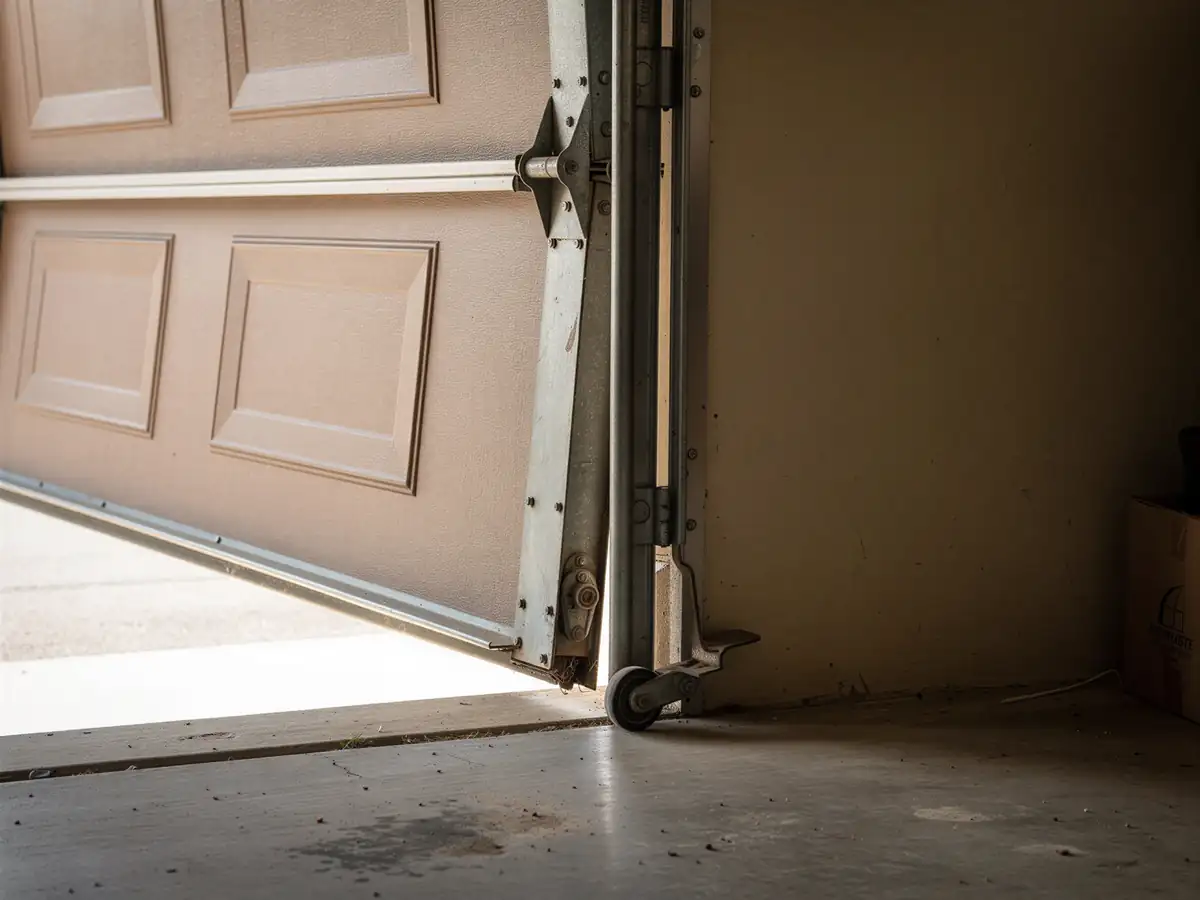
The garage door is off its track, with the bottom panel angled inward.

Off-Track Repair

If your garage door has jumped the track, Waukesha's cold winters and older torsion hardware make it worse fast. Here's what causes it and what to do.

Learn more
A technician in gloves is installing a new roller on a garage door.

Roller Replacement

Rollers wear fast in Waukesha's cold winters and on the area's older 1960s-70s doors. See why they fail here and what replacement actually involves.

Learn more
A technician inspects a broken garage door torsion spring with a flashlight.

Emergency Garage Door Repair

Broken spring, stuck panel, or dead opener in Waukesha's cold-climate housing stock? We handle emergency garage door repair across the whole service area, day or night.

Learn more
Questions

Frequently asked

Straight answers about garage door repair in Waukesha. Still unsure? Ask us directly.

Does a detached garage door need to be insulated in Waukesha's winters?

Not necessarily. Since a detached garage isn't sharing a wall with heated living space, an insulated door mainly helps keep the garage itself warmer, which matters if you park a car in there or use it as a workshop. If it's just storage, a non-insulated door is a reasonable choice, especially on an older structure.

Why does my attached garage door let cold air into the house?

Usually it's the weatherstripping, not the door itself. A worn bottom seal or side seals let outside air in, and because that wall backs onto living space, you feel it faster than you would in a fully detached garage. Check the seals before assuming you need a new door.

My house was built in the 1970s - what should I expect from the original garage door?

A lot of houses from that era still have original torsion springs and non-insulated steel panels. That hardware was built for lighter doors than what's common today, so if you're upgrading to a heavier insulated door, the spring usually needs to be resized, not just replaced with the same size.

Ready to get your garage door sorted?

Tell us what it’s doing and where you are in Waukesha - we’ll take it from there.

Request a QuoteCall