Serving Waukesha, WI & nearby
(262) 216-2775
Waukesha, WI

What Actually Happens When We Show Up at Your Door

A walk-through of what a Waukesha Garage Door Pros service call actually inspects, what drives the cost, and why 1960s-70s housing stock and cold winters change the job.

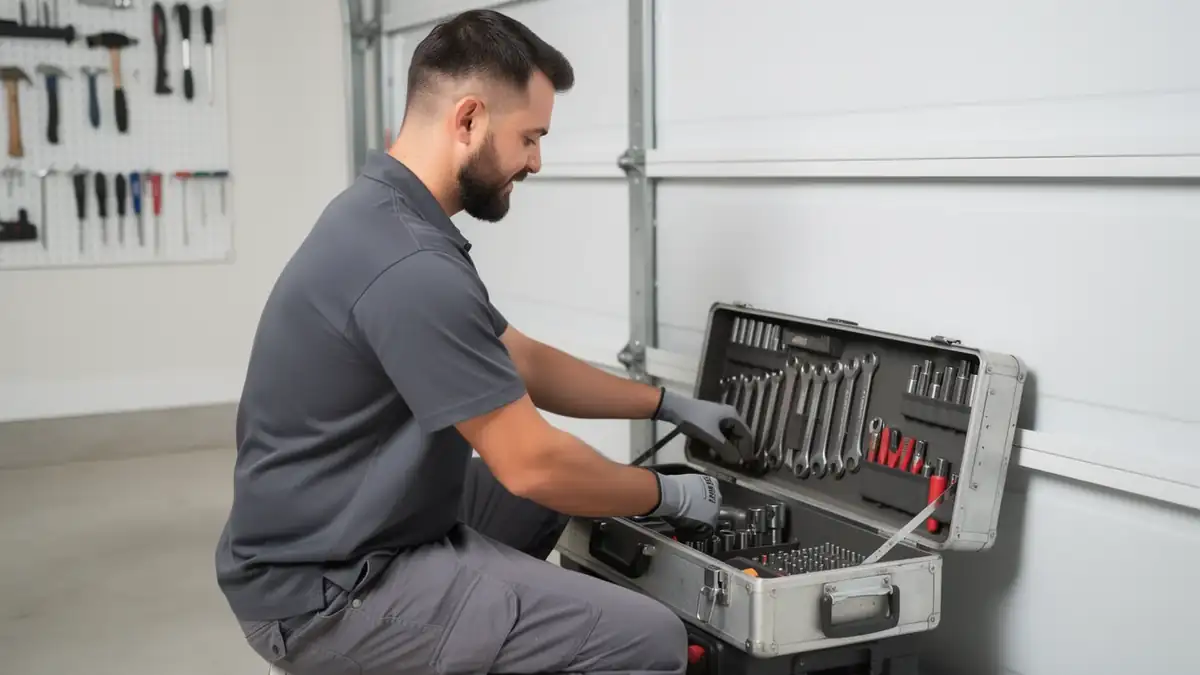
A technician wearing gloves is selecting a tool from an open toolbox in a garage.

The Situation

Most of the calls we run in this area come from houses built between 1938 and 2004, with the bulk of the stock dating to the 1960s and '70s and a median build year around 1979. That spread matters because a door from 1968 and a door from 1998 don't share hardware, track gauge, or spring tension - and a tech who doesn't check the build era first is guessing before he's even opened the panel.

Across the 54 named areas we cover, from close-in neighborhoods a few miles out toward Pewaukee and Wales to the farther edge near Hartland and Delafield, the pattern repeats: a lot of original torsion setups still doing their first or second spring, next to newer doors with openers that have outlived their circuit boards twice. A service call starts by figuring out which situation we're standing in front of, because that decides whether we're doing a 20-minute adjustment or a conversation about replacement.

We don't open a call assuming the worst. We open it checking what's actually there - the spring wire gauge, the track mount, the opener's age relative to the house - against what that era of construction typically shipped with.

What It Costs

We're not going to give you a number here, because the honest answer is "it depends on what we find," and quoting a flat figure before seeing the door is how you end up either overcharged or surprised at the truck. What does move the cost: whether it's one spring or a matched pair, whether the drum and cable are original or already replaced once, and whether the opener is a legacy chain-drive unit or something newer with circuit-board quirks.

Houses on the older end of our 1938-2004 range sometimes carry non-standard spring lengths or discontinued track hardware, which can add time even on a job that sounds simple over the phone. That's the one limitation worth saying plainly: if your door is original to a house from the '60s or '70s, we may need to special-order a part rather than pull it off the truck, and that changes the timeline more than it changes the base cost.

With median household income in the service area at $108,690, we see plenty of owners who'd rather replace a tired spring-and-cable setup outright than keep patching it every two years - but that's a call we make together after we've looked at the door, not before.

What to Look At First

  1. Before you call, there are a few things worth checking yourself

    Because they tell us what kind of visit to schedule. Look at the springs first - are they the torsion type mounted on a shaft above the door, or extension springs running along the horizontal track. That single detail, more common to split by build era than anything else, changes both the repair and who should be standing there when it's done.

  2. Next, check the cables for fraying near the bottom bracket and the rollers for flat spots or rust pitting

    Rust shows up faster here than in a dry climate, which we'll get to. Look at the weatherstripping along the bottom panel and sides; gaps there are a bigger deal in this part of Wisconsin than in most places.

  3. Last, listen to the opener

    A grinding or straining sound on lift usually means the springs are compensating for something else - a bent track, a misaligned sensor, a door that's heavier than the opener was ever sized for. None of that is a DIY fix, but knowing which symptom you've got saves time when we're on site.

How Local Conditions Play In

This area sits in a cold climate band with severe winter conditions, and that changes how a garage door ages here compared to a milder region. Steel torsion springs lose a measurable amount of tension as temperatures drop, so a spring that's marginal in October can snap in January - we see a real seasonal spike in cold-weather spring failures, and it tracks almost exactly with the first hard freeze.

Lift cables and rollers also take more abuse here: moisture from snowmelt gets into the track, freezes overnight, and pits the metal faster than it would in a dry climate. If your house sits closer to one of the lake-adjacent communities out past Pewaukee or up toward that moisture load tends to be a bit higher still.

We size spring replacements and weatherstripping for winter performance, not just a quiet summer afternoon, because a door that works fine in July and binds in February wasn't actually fixed - it was fixed for the wrong season.
How it works

From “it’s stuck” to “it’s fixed”

A quick, honest process - no guesswork and no surprises, start to finish.

  1. 1
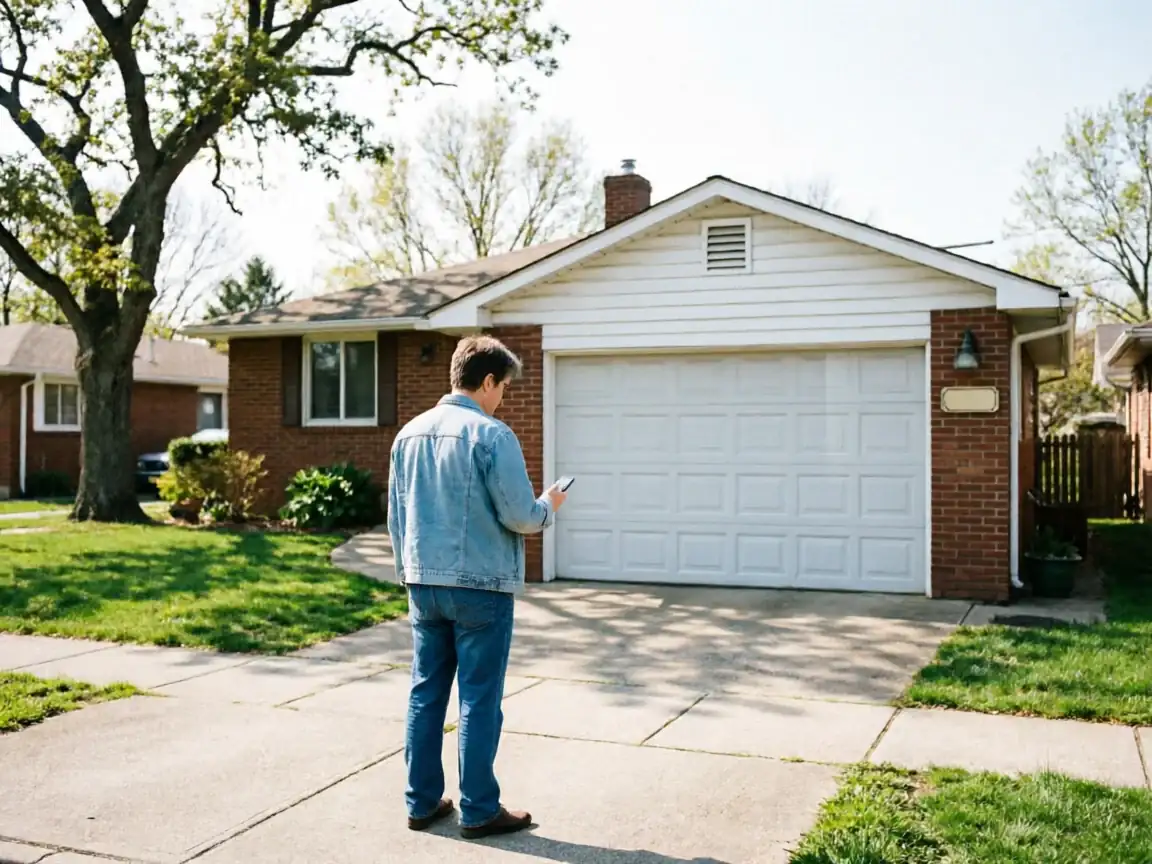
    A man in a denim jacket stands in a driveway looking at his phone.

    Tell us what’s wrong

    Describe the symptom - won’t open, loud bang, opener runs but the door won’t move.

  2. 2
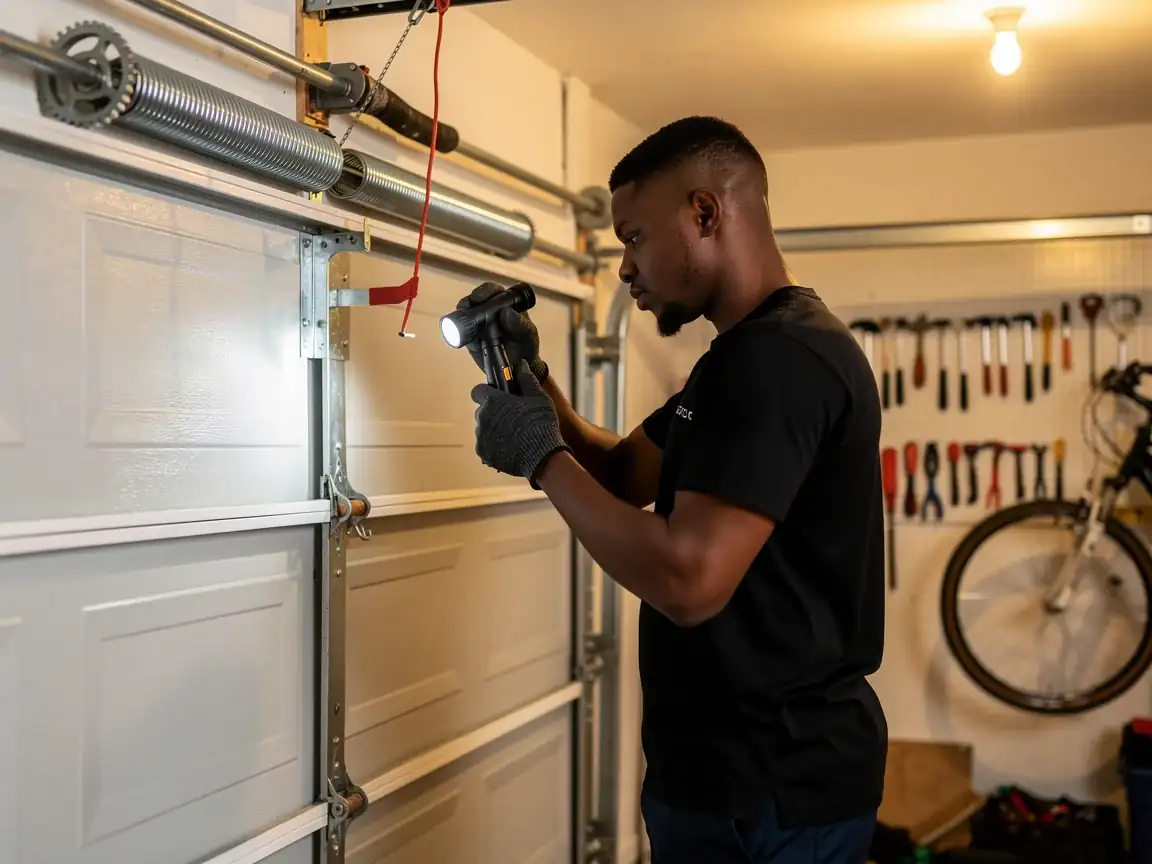
    A technician shines a flashlight on the garage door's top panel and roller.

    On-site diagnosis

    A technician tests the door under power and by hand and finds what actually failed.

  3. 3
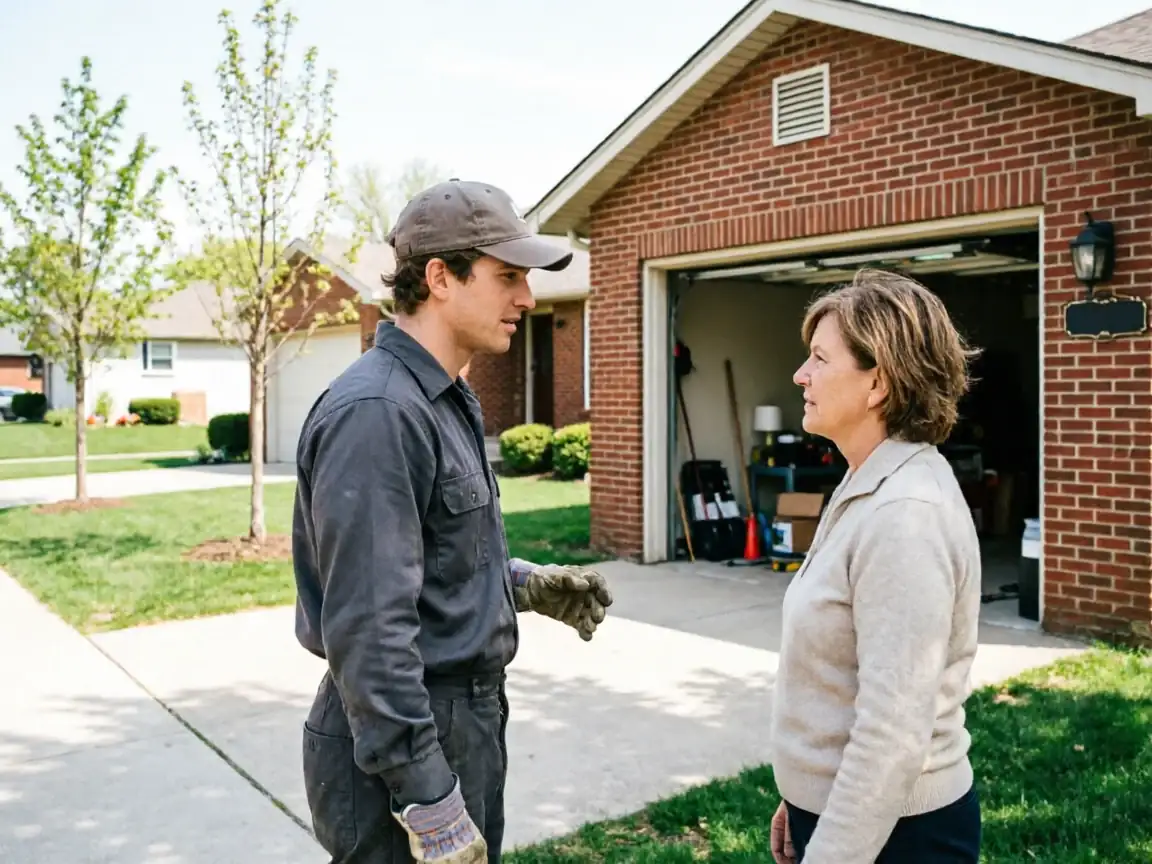
    A technician in a gray uniform talks to a woman in front of a brick house.

    Clear, up-front plan

    You get the fix that’s needed and what drives the cost - before any work starts.

  4. 4
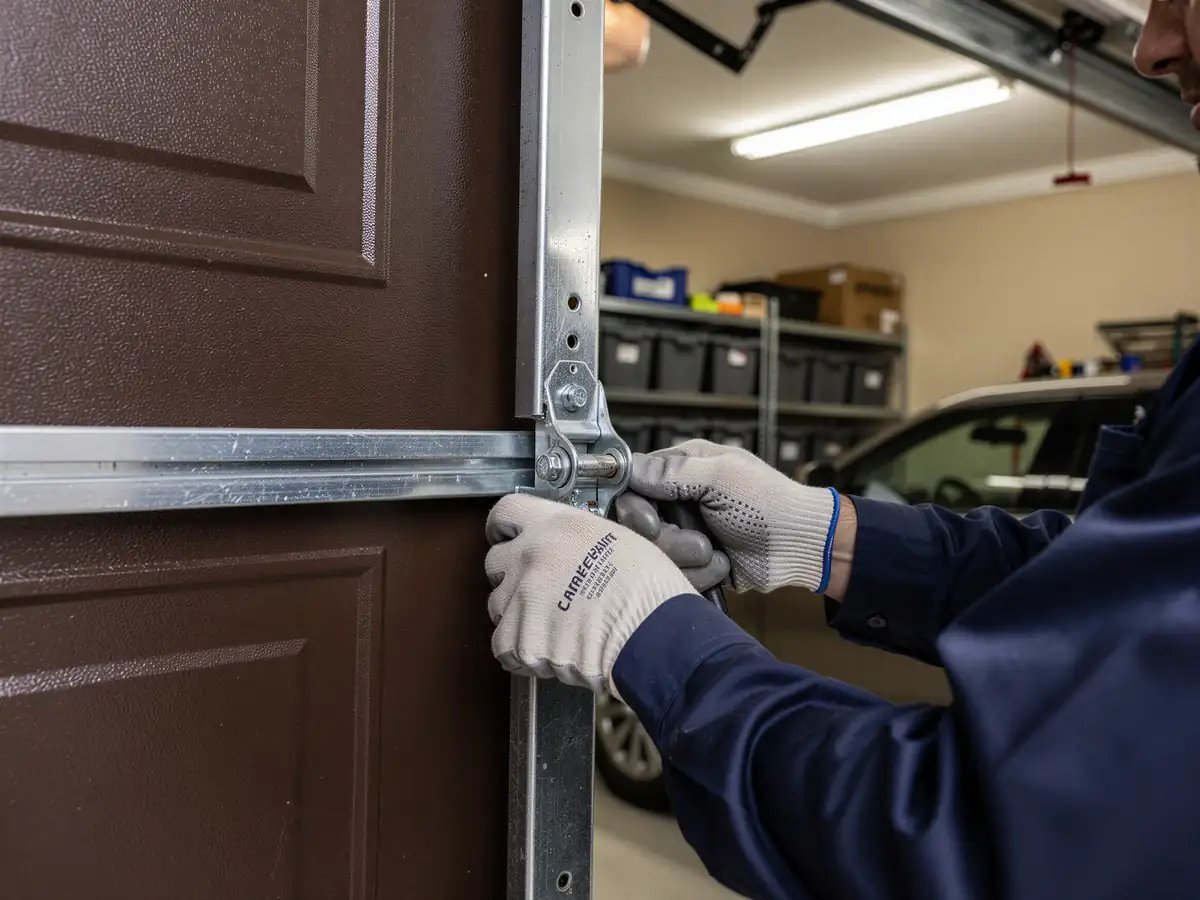
    A technician in a blue shirt is working on a brown garage door.

    Repaired & tested

    The repair is done, the door is set true and tested, and the work area left clean.

Next step

Not sure which repair your door needs in Waukesha, WI? Describe what it’s doing - every job starts with a diagnosis.

How we work

What to expect

Diagnosis firstEvery visit starts by finding what actually failed - not a pre-written parts list.
The right part for the doorSprings and openers matched to the door’s weight and age, so the fix holds up.
Straight answersWhen a repair makes more sense than a replacement - or the reverse - you hear it plainly.
Clean, careful workTension released safely, hardware set true, the door tested under power before we leave.
What we do

Garage Door Services

Repair and installation work for Waukesha homes and businesses.

A technician in gloves adjusts the metal track of a brown garage door.

Garage Door Repair

Garage door repair for Waukesha homes built 1938-2004, where cold-climate torsion springs and original openers wear out together. Same service area as Pewaukee, Hartland.

Learn more
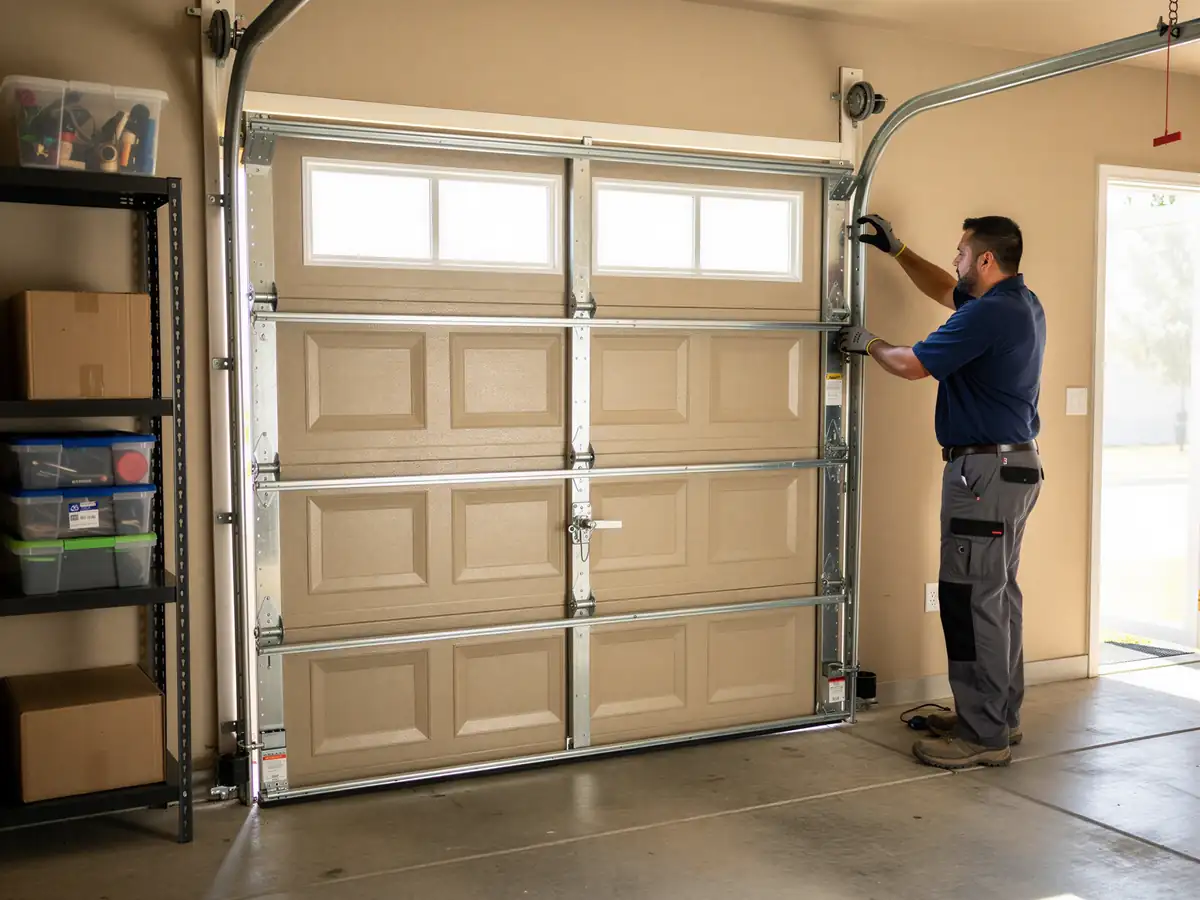
A technician in a blue shirt is working on a tan garage door with windows.

Garage Door Installation

Most Waukesha homes were built between 1938 and 2004, many in the 1960s and 70s, and cold winters wear garage doors fast. Here's what installation involves.

Learn more
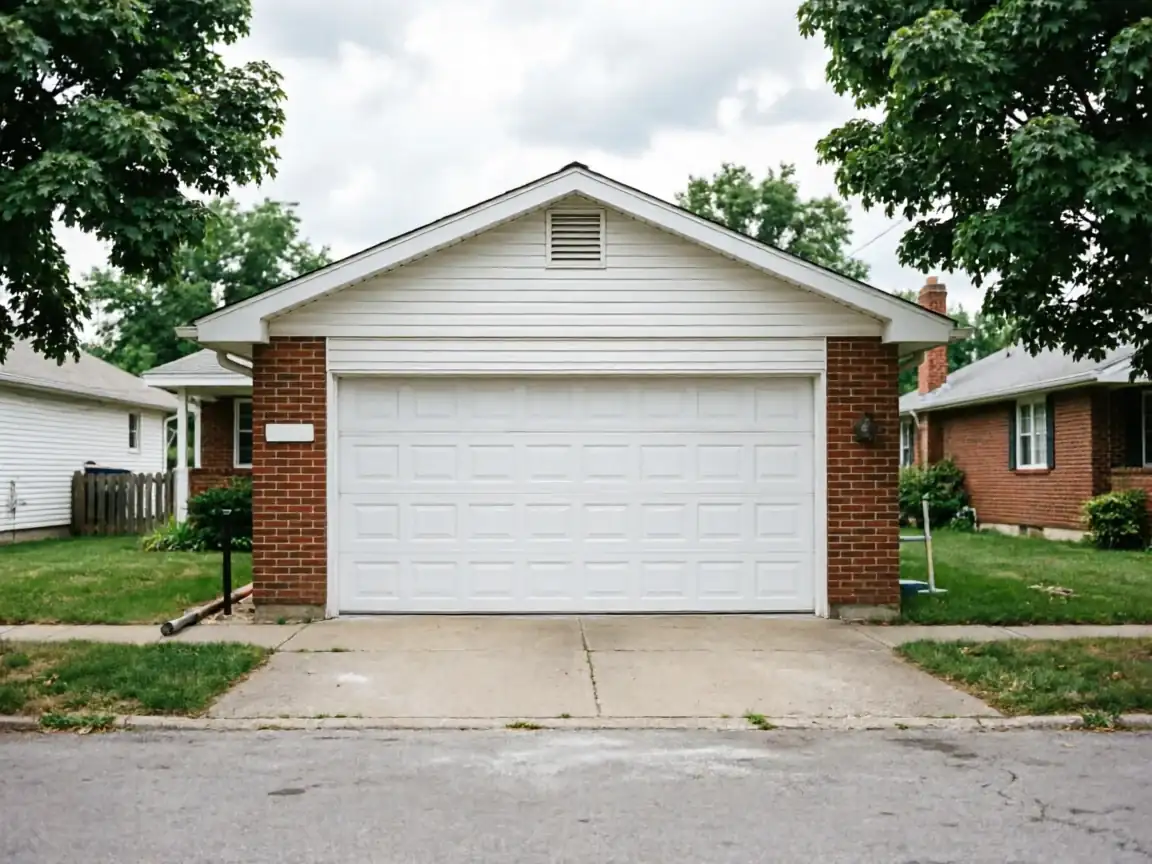
A white garage door on a brick house with white siding and a driveway.

Garage Door Service

Waukesha homes built mostly in the 1960s-70s see specific spring and track failures from cold winters. Here's what causes it, what you can fix, and what takes a call.

Learn more
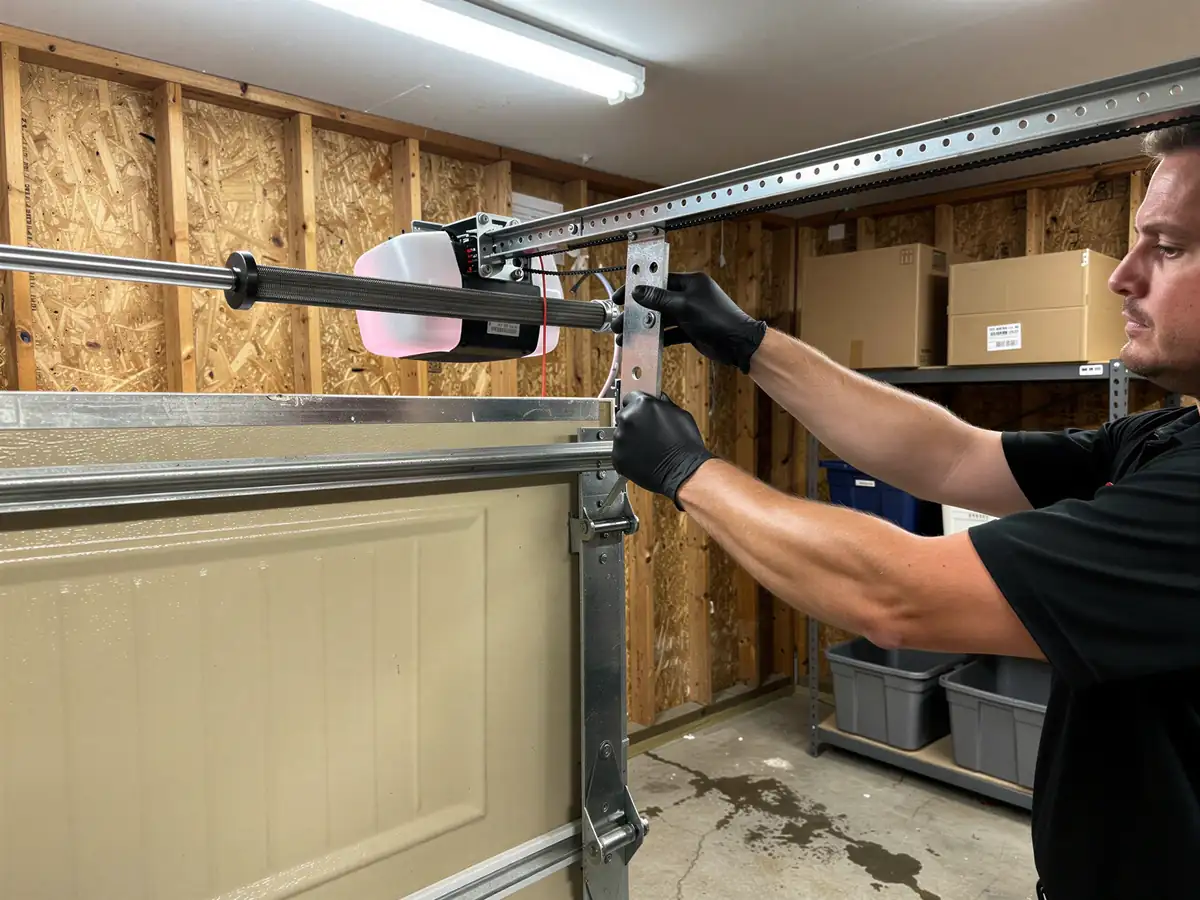
A technician in black gloves adjusts the garage door opener rail.

Opener Installation

Opener installation for Waukesha-area homes, where 1938-2004 housing stock and severe cold winters wear out old chain-drive units faster than owners expect.

Learn more
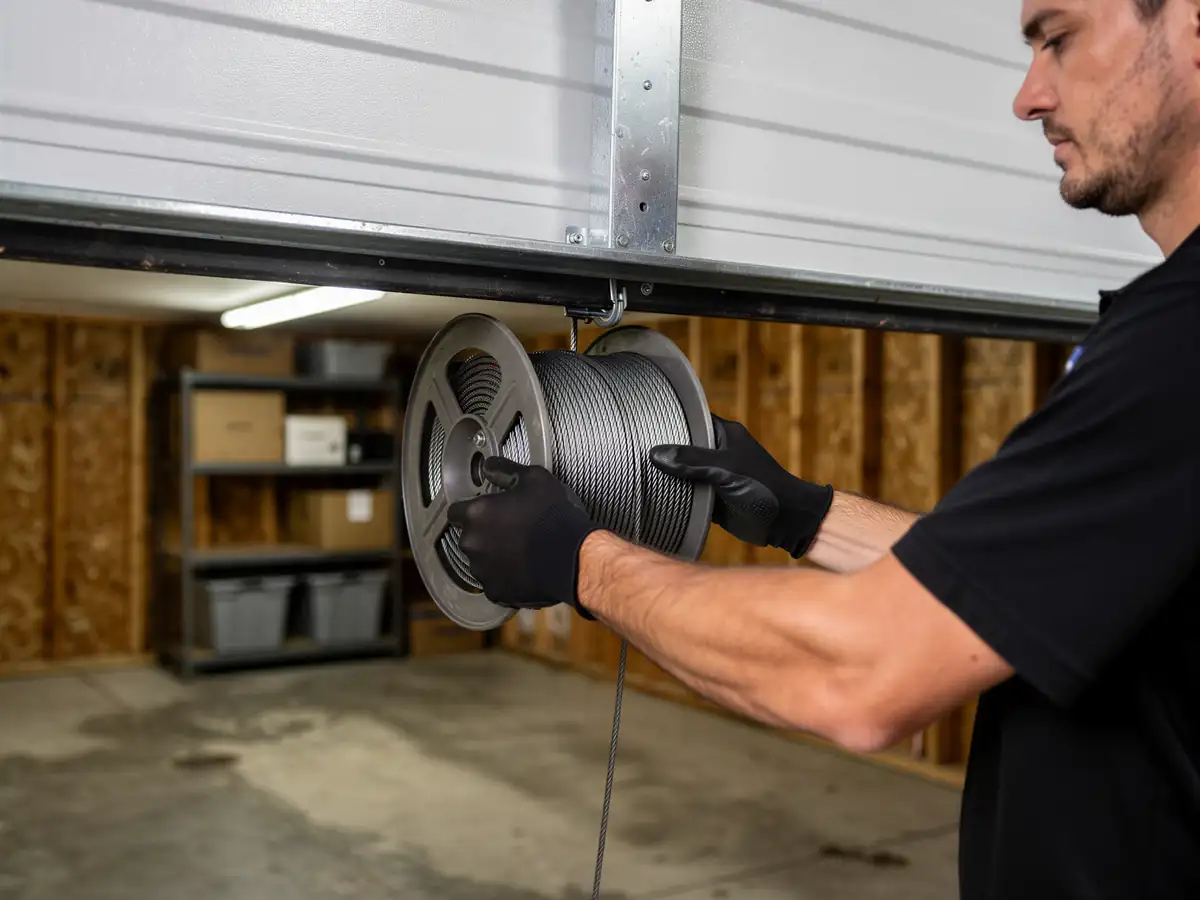
A technician in black gloves holds a spool of cable under a white garage door.

Cable Repair

Snapped or frayed garage door cable in Waukesha, WI? We fix broken cables on torsion and extension systems common in area's 1960s-70s housing stock, fast.

Learn more
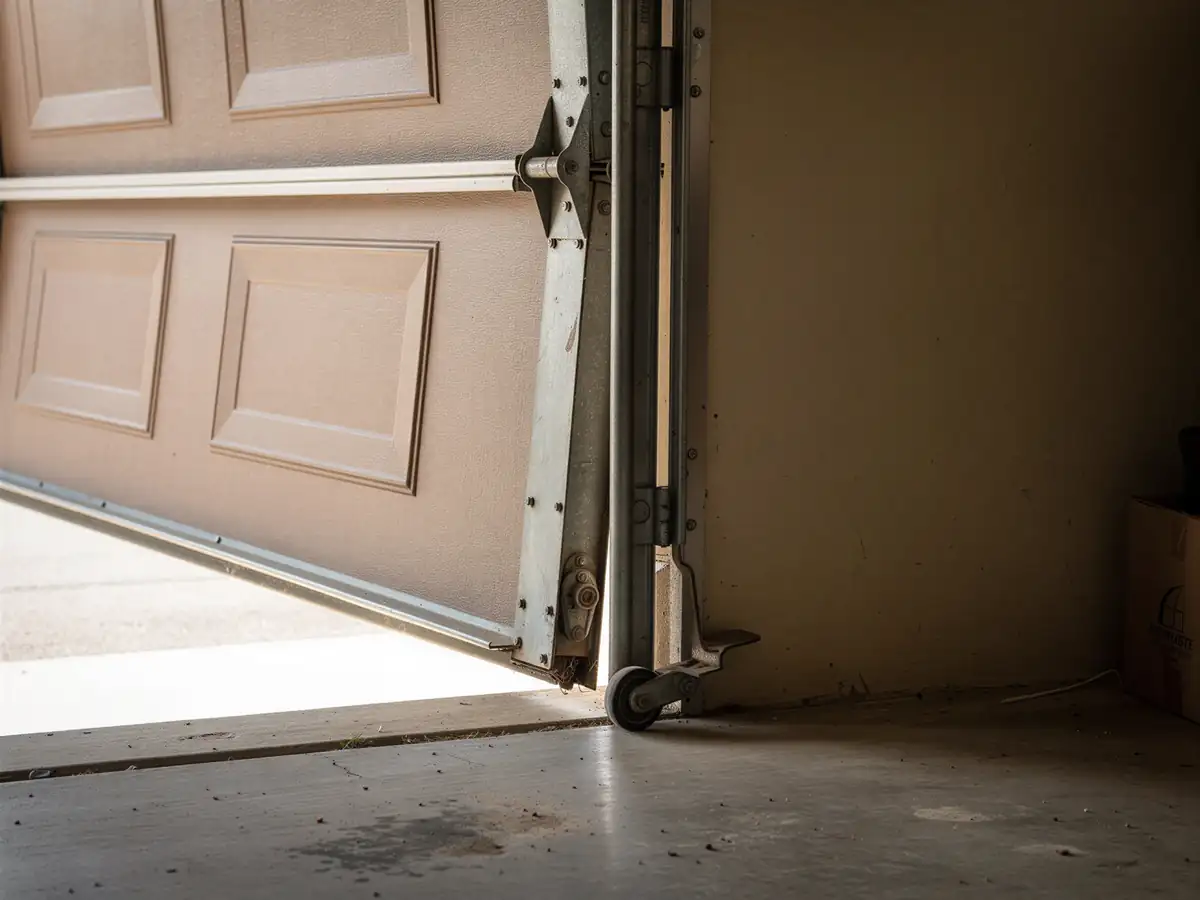
The garage door is off its track, with the bottom panel angled inward.

Off-Track Repair

If your garage door has jumped the track, Waukesha's cold winters and older torsion hardware make it worse fast. Here's what causes it and what to do.

Learn more
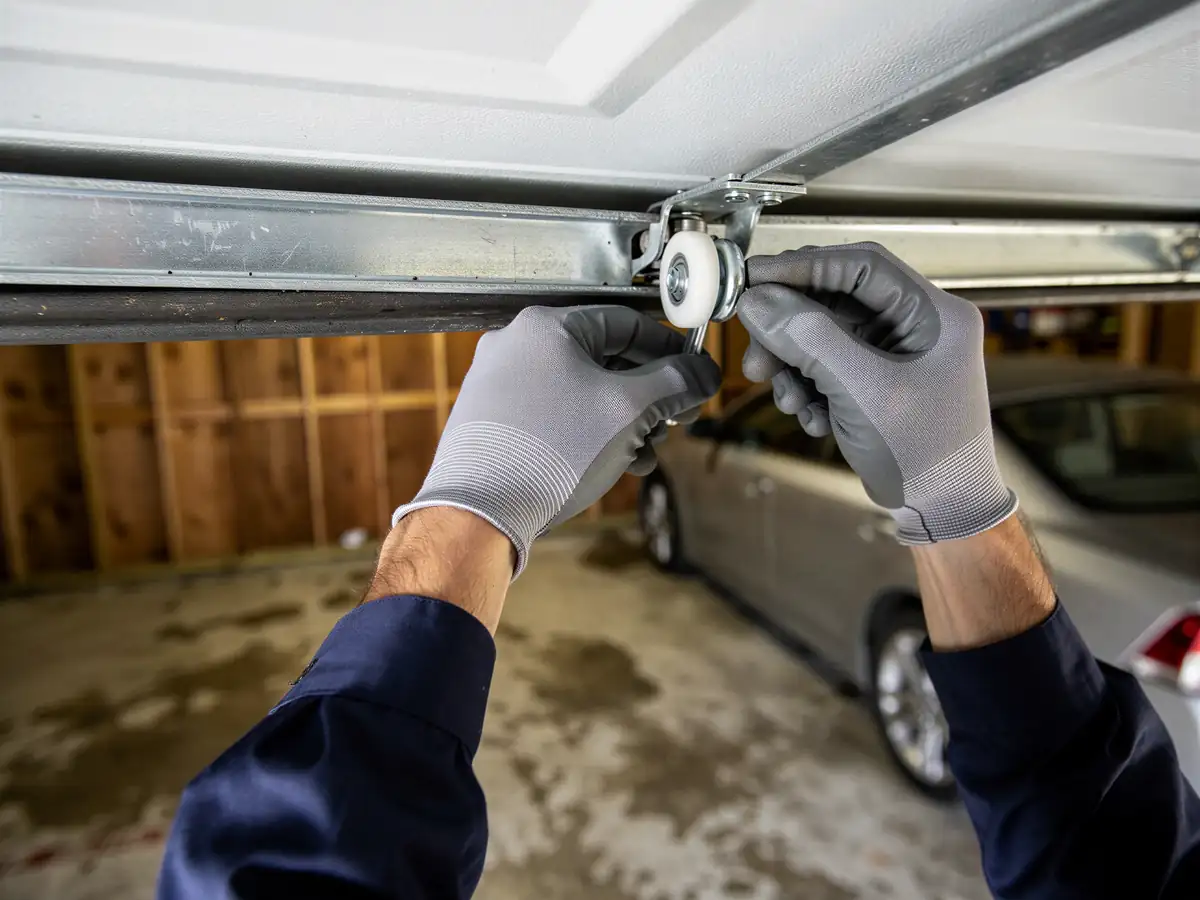
A technician in gloves is installing a new roller on a garage door.

Roller Replacement

Rollers wear fast in Waukesha's cold winters and on the area's older 1960s-70s doors. See why they fail here and what replacement actually involves.

Learn more
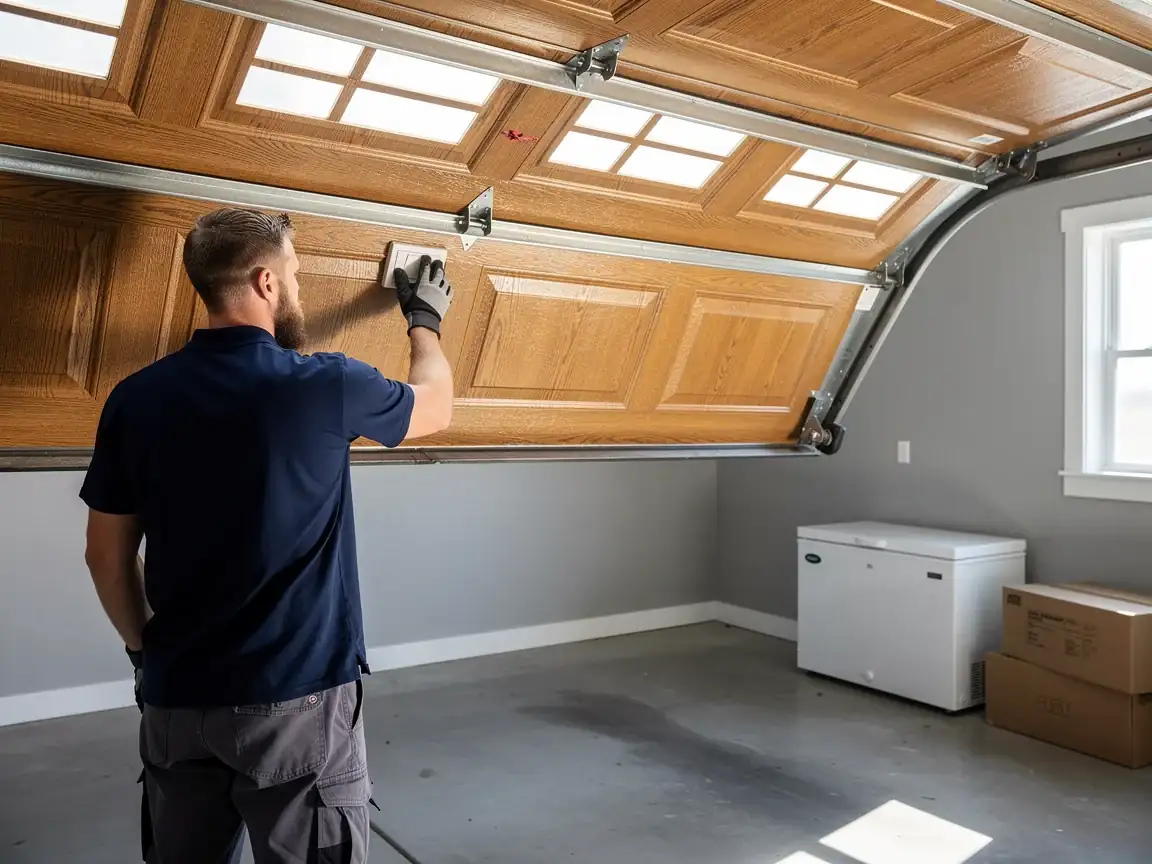
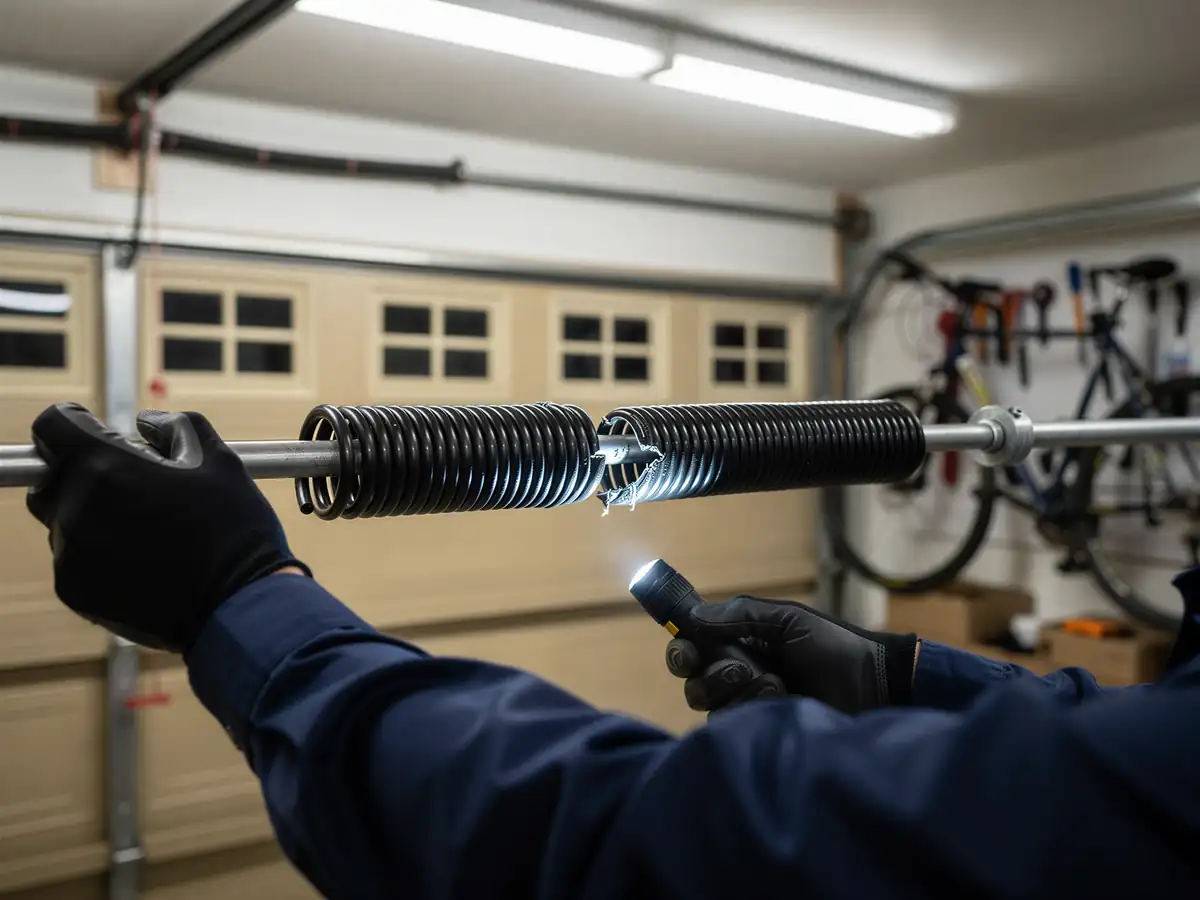
A technician inspects a broken garage door torsion spring with a flashlight.

Emergency Garage Door Repair

Broken spring, stuck panel, or dead opener in Waukesha's cold-climate housing stock? We handle emergency garage door repair across the whole service area, day or night.

Learn more
Questions

Frequently asked

Straight answers about garage door repair in Waukesha. Still unsure? Ask us directly.

Do you give a price over the phone?

Not a firm one. Cost depends on spring type, cable condition, and whether your door's hardware is original to a 1960s or '70s build, which this area has a lot of. We'll give you a real number after a tech looks at the door, not before.

Why did my spring break in the middle of winter?

Cold steel loses tension, and this area sits in a severe cold-climate band. A spring that was already near the end of its life often fails right at the first hard freeze rather than in a mild month, which is why winter is our busiest season for spring calls.

My house is from the 1970s - will parts be hard to find?

Sometimes. Original torsion hardware and some track gauges from that era aren't stocked everywhere, so a repair on an older, original setup can take longer to source than a job on a newer door. We'll tell you up front if that's the case.

Is replacement ever better than repair?

For an original door from the older end of the 1938-2004 range, sometimes yes - if the track, hardware, and panel are all original, patching one part often just shifts the next failure a few months down the road. We'll say so if that's what we see.

Ready to get your garage door sorted?

Tell us what it’s doing and where you are in Waukesha - we’ll take it from there.

Request a QuoteCall