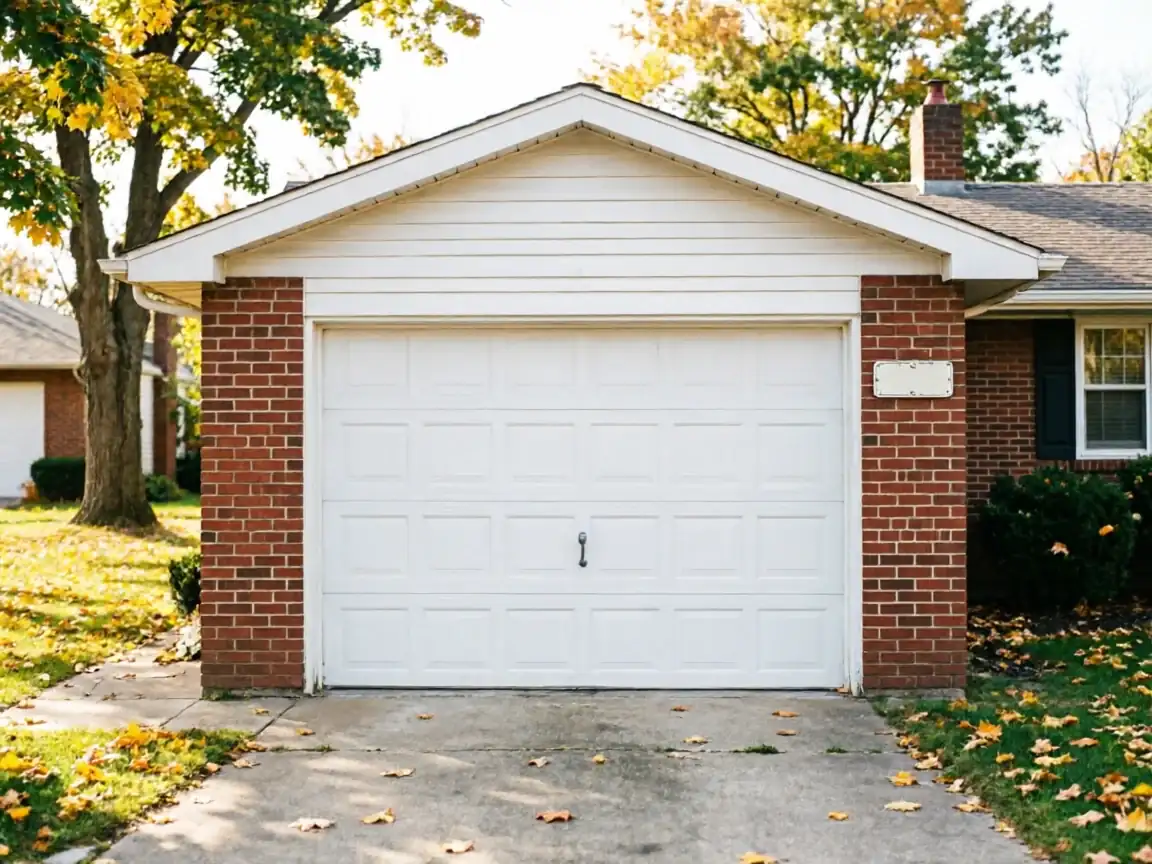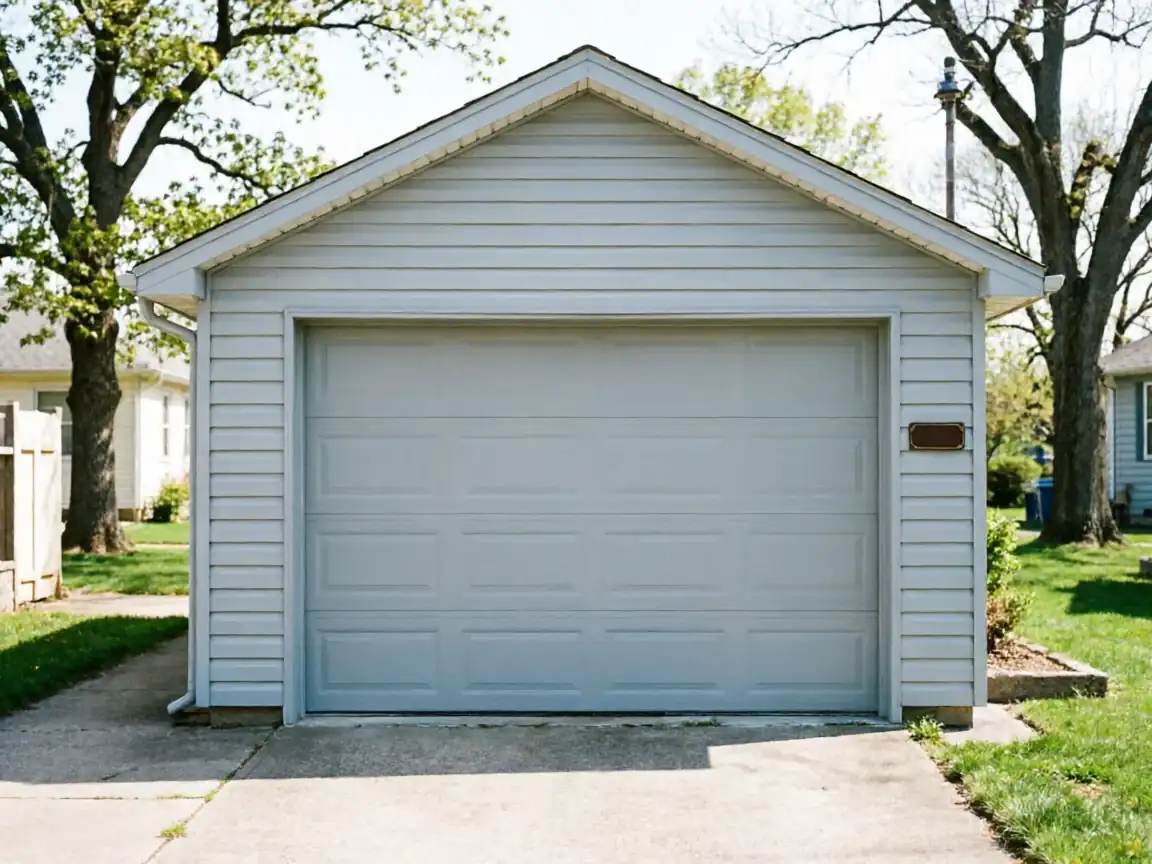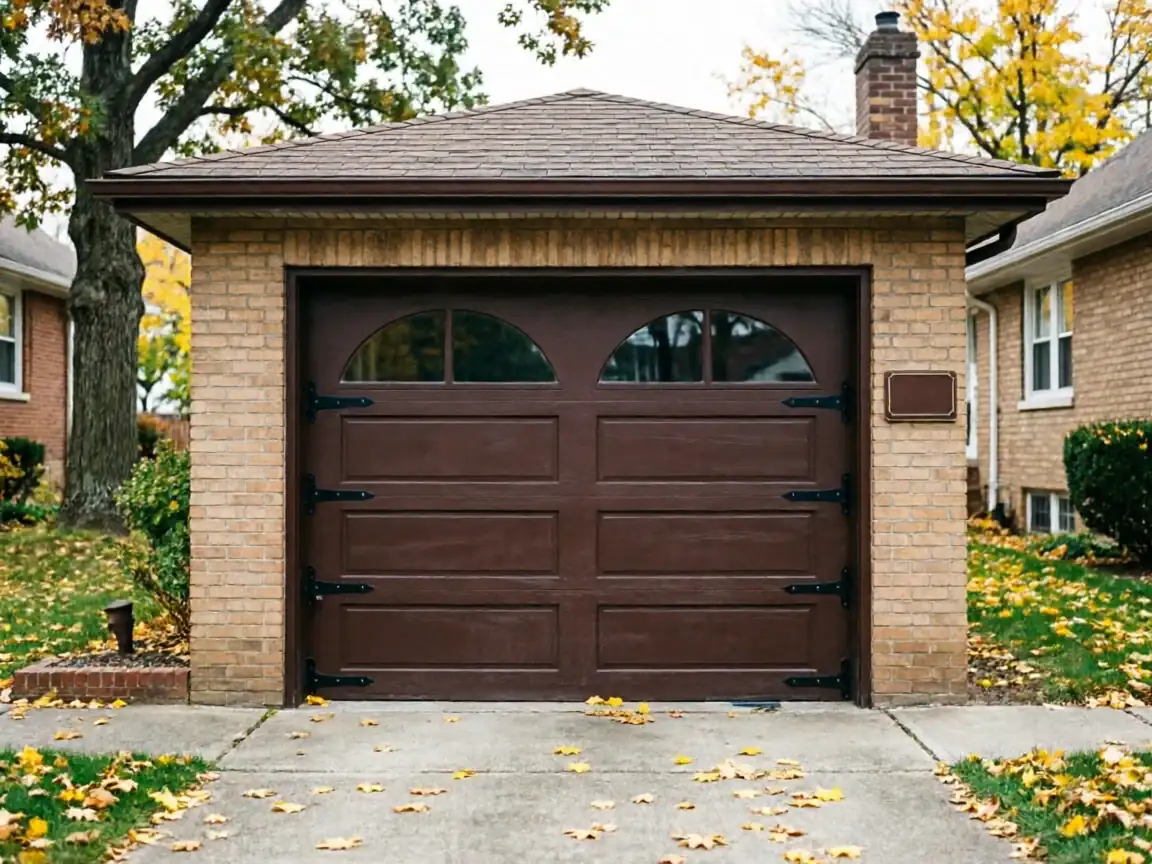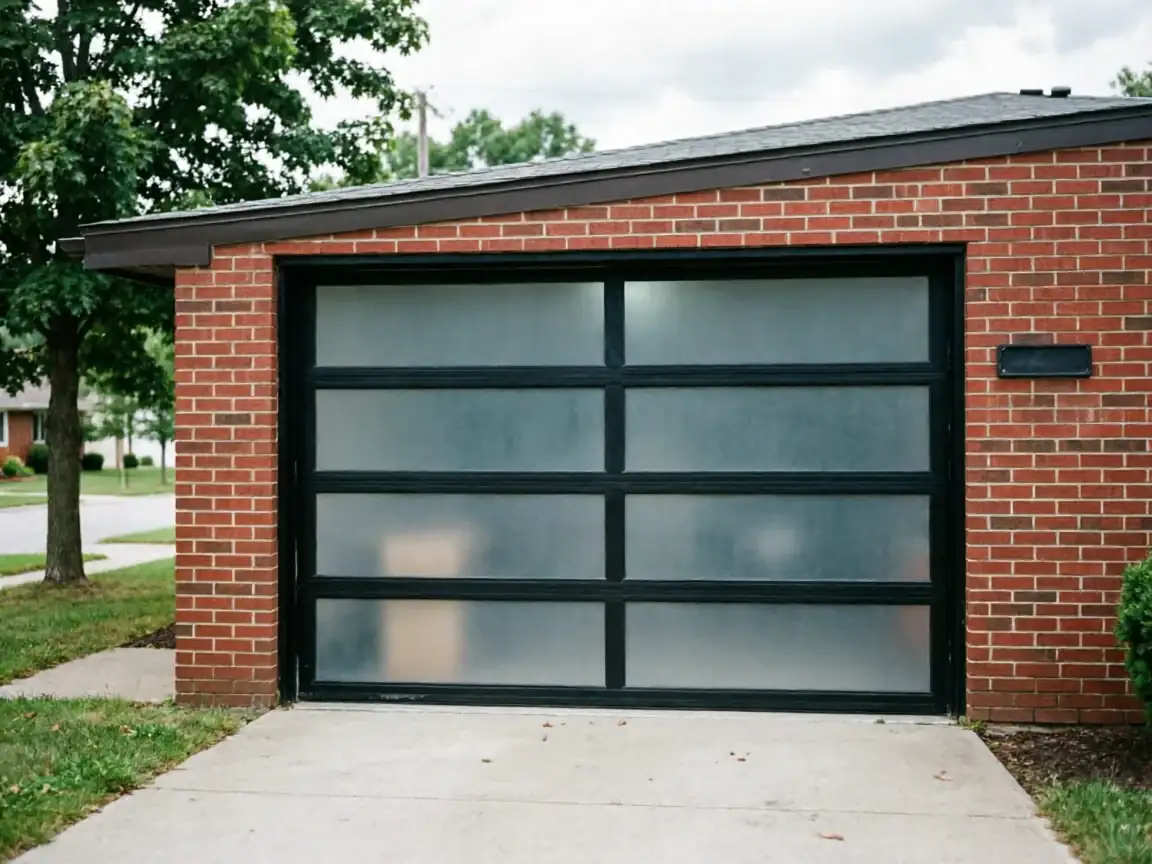
What Causes It Around Here
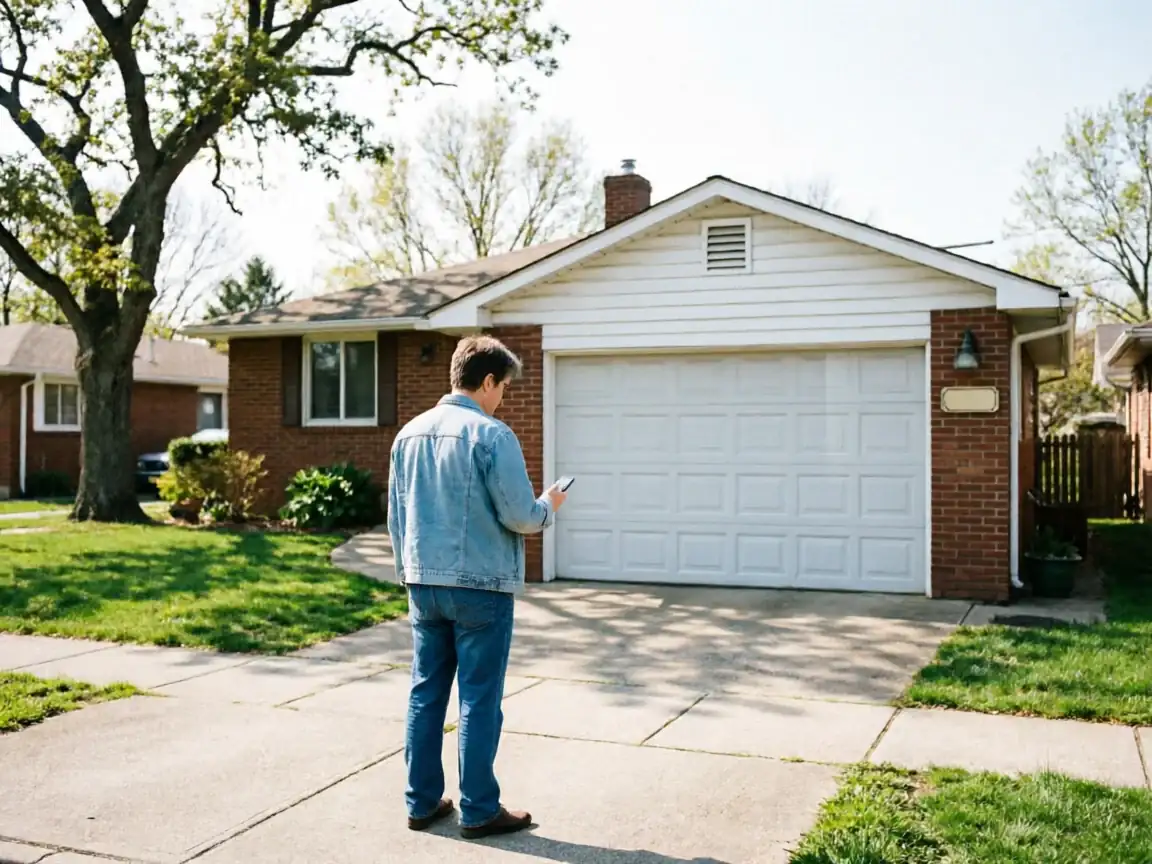
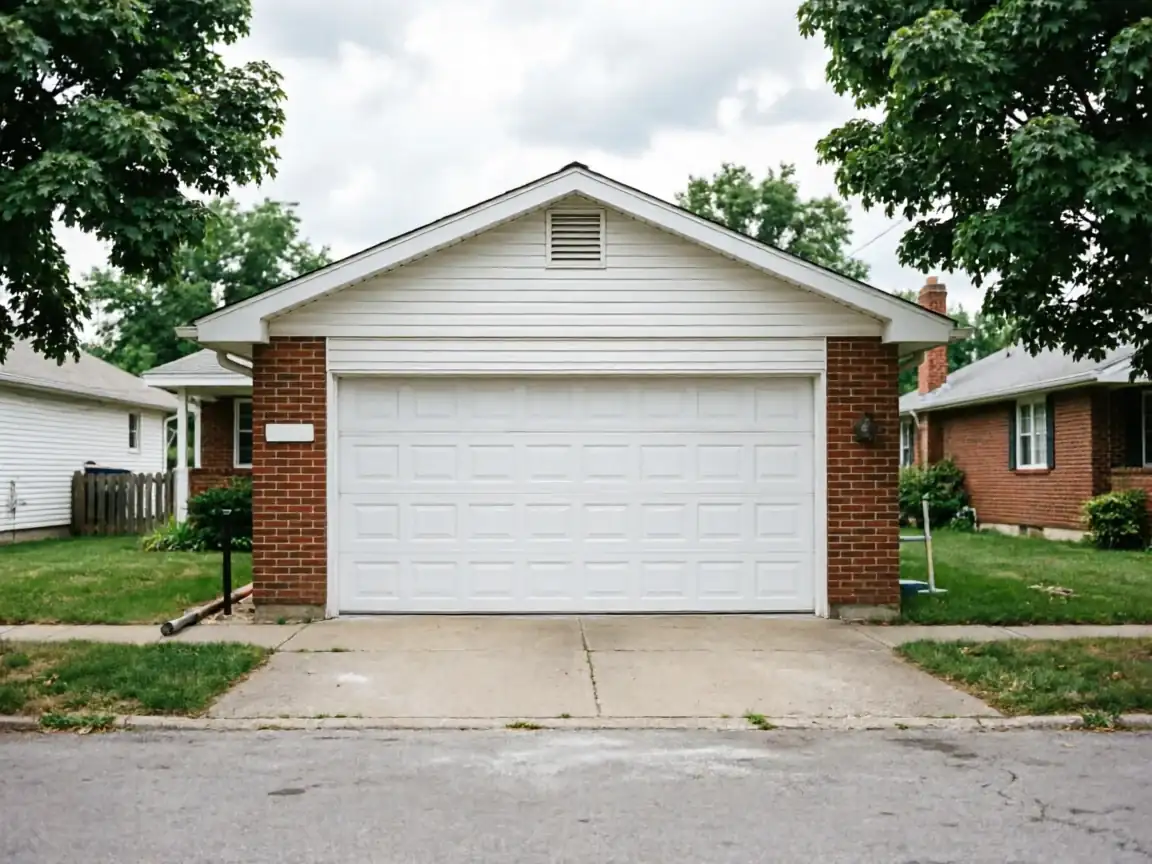
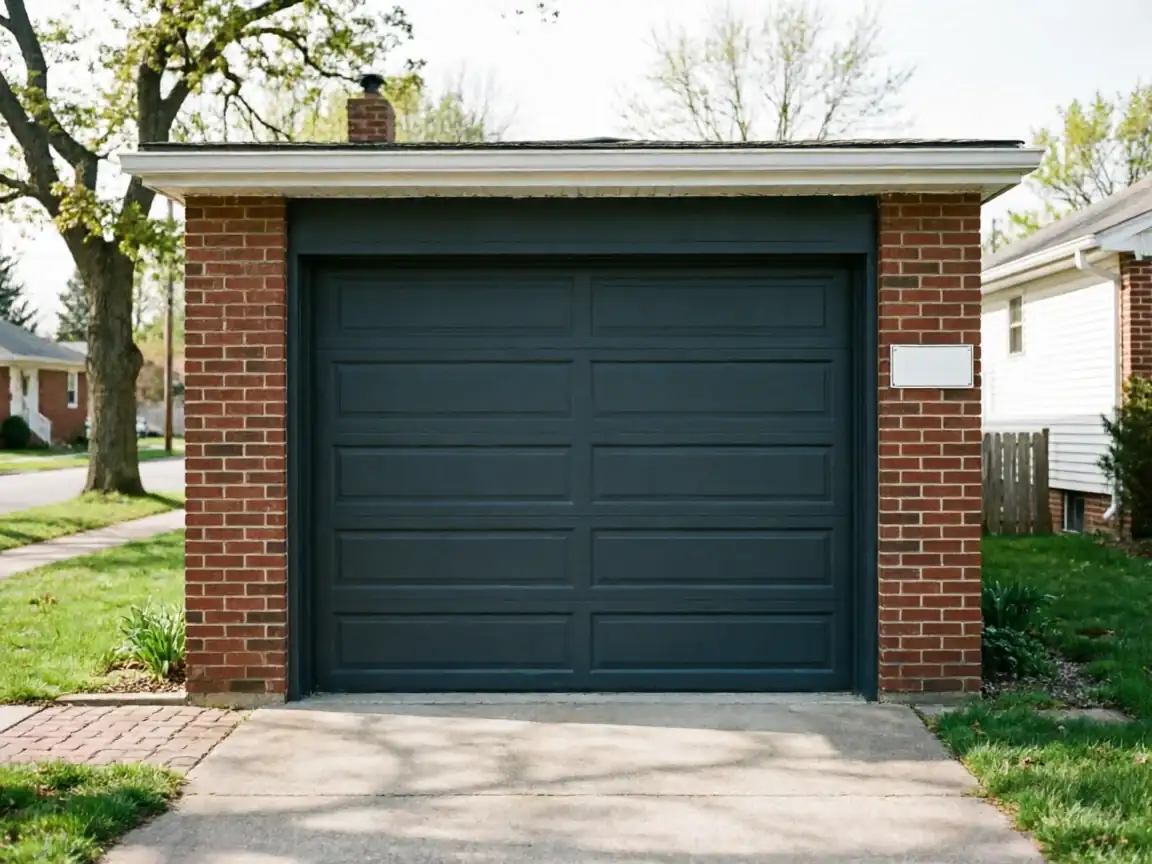
Most of the garage doors we get called out on in Waukesha sit on houses built somewhere between 1938 and 2004, with the bulk of that stock going up in the 1960s and 70s. That matters because a door installed in 1972 has had five decades of Wisconsin winters to work on its hardware. Torsion springs rated for a certain cycle count don't care how well you've maintained the rest of the house - they fatigue on a schedule, and that schedule runs out faster here than it would somewhere with a mild climate.
Waukesha sits in a severe cold band, and that's the real driver behind most service calls. Steel contracts in cold air. Lubricant thickens. A spring that was already near the end of its life snaps on the first fifteen-below morning of the year, not in July. Track alignment drifts too - concrete slabs heave slightly with frost, and a door that rolled smooth in September starts binding by January.
Across the 54 named communities we see in this area, the pattern repeats: older housing stock plus hard winters equals predictable failure points. It's not bad luck. It's materials doing exactly what materials do under these conditions, on hardware that's often original to a house built before anyone reading this owned it.
Can You Do This Yourself
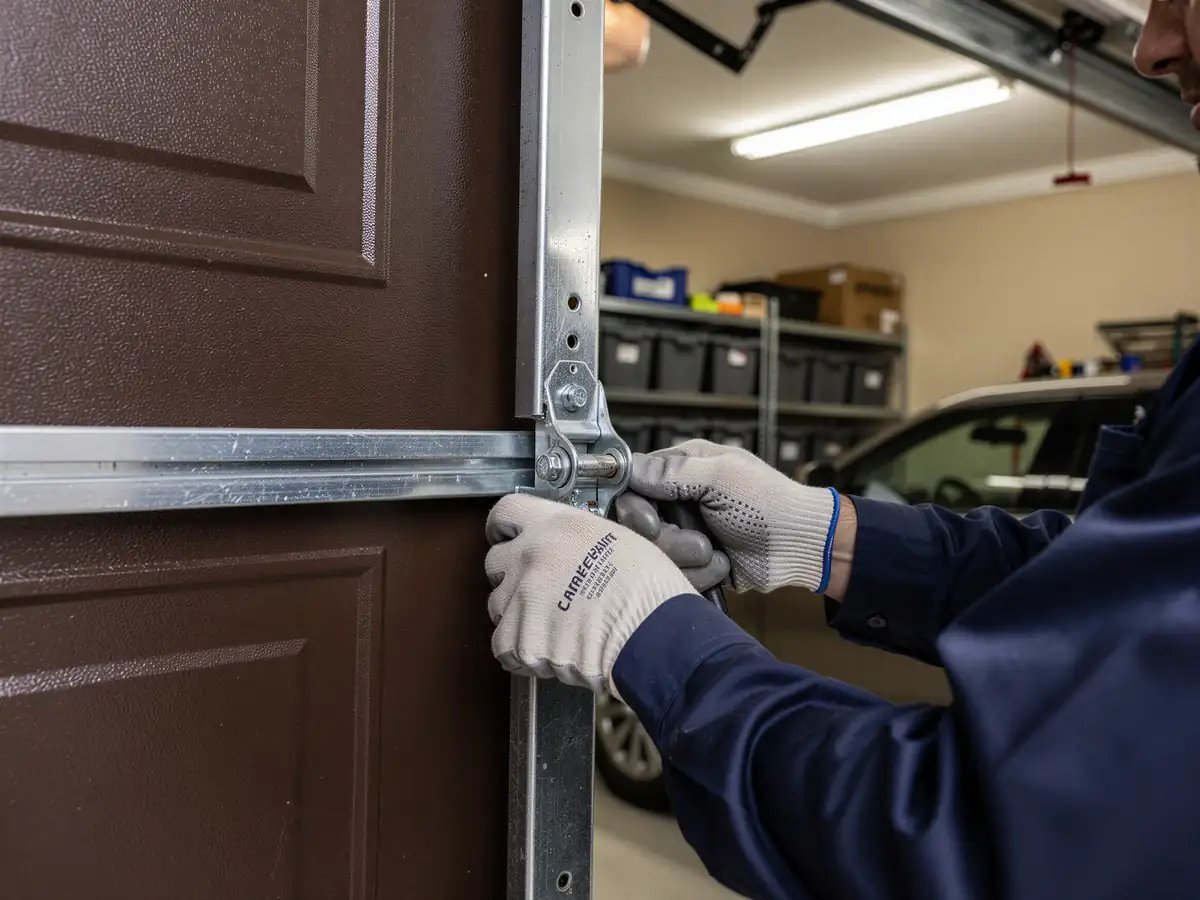
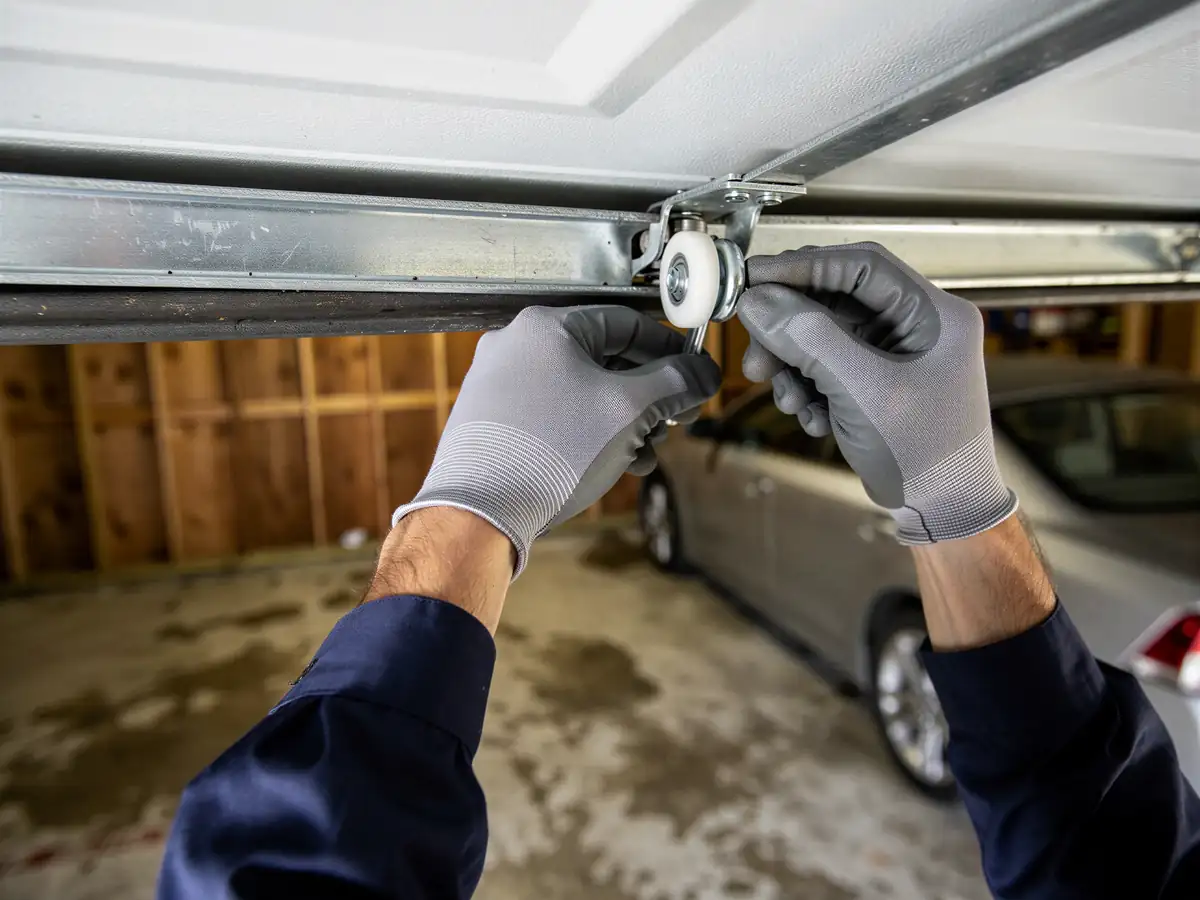
Some of it, yes. If your door is noisy, check the rollers first - nylon rollers crack and harden with age, and swapping them is within reach for most homeowners with basic tools. Lubricating hinges and tracks with the right product (not WD-40, which attracts grit) is a five-minute job that actually extends the life of everything downstream.
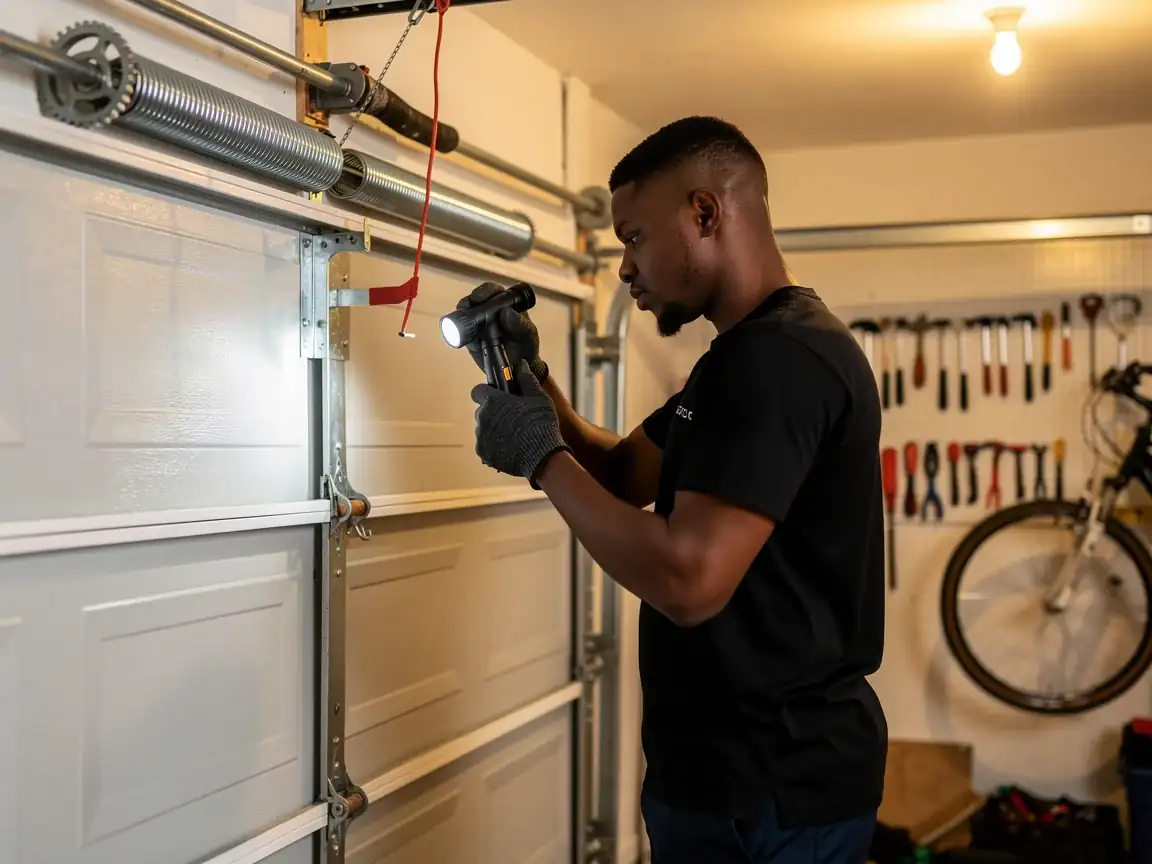
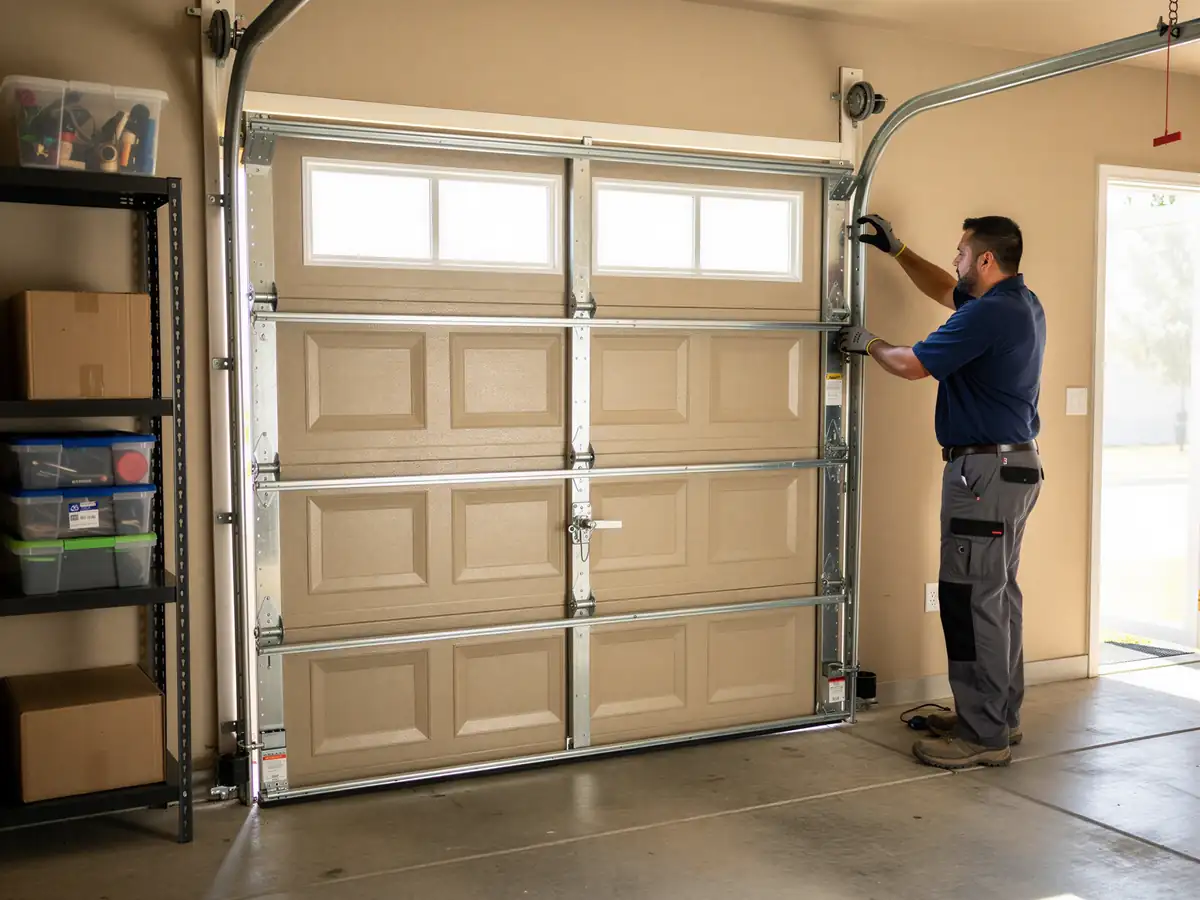
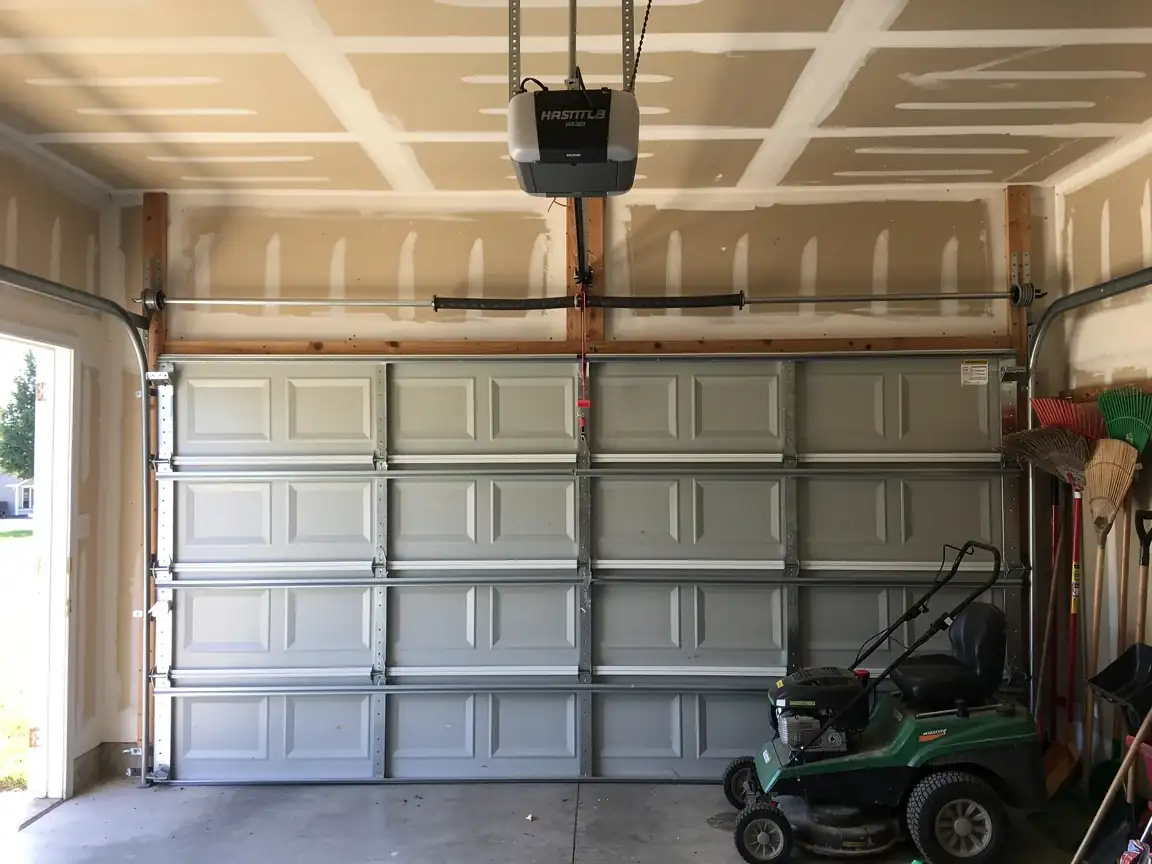
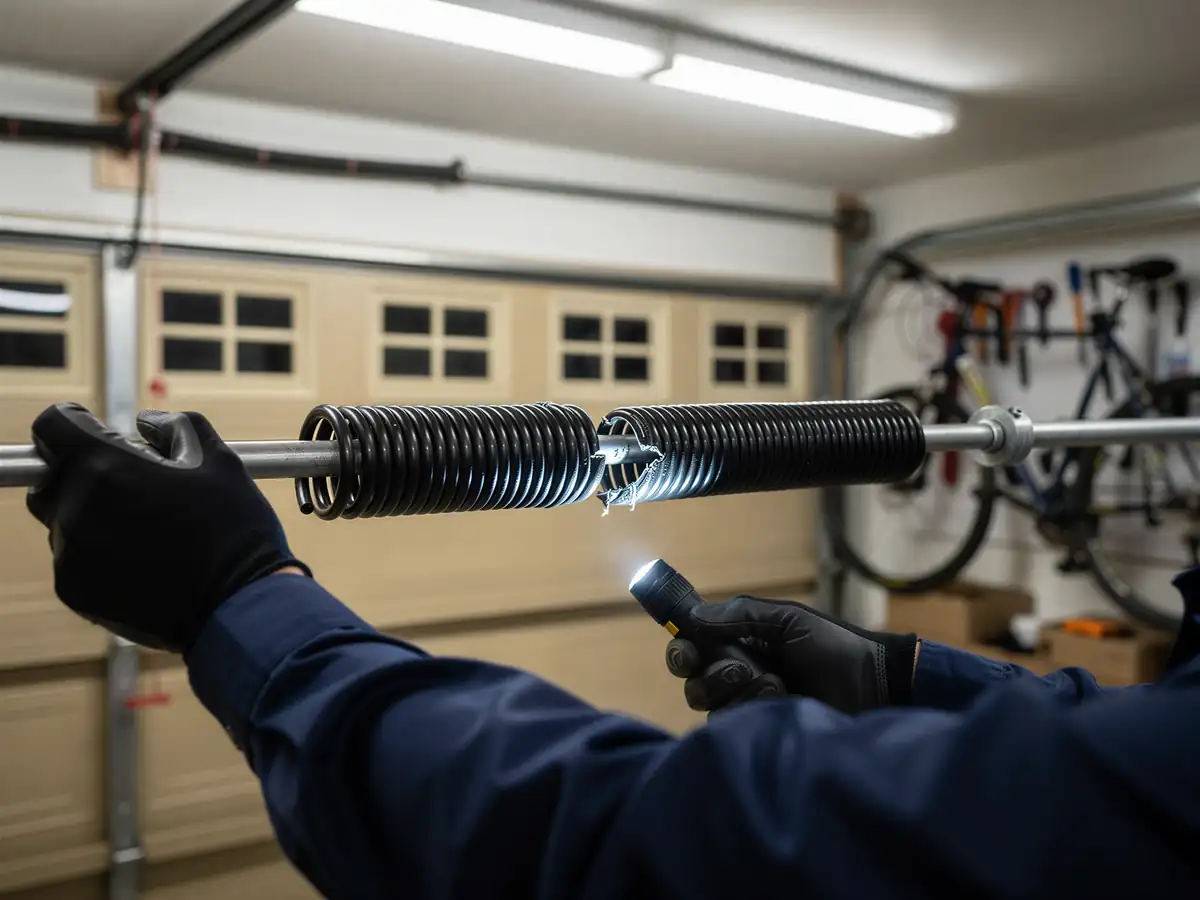
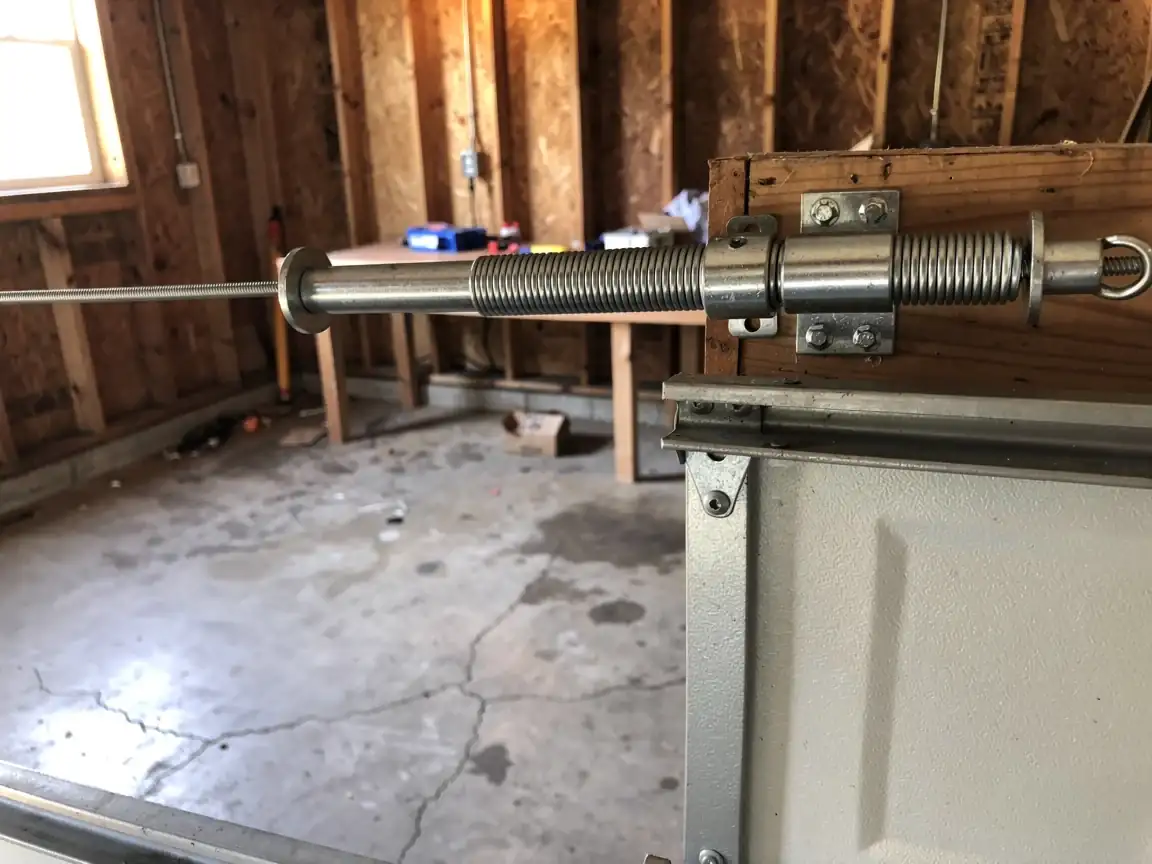
What you should not touch: torsion springs. They're under enough tension to break bones, and on a standard double door that spring has been doing the lifting work your garage opener was never designed to do alone. If a spring has snapped, the door is now dead weight on a motor that isn't built to carry it - trying to force it open with the opener will burn out the motor too, turning a spring job into a spring-and-opener job.
We'll be straight with you: a lot of service calls we take are for things a homeowner could've caught early with five minutes of looking. We'd rather talk you through what's safe to check yourself than roll a truck for a roller you could've swapped. But once tension or alignment is involved, that's where DIY stops being worth the risk.
How Long It Takes
A straightforward spring replacement or track realignment is usually a same-visit job
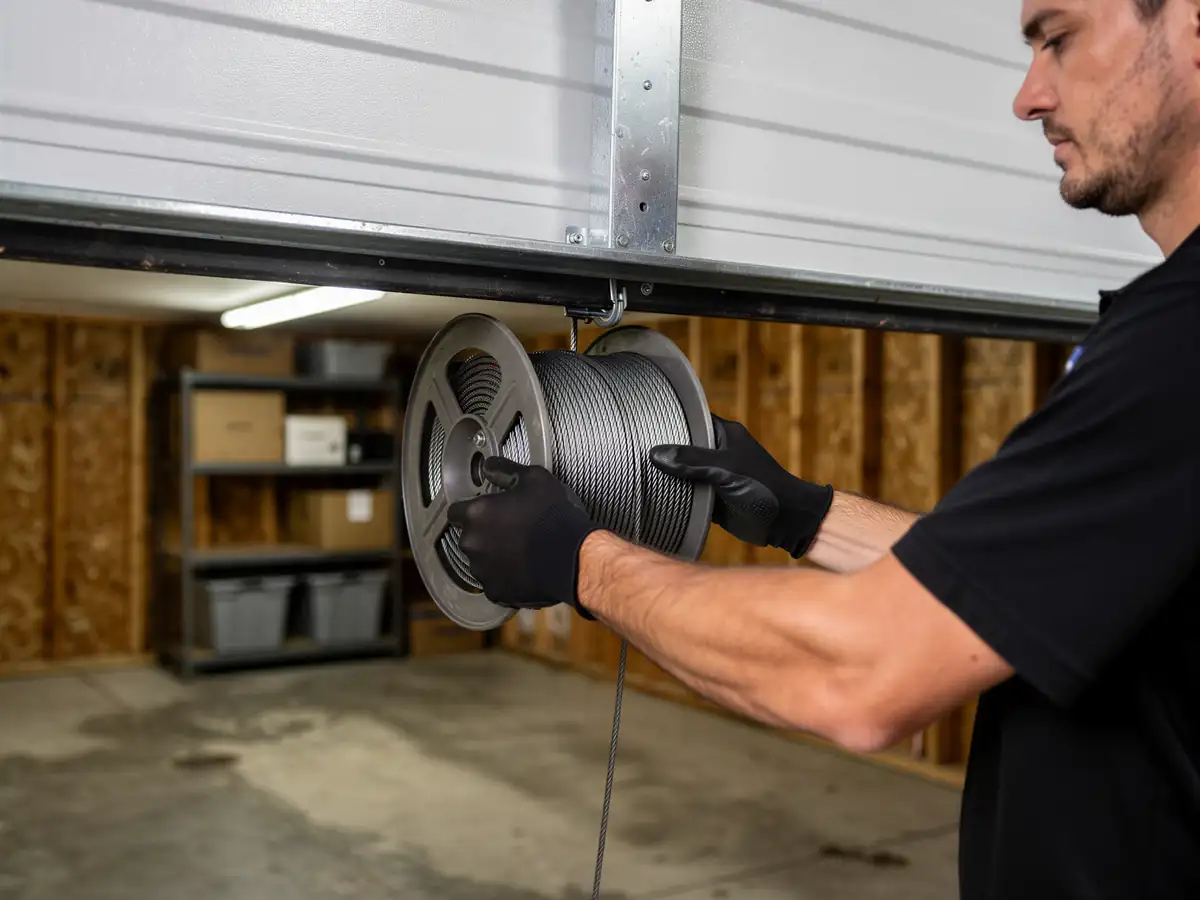
We diagnose and fix it in one stop for most of what we see. What slows things down is parts. If your door is old enough that the track hardware or spring size isn't something we stock on the truck, that's a lead-time issue, not a labor issue, and we'll tell you up front if that's the case rather than guess.
Opener issues can go either way
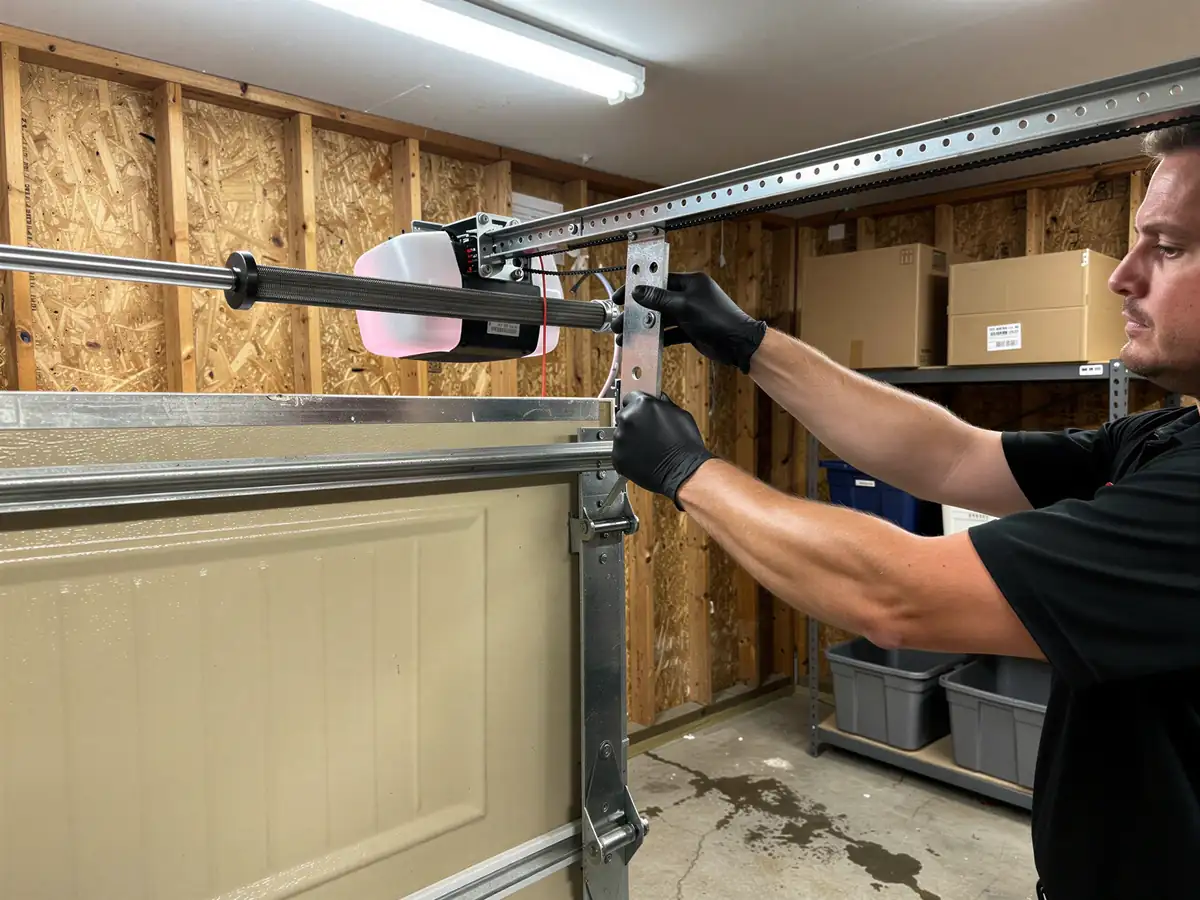
Sometimes it's a sensor alignment problem that takes ten minutes. Sometimes the motor itself has failed after years of compensating for a door that was already out of balance, and that's a bigger conversation about whether repair or replacement makes more sense.
Here's the honest limitation
We don't carry every part for every door ever installed in this area, especially on houses from the earlier end of that 1938-2004 build range. If your hardware is unusual or discontinued, we'll tell you that on-site instead of stringing you along, and we'll talk about what the actual options are instead of pretending we can fix anything on the first visit.
What You Are Seeing
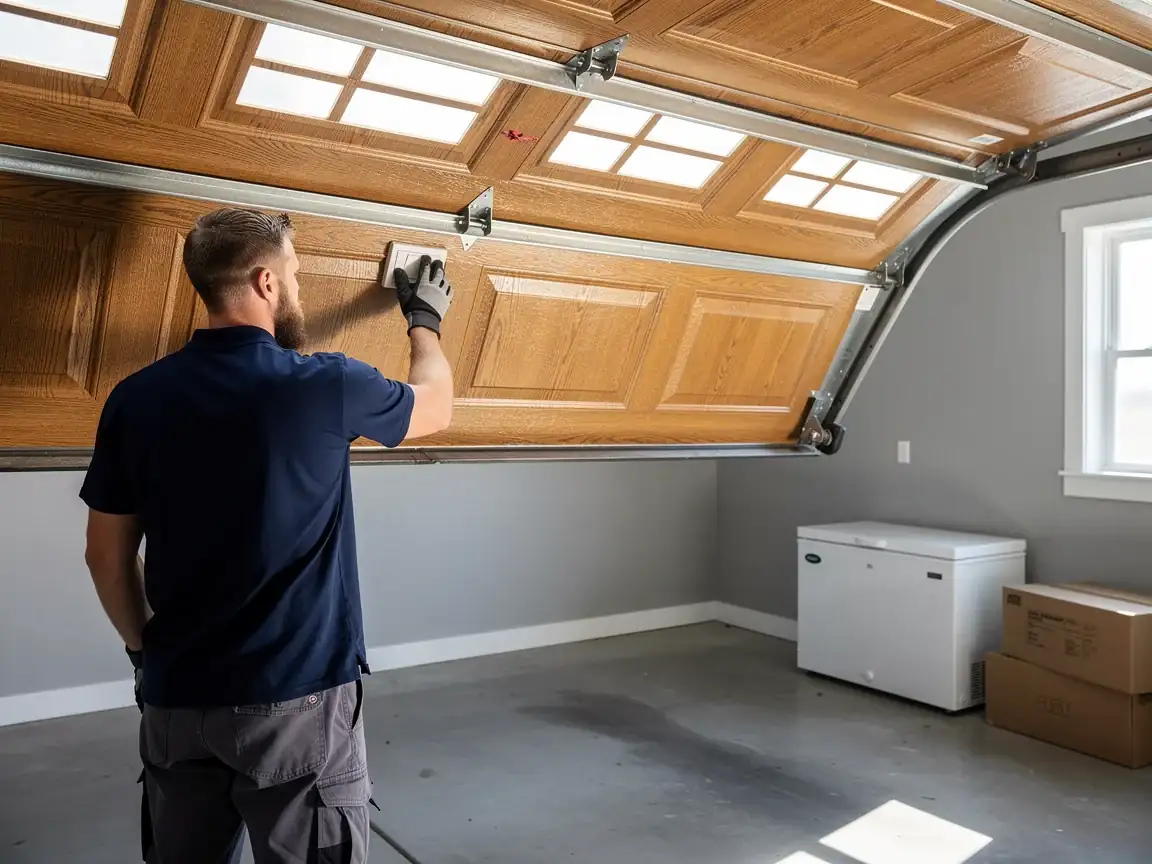
A door that's suddenly heavy to lift by hand, even with the opener disconnected, almost always means a broken or weakening torsion spring - that's the balance mechanism failing, not the opener. A door that opens a few inches then reverses is usually the safety sensors catching something, often just dirt or slight misalignment from seasonal shifting, which is common on slabs around here that move a little with frost each year.
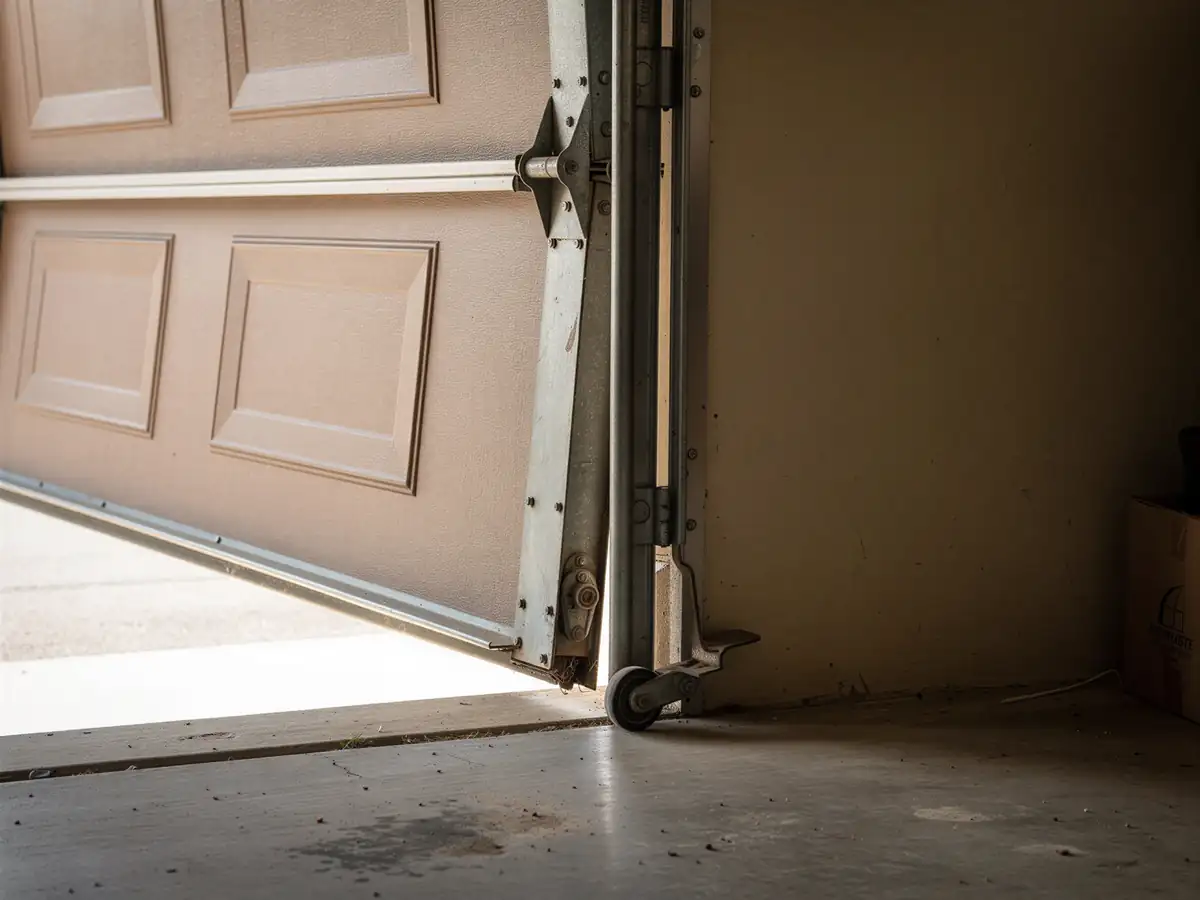
Grinding or popping sounds during operation point to roller or track wear, which shows up more on original hardware from the older end of Waukesha's housing stock than on anything installed in the last decade. A door that's slow to respond to the opener, or that works intermittently, is often an opener motor nearing the end of its life rather than anything mechanical with the door itself.
If your door won't move at all and you hear a hum from the opener, stop pressing the button - that's usually a spring failure, and running the motor against dead weight is how you turn one repair into two.