What Causes It Around Here
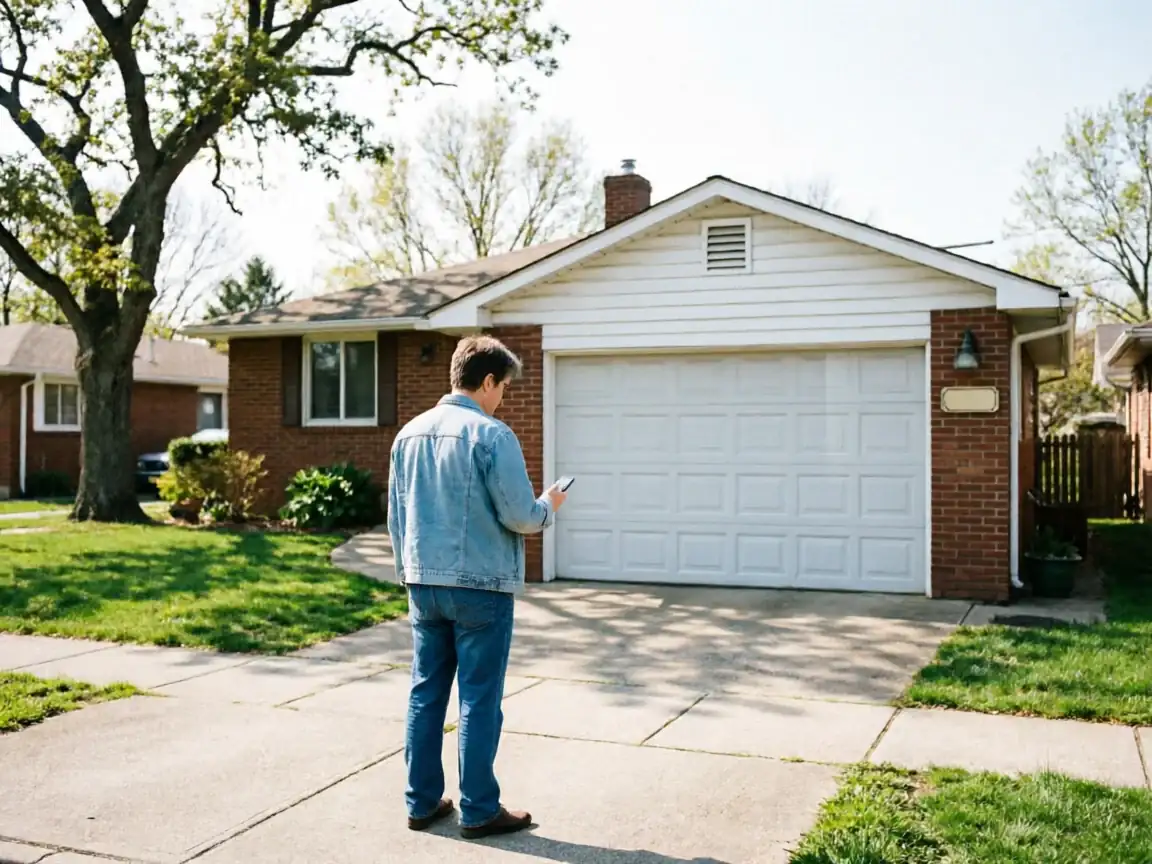
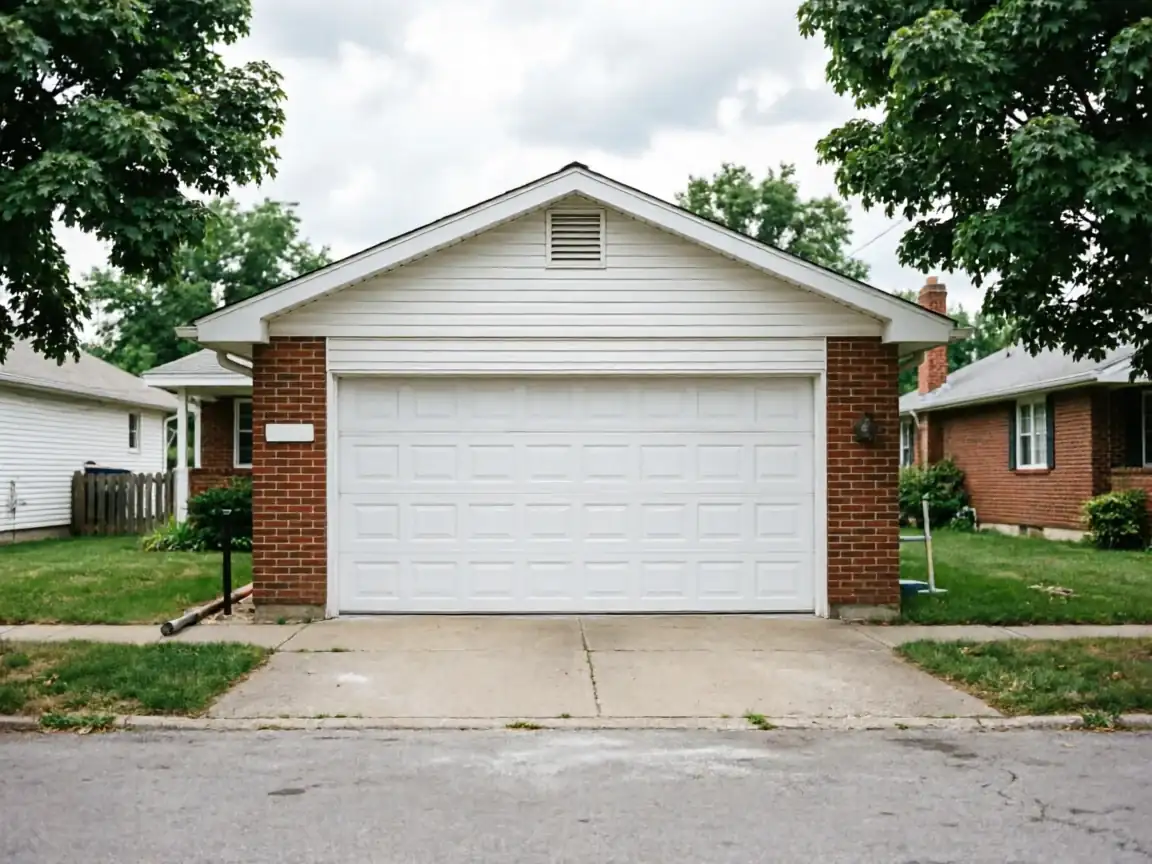
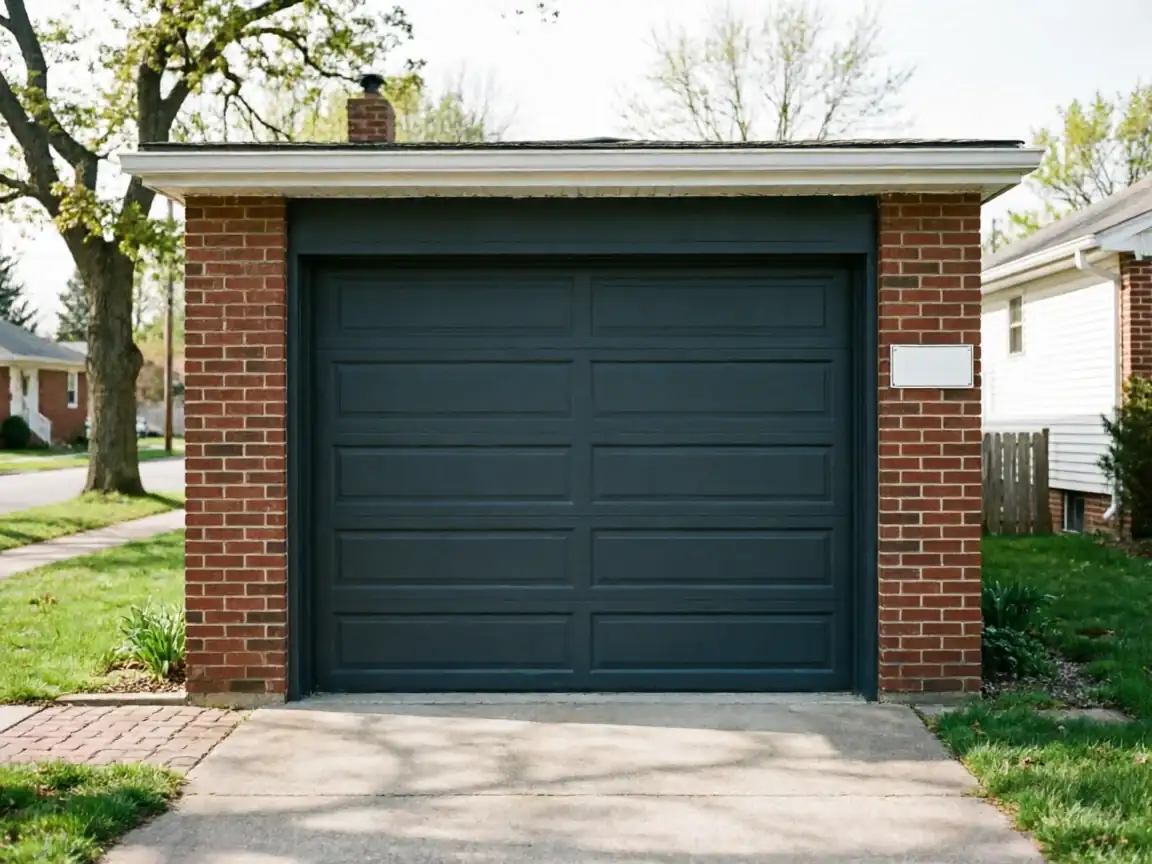
Most of the garage doors failing on cable around here aren't failing because of bad luck. Houses in this part of Wisconsin were built mostly between 1938 and 2004, with the median landing around 1979, and the bulk of that stock - across the 54 named areas we cover - went up in the 1960s and 70s. That means a lot of original torsion and extension hardware that's now pushing fifty, sixty years old, with cable rated for a service life that's long since run out.
Add in the climate. This area sits in a severe cold band, and cold does two things to a cable: it stiffens the galvanized coating until it cracks where it bends at the drum, and it makes the whole system work harder because cold makes grease stiff and effectively raises the load the cable carries. A cable that's been fraying quietly for a year tends to pick a January morning to finally let go, because that's when the system is under the most strain it ever sees.
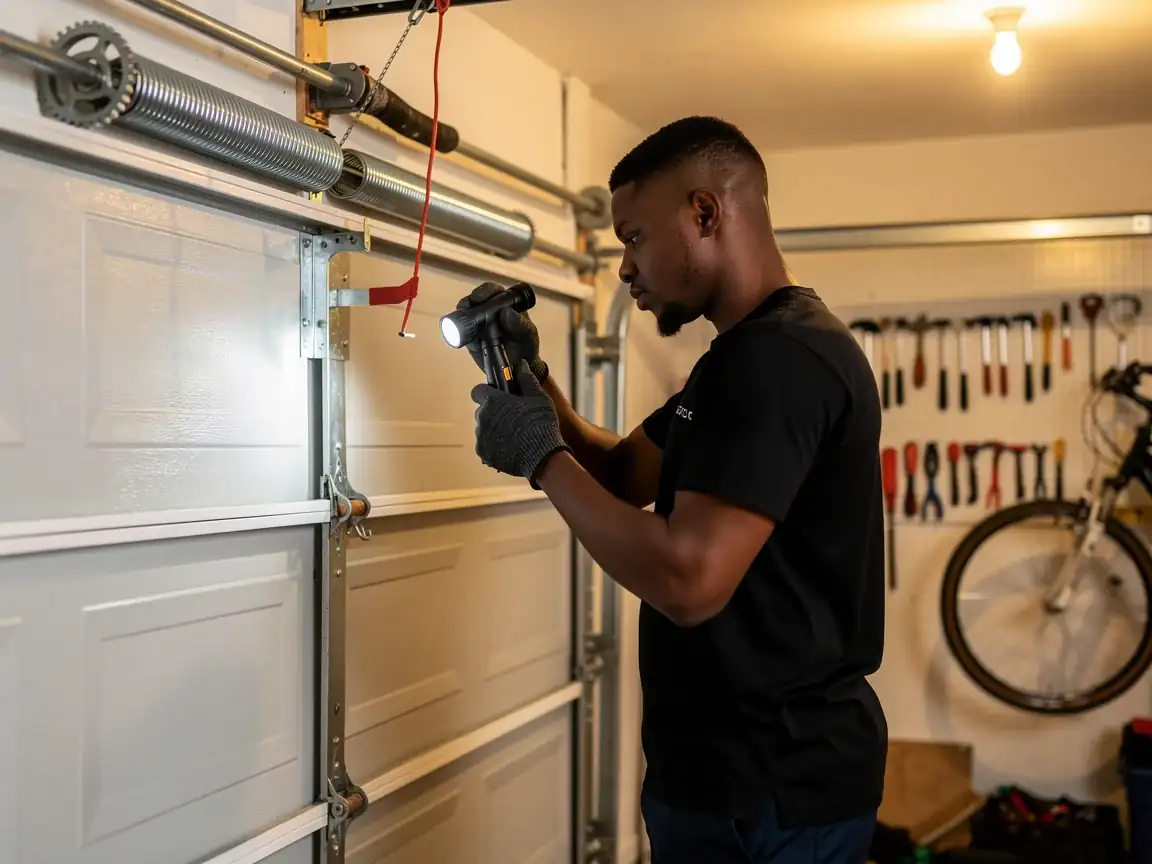
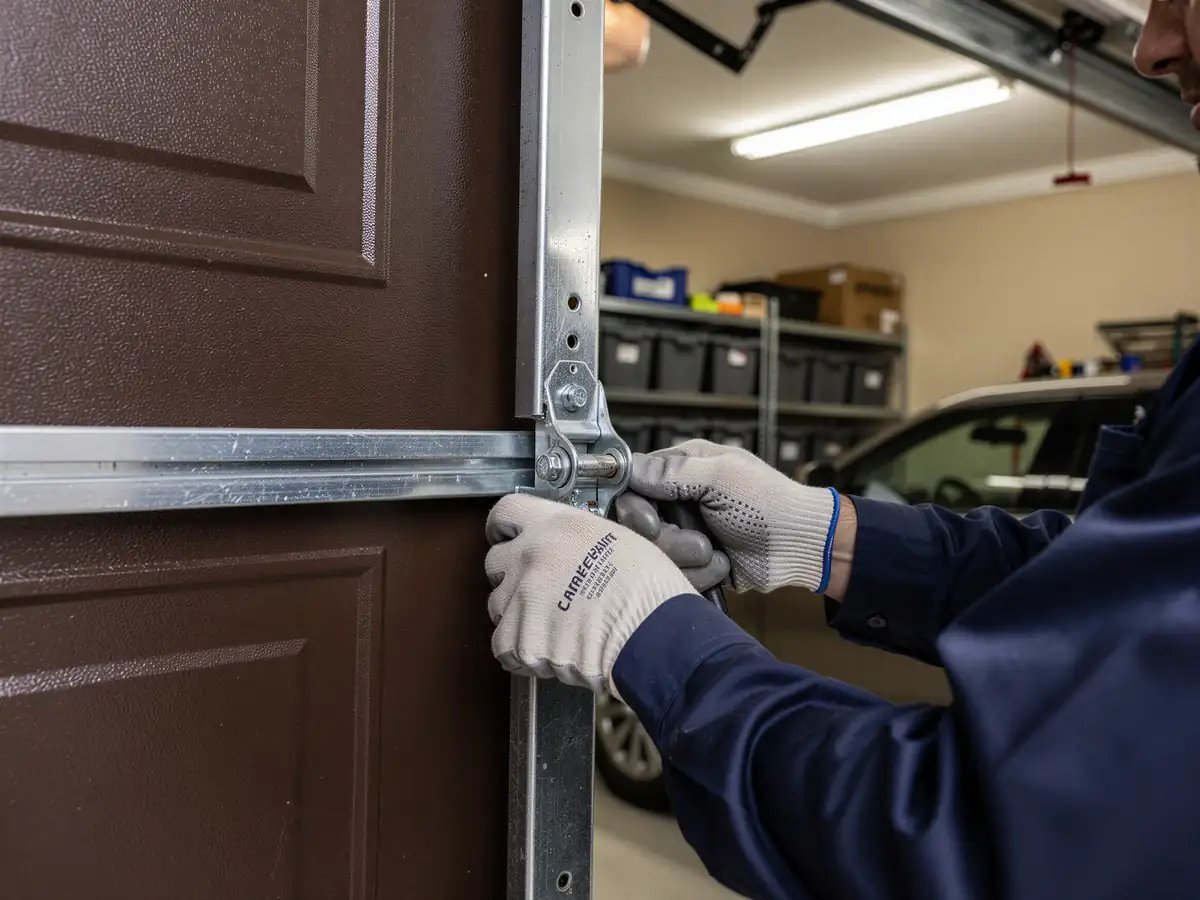
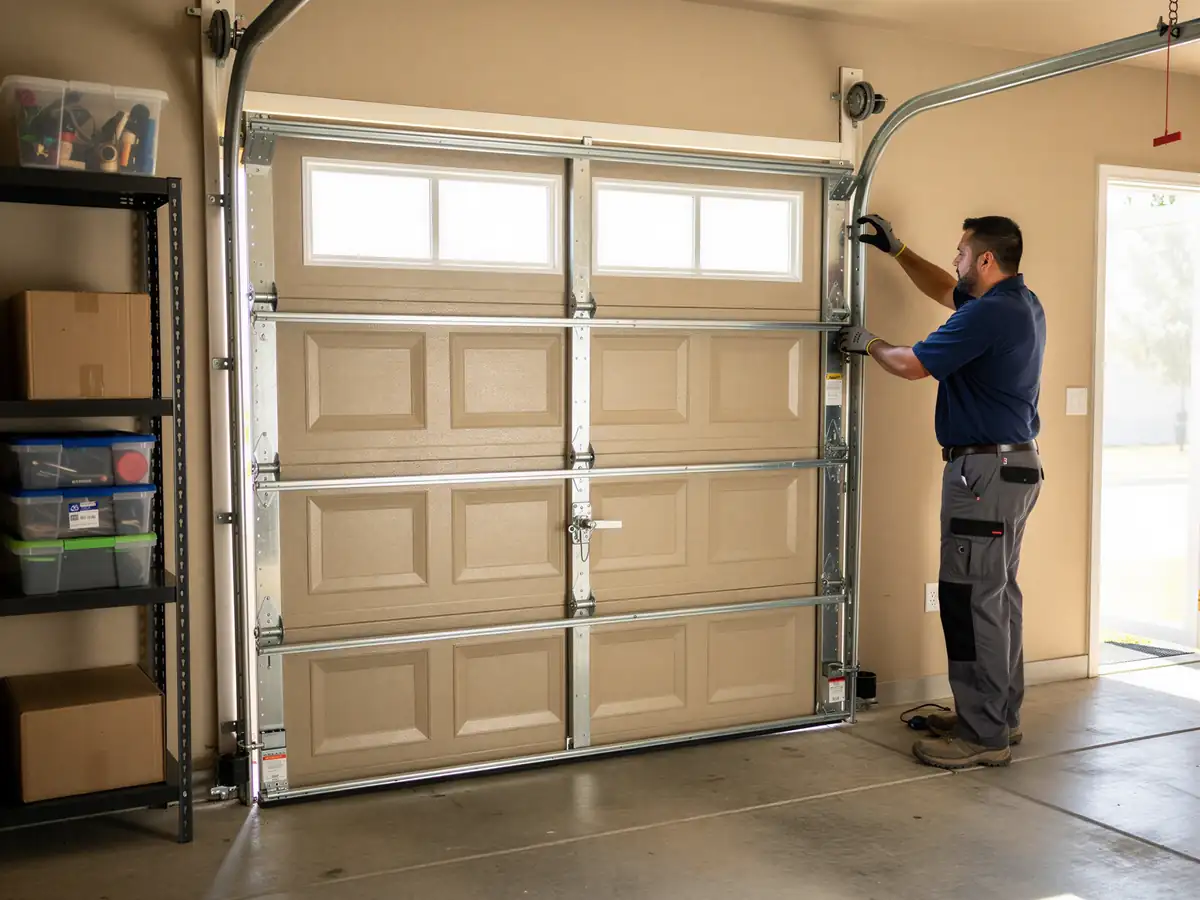
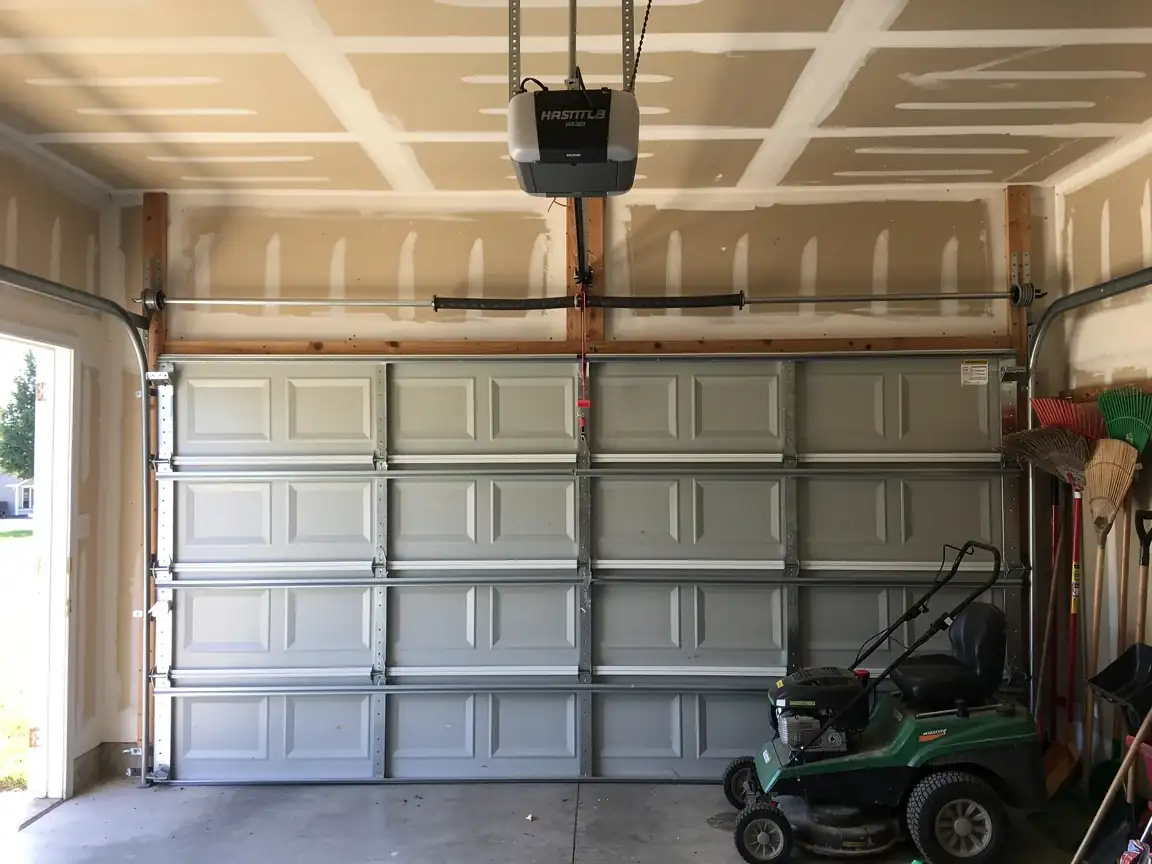
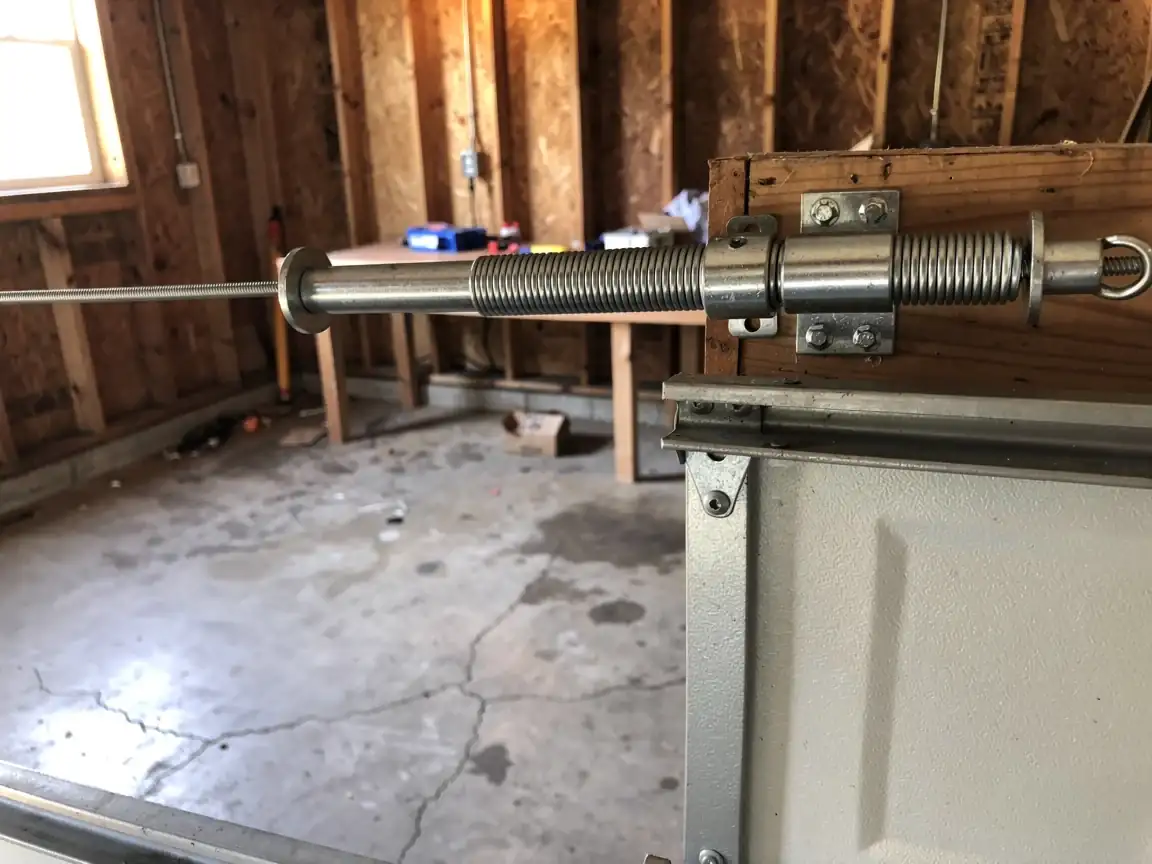
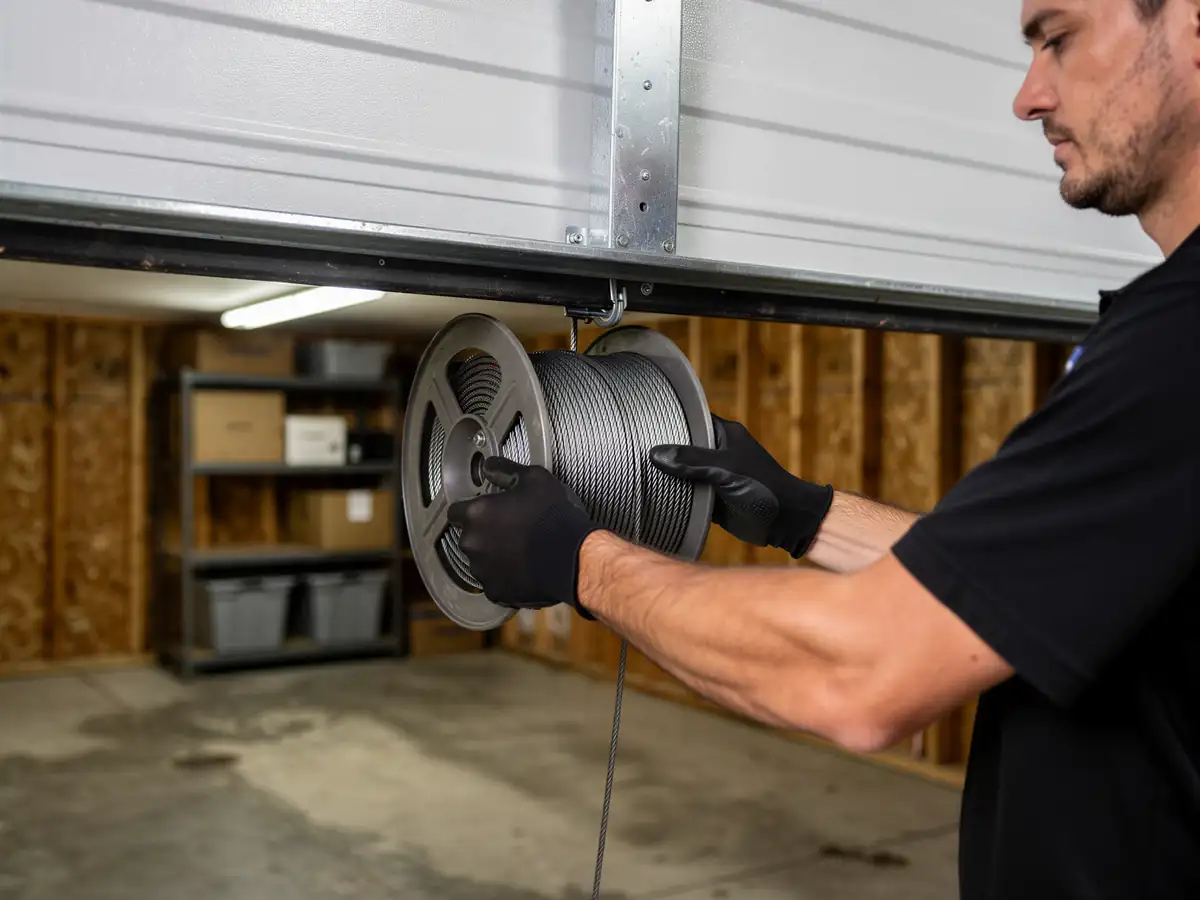
We see this pattern on both torsion setups (cable at the bottom bracket, wound around a drum at the top) and the older extension setups still common on this era of house (cable running the length of the track to a pulley). Different failure point, same root cause: age plus cold.
Can You Do This Yourself
Short answer: we'd rather you didn't, and here's why without sugarcoating it. A garage door cable is holding back a spring under enough tension to lift a few hundred pounds of door. When a cable lets go, or you're loosening clamps trying to free one while the spring is still wound, that tension doesn't disappear - it goes somewhere, and that somewhere is often a hand or a face.
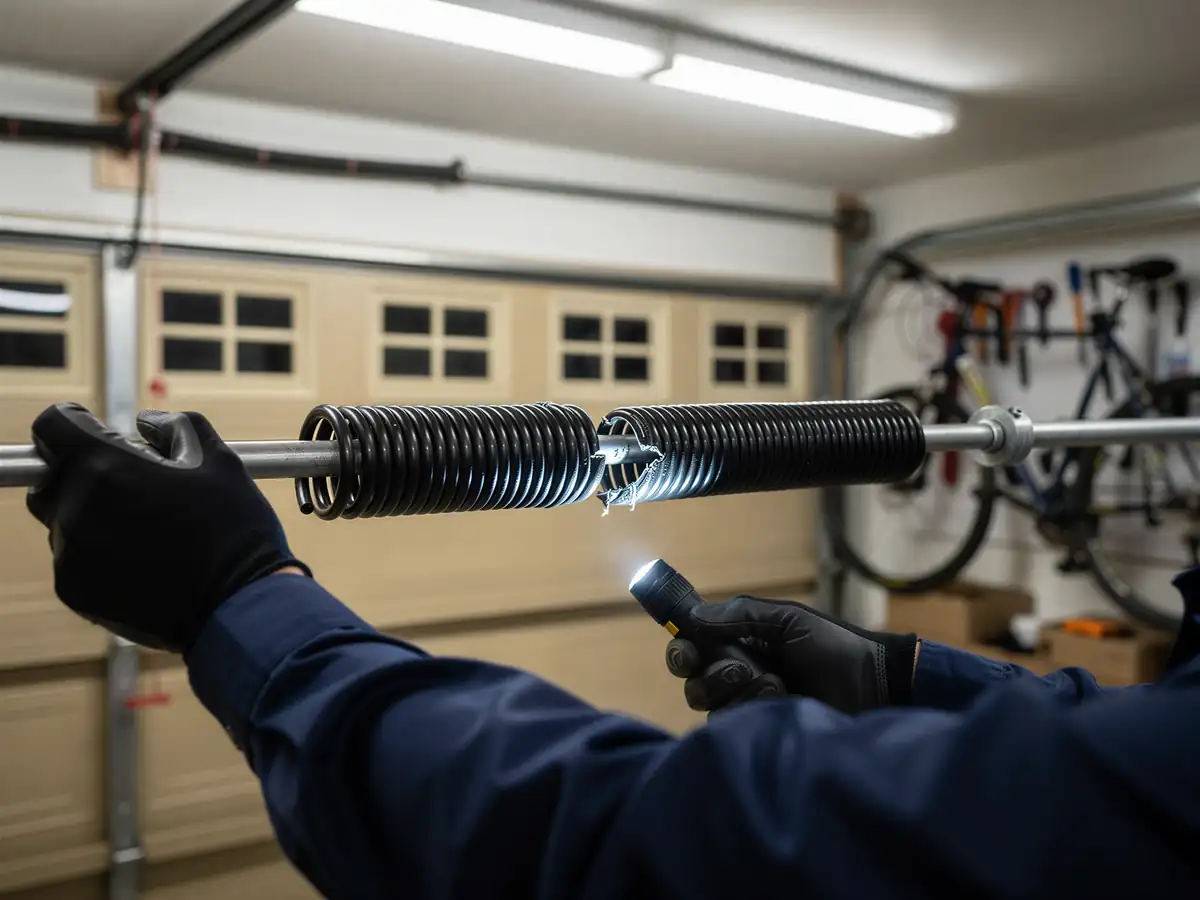
If the door is already down and a cable is just loose or has slipped off the drum without snapping, you can sometimes get it reseated with the door fully closed and the opener disconnected, working slow and careful. But if a strand has actually broken, if the cable is frayed past a few threads, or the door is hanging crooked on one side, that's not a tightening job anymore. The spring has to come down safely first, which means the right winding bar, the right cone, and knowing which direction it unwinds.
This is one of the few repairs on a garage door where we'll say it plainly: it isn't worth the risk to save a service call. We won't pad this out with a list of tools you could buy online - if a cable's broken, that's a call, not a weekend project.
How Long It Takes
Cable repair is usually one of the quicker jobs on the truck
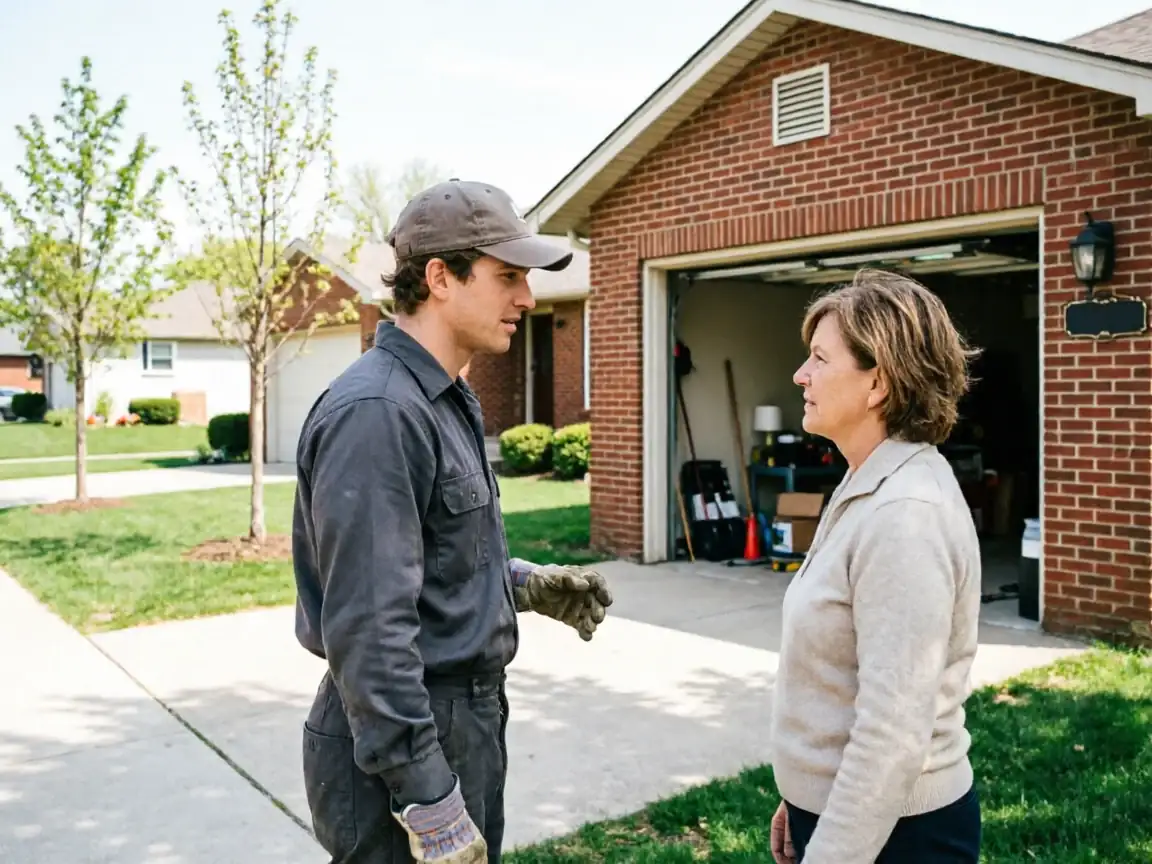
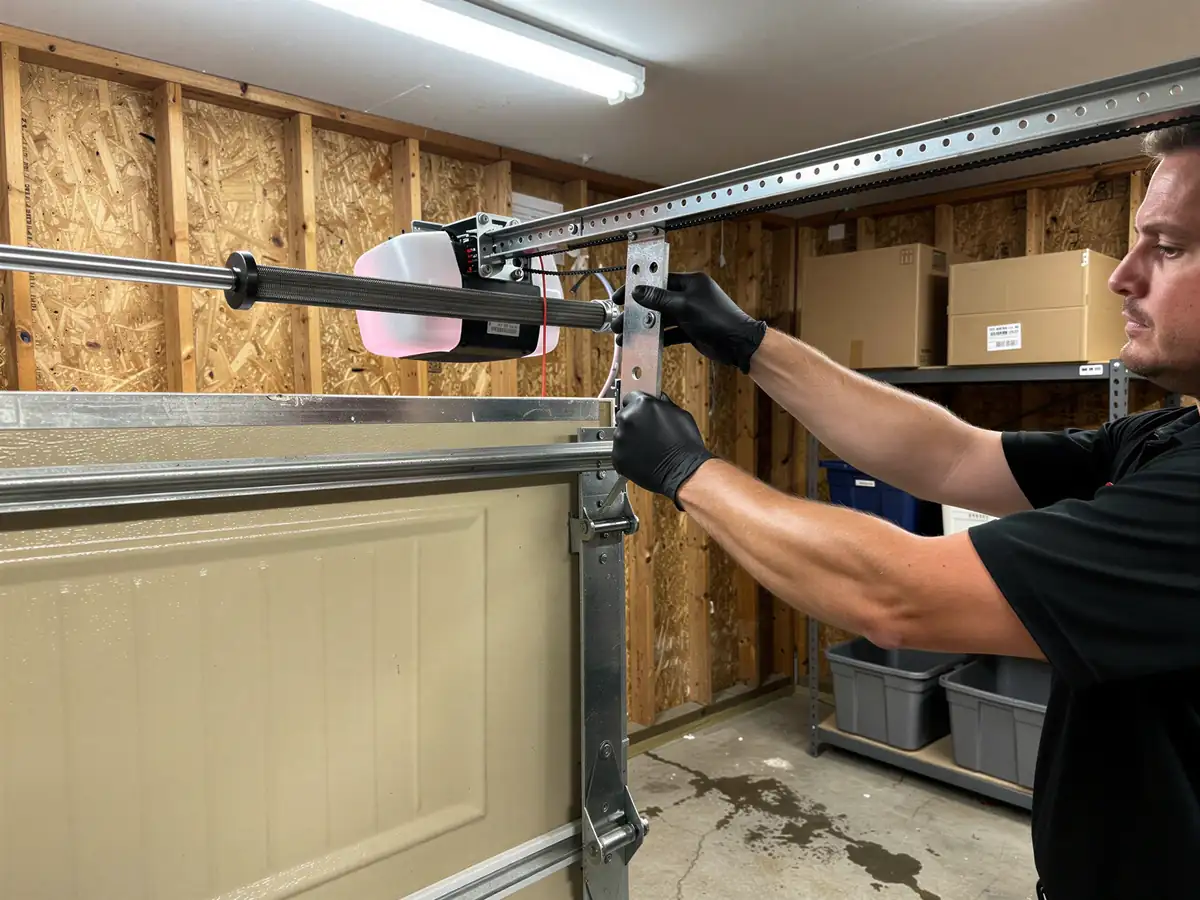
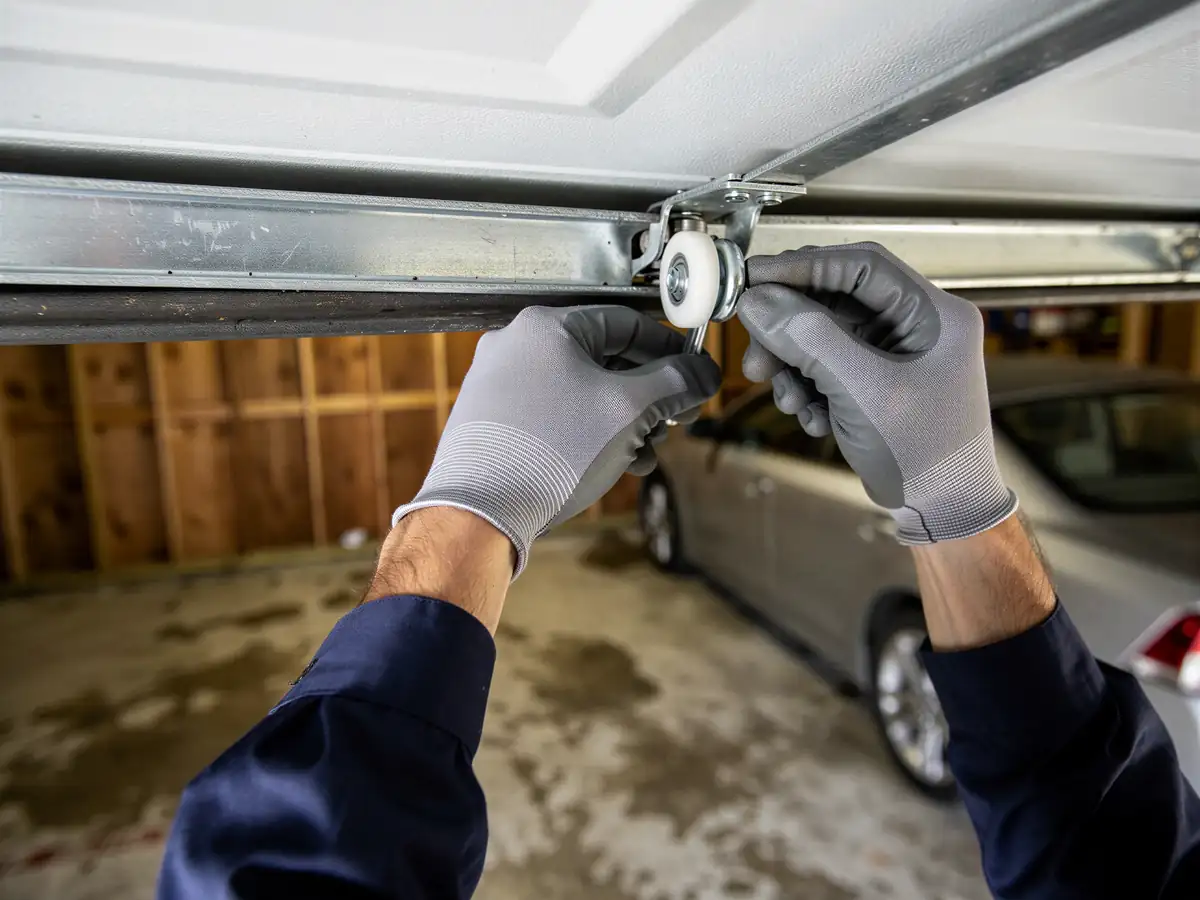
But how quick depends on what we find once the door's open. A straightforward cable replacement on a torsion system - unwind the spring, pull the old cable, spool a new one, re-tension - is a contained job. If the drum is also worn, or the cable came off because a roller seized in the track and pulled the whole system out of alignment, there's more to sort out before we close it back up.
Extension-style setups on older houses sometimes take a little longer
Mostly because matching hardware for that generation of door isn't always on the truck - this is one spot where we won't promise a fixed number, since it depends on what's actually on the door in front of us. What we can tell you is that a cable job rarely means the door sits out of commission for the rest of the day. In almost every case we get the door back to working the same visit.
We're not going to quote a flat turnaround time here
Because the honest answer changes door to door, not by town.
What You Are Seeing
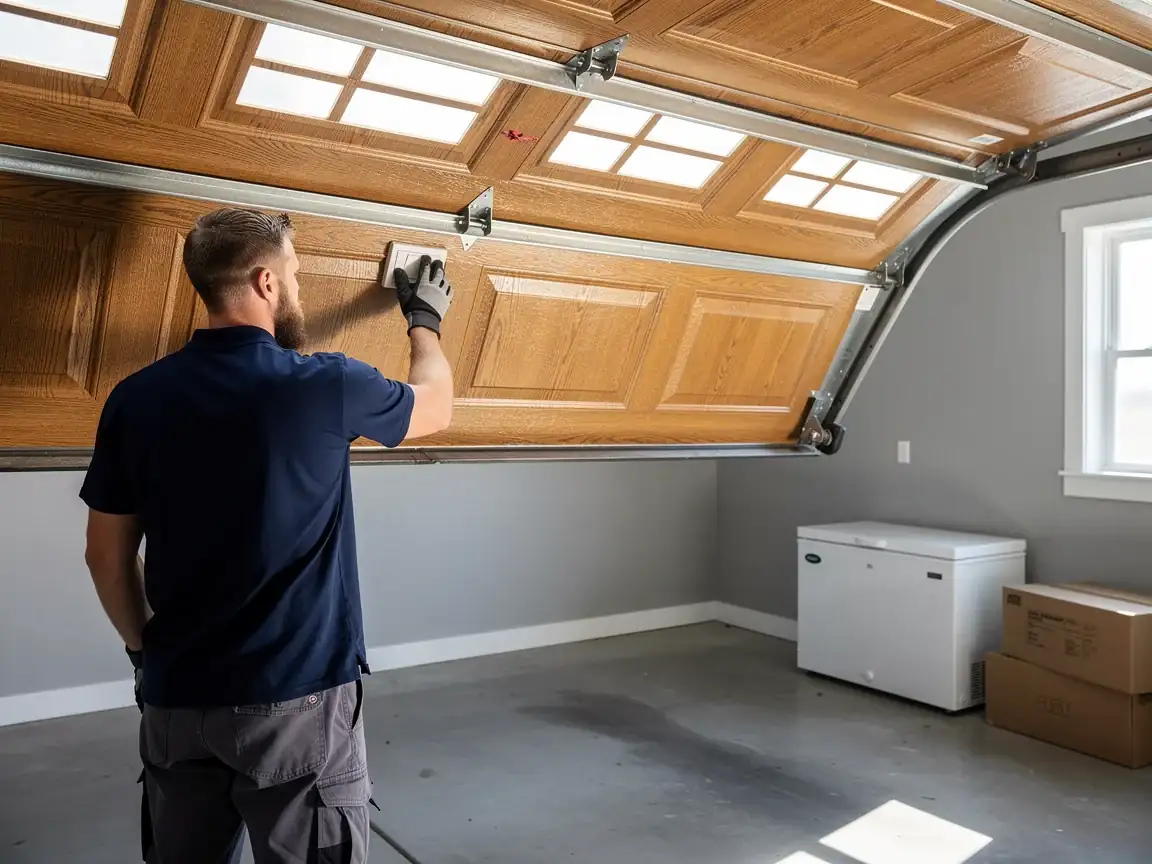
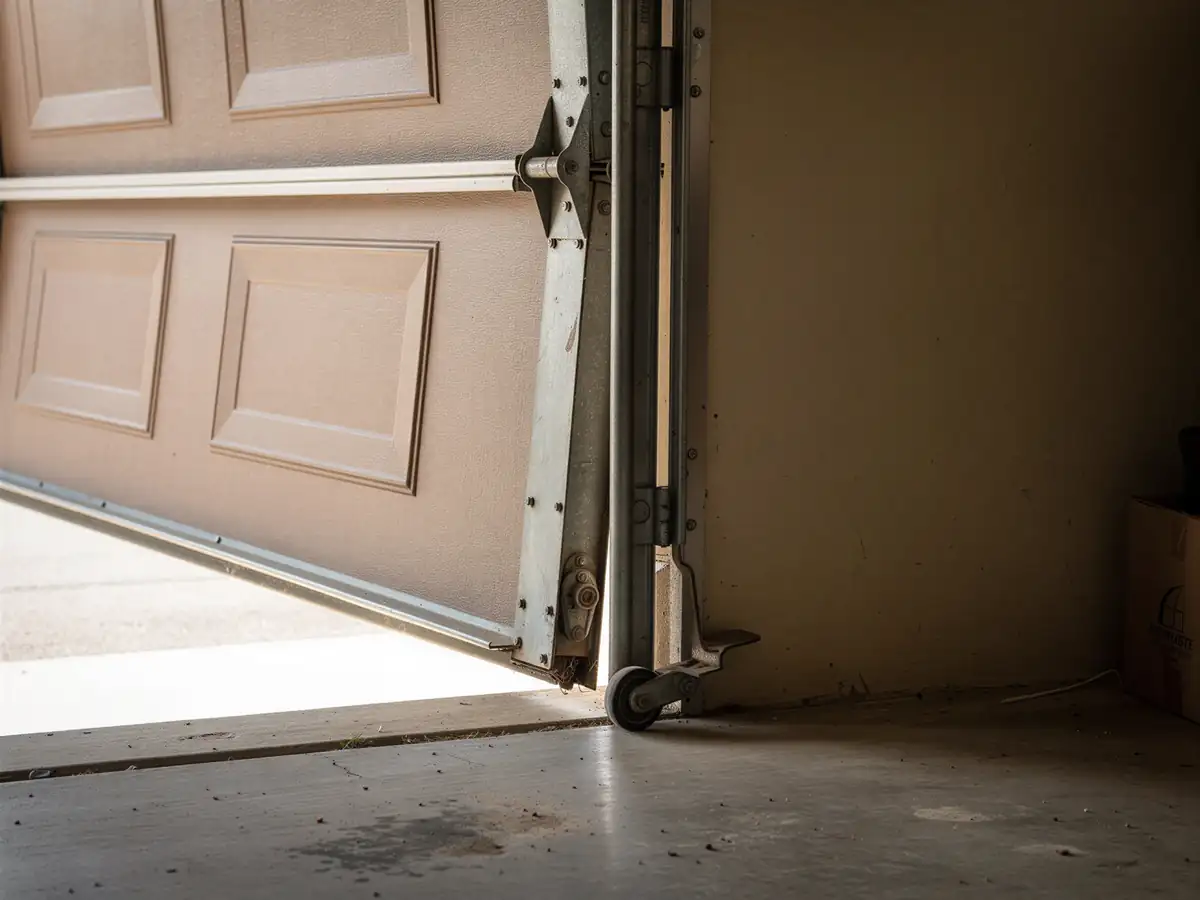
A failing cable rarely comes out of nowhere - it usually tells you first. The most common sign is a door that looks crooked going up or down, higher on one side than the other, because one cable is still under tension while the other has gone slack or snapped outright. You might also hear a pop or a loud bang from the garage, which is usually the cable letting go at the drum.
Fraying shows up as thin wire strands sticking out near the bottom bracket or around the drum at the top of the track - if you can see that, treat it as a warning, not something to watch for a few more weeks. A door that slams the last foot instead of lowering evenly is often running on one good cable doing the work of two. And if the door won't move at all, with the opener straining or clicking, that can mean a cable has come off the drum entirely and jammed the system.
Don't force the opener if you notice any of this. Running the motor against a jammed or unevenly cabled door usually turns what would have been a cable repair into a track and roller repair too.