What the Repair Takes
Delafield is 8 miles out from our shop in Waukesha, which is close enough that a broken spring or a door stuck half-open doesn't turn into an all-afternoon wait, but it's still a real drive, not a walk across a parking lot. That matters for how we load the truck before we leave: on an emergency call we're not diagnosing from the driveway and then driving back for parts. We bring torsion springs in the common sizes, cables, rollers, and a couple of standard opener logic boards before we ever see the door, because guessing wrong at 8 miles out costs everyone an hour.
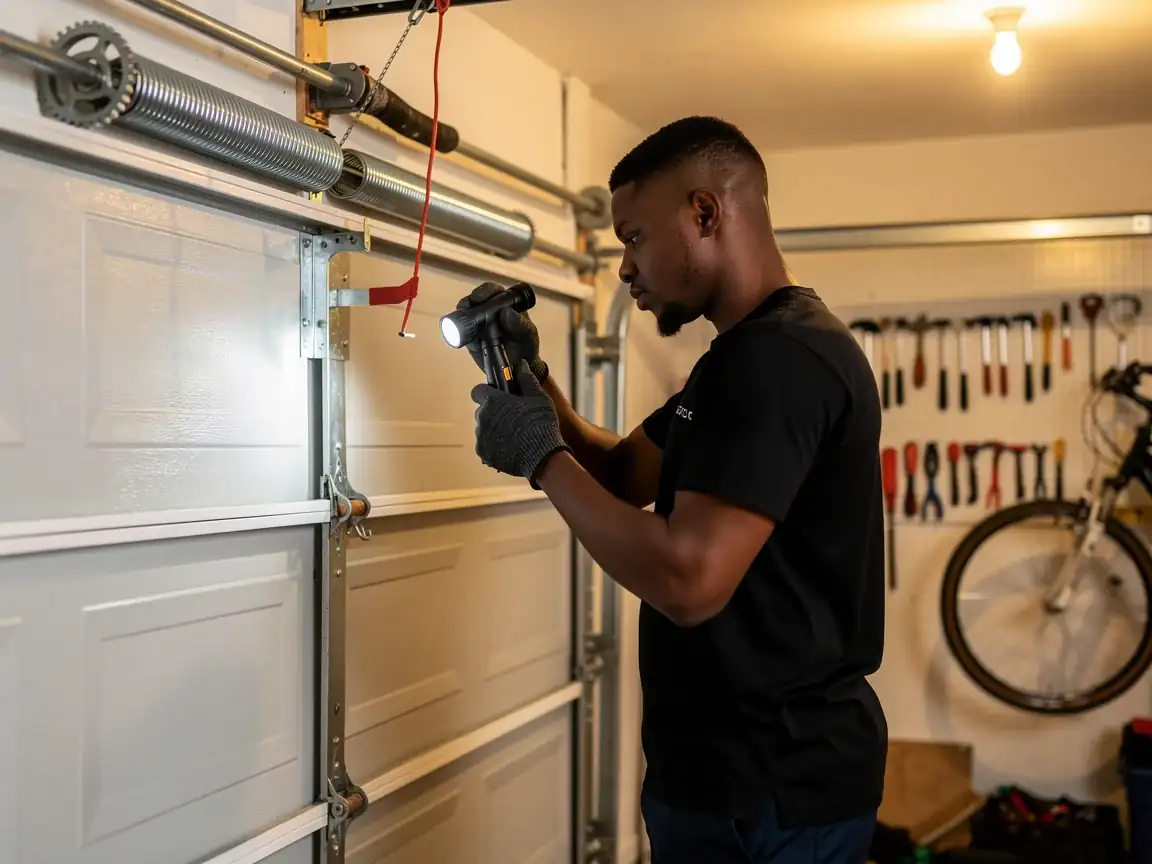
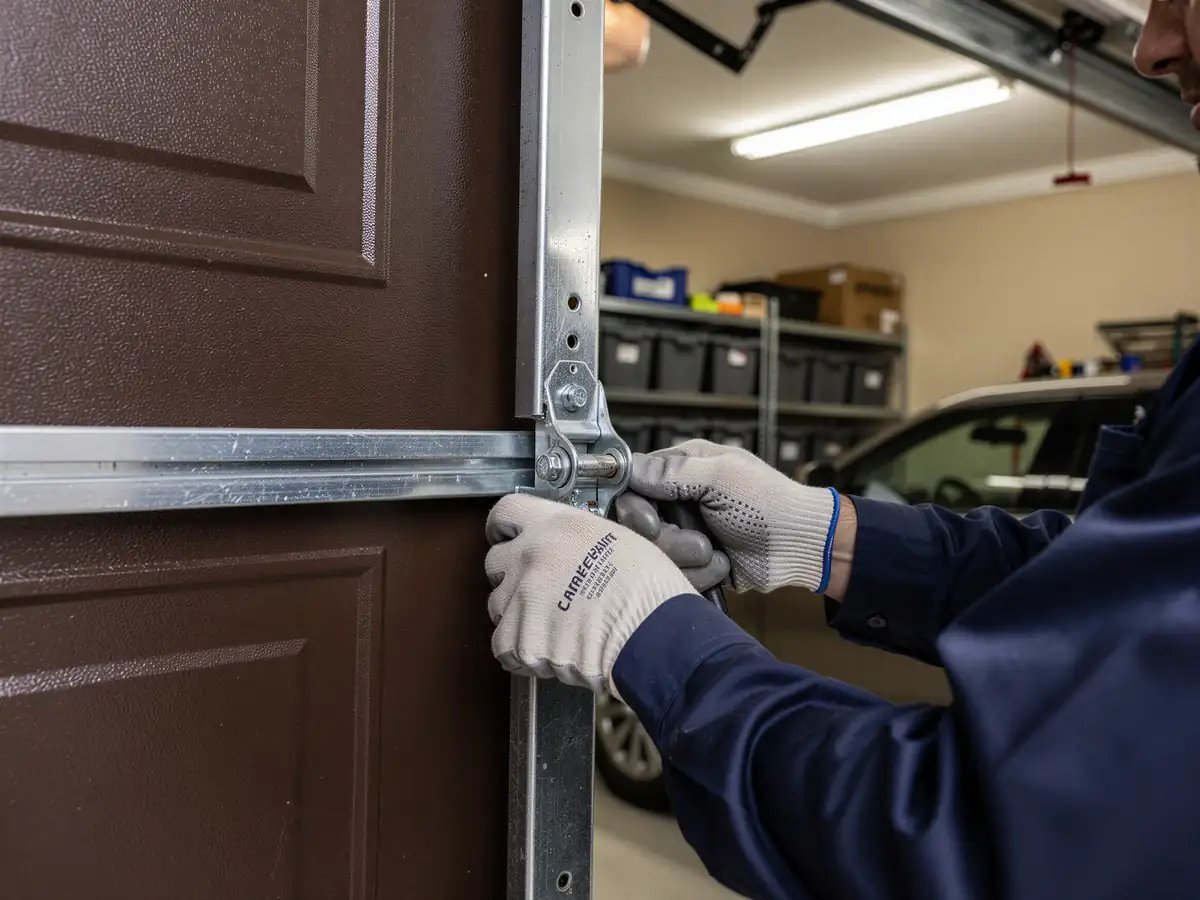
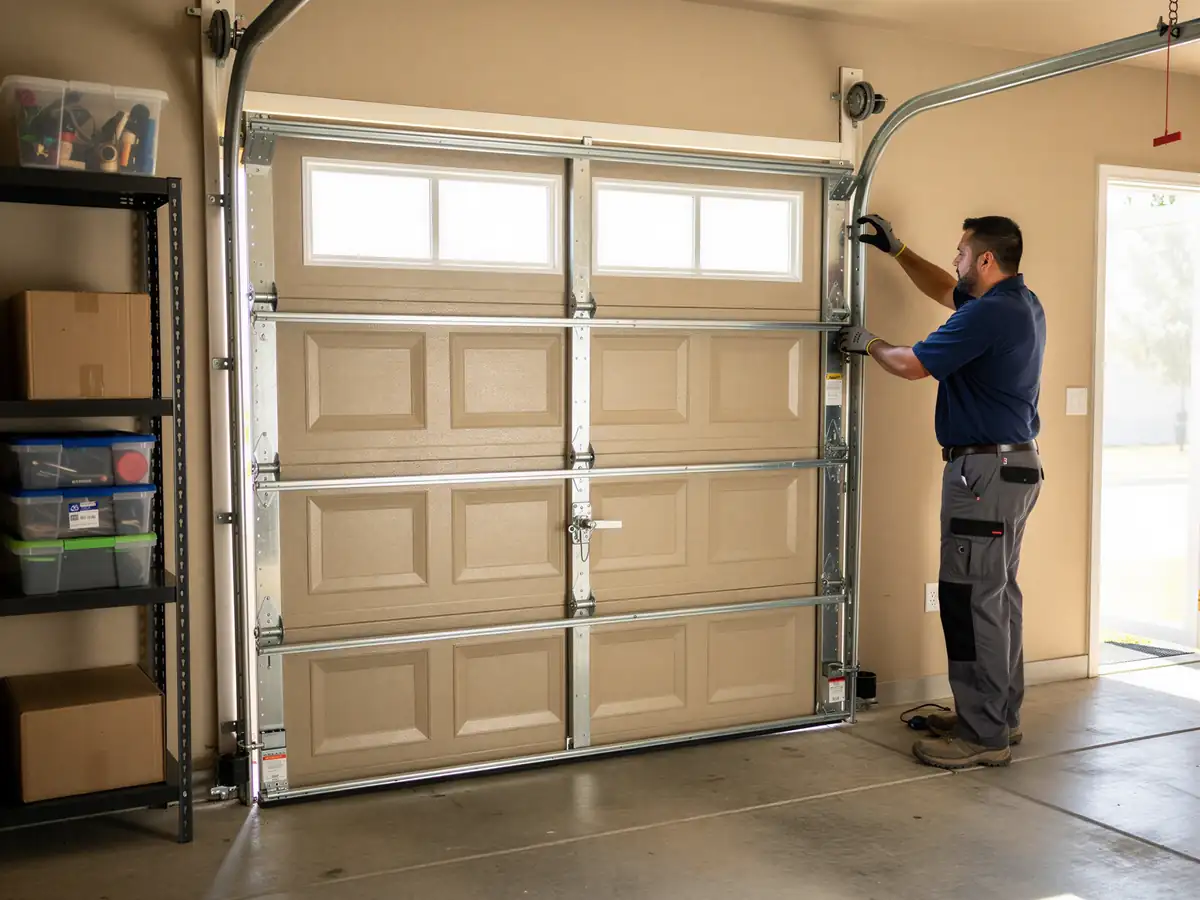
The actual repair work doesn't change much with distance. A broken torsion spring on a double door still takes the same bar, the same winding cones, the same care not to put a hand near the cable while it's under tension. What the distance changes is sequencing: we want your garage door model and the symptom on the phone before we leave, not after we arrive, so the first trip is the only trip.
If the job turns out to need a part we don't carry stock of - certain opener boards, specialty tracks for low-headroom setups - we'll say so on site rather than quote a fix we can't deliver that day.
Getting It Booked In
Tell us what you're seeing before we head out: a door that won't move at all, one that opens a few inches and stops, a spring that's visibly separated, or an opener that runs but the door doesn't move. Each of those points to a different fault, and knowing which one lets us pull the right parts for a Delafield-era door before we're on the road.
With roughly 3,229 households in Delafield and a median home age putting most garages at systems installed or replaced sometime after the late 1980s, we're usually dealing with a door and opener pairing from a narrower build window than in the older parts of the service area. That's useful - it narrows down the likely failure points fast. A stuck door on a home from this era is more often a worn roller or a misaligned safety sensor than the rusted-through hardware we see on pre-1960s housing stock elsewhere in the county.
We'll confirm the fix and the cost before anything gets replaced. If it's a weekend or late call, say so up front - we schedule the drive out from Waukesha around what you tell us on the phone, not the other way around.
Where This Job Goes Sideways
The honest limitation first
If the opener logic board that failed is an older or less common model, we may not have the exact replacement on the truck, and a same-day fix can turn into a part-order situation. That's less common on Delafield's newer housing stock than on homes from the 1940s and 50s, but it still happens, especially on openers that were themselves already a replacement years back.
Where things go sideways most often on a door from this build era isn't the spring
It's the sensor alignment. Doors installed from the late 1980s on were built with photo-eye safety sensors as standard, and those get knocked out of alignment by a bumped broom, a parked bike, even a shift in the concrete slab over the years. A door that reverses halfway down, or won't close at all with no obvious damage, is very often that - not a motor problem, not a spring problem.
The other place it goes sideways: a cable that's frayed but not yet snapped
On a double door that's been running fine for thirty-some years, a partially frayed cable can look like nothing until it lets go under load. We check both cables on every emergency call for that reason, even if the complaint is somewhere else.
What You Are Seeing
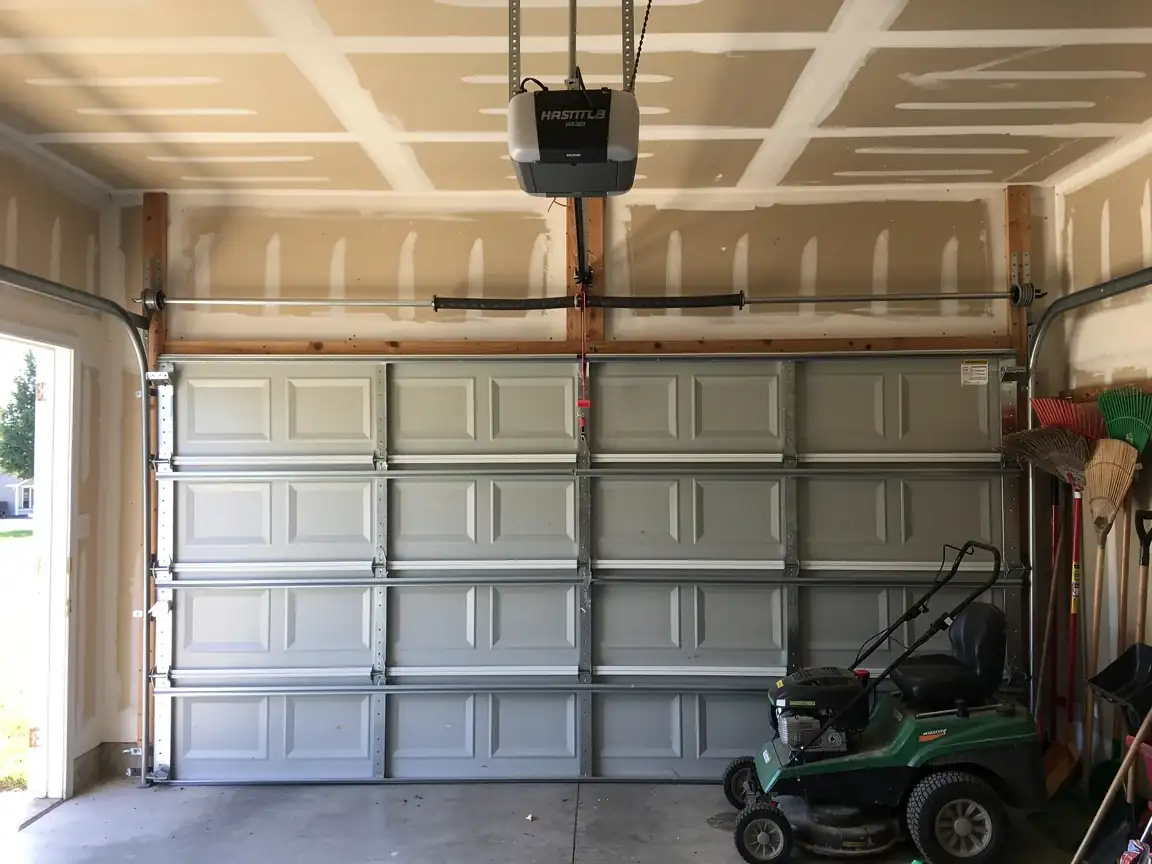
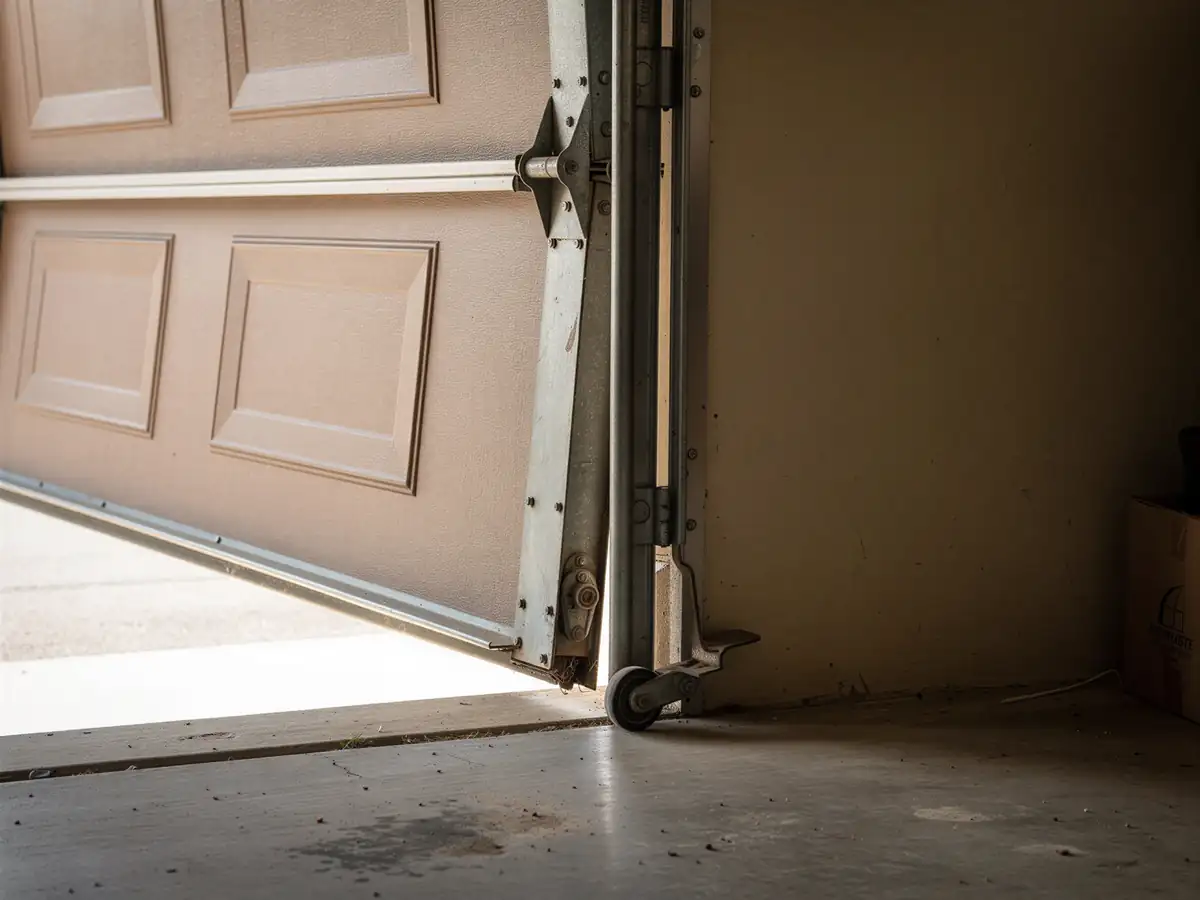
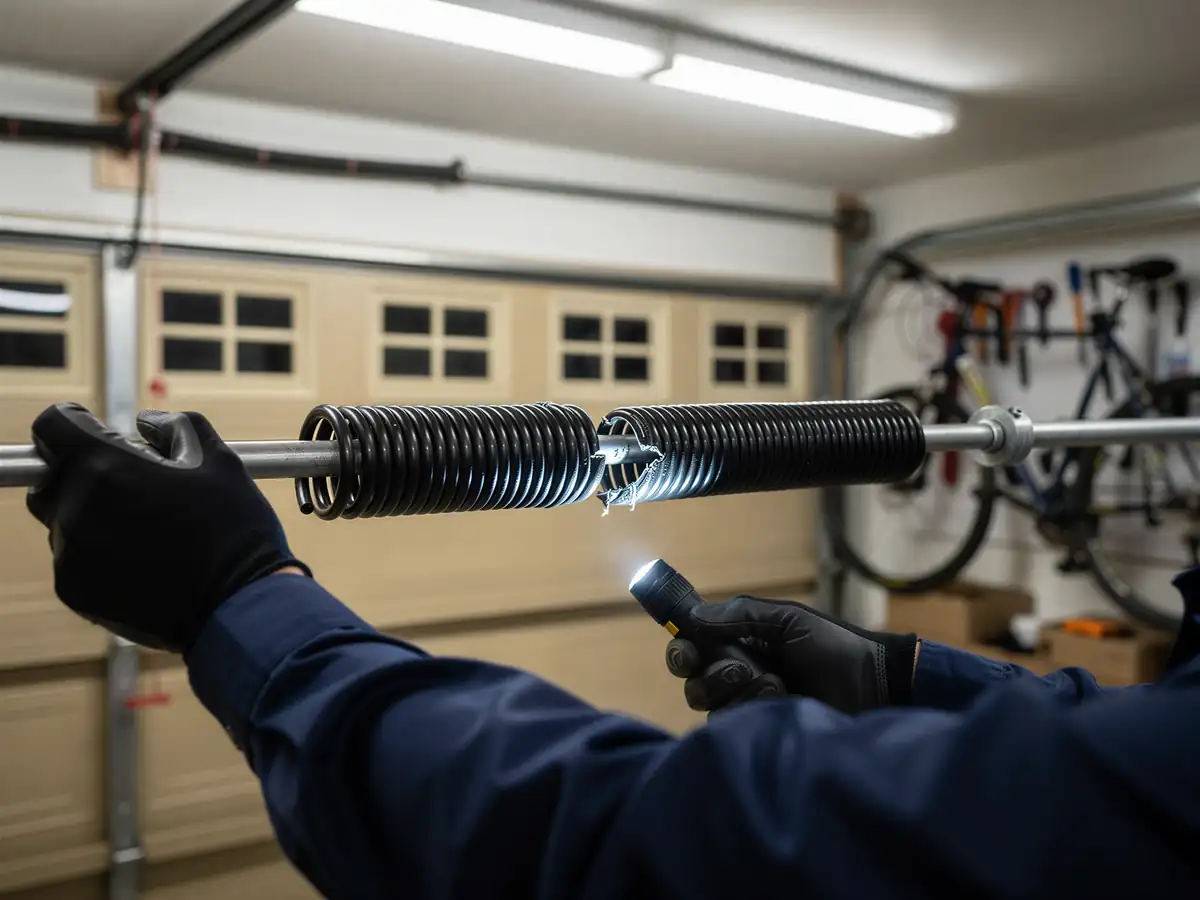
A door that drops suddenly and won't lift, even with the opener disconnected, is almost always a broken torsion spring - the spring that holds the weight of the door is gone, and the opener was never built to lift that weight alone. Don't force it by hand or by motor; that's how a cable lets go next.
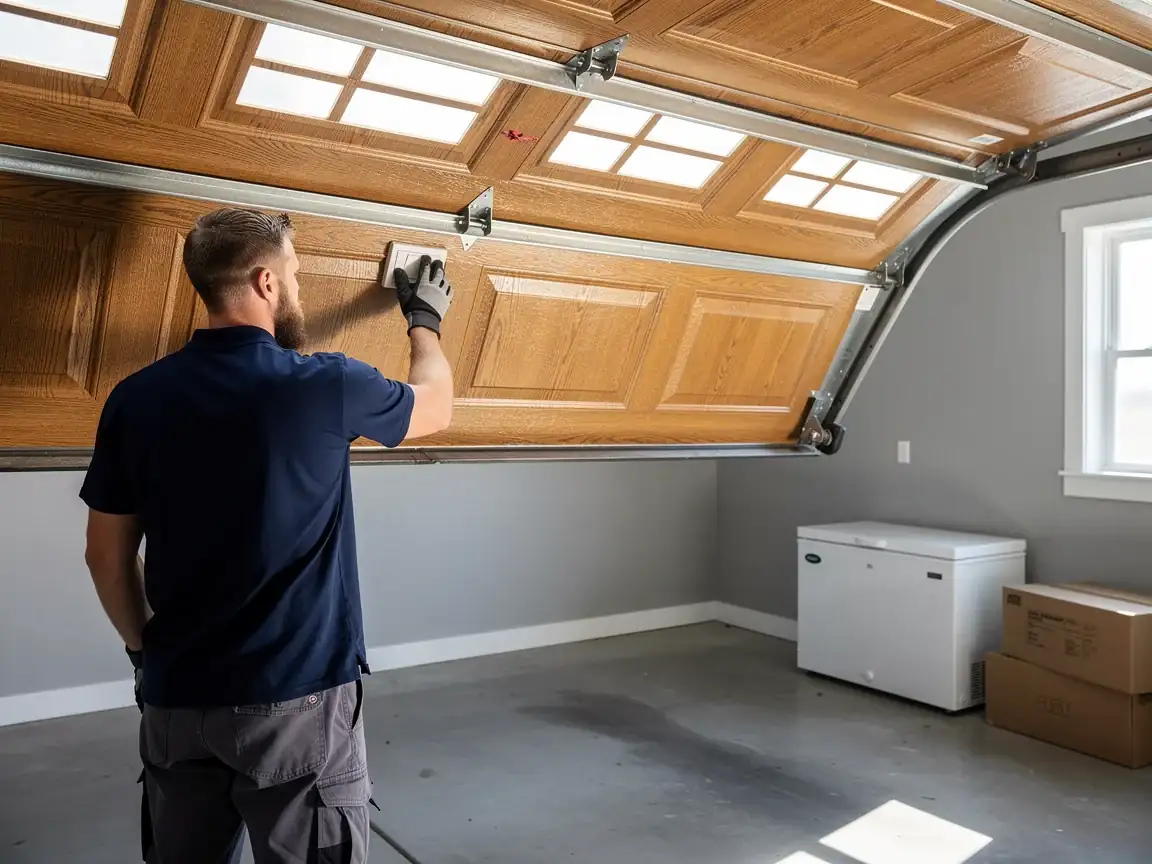
A door that opens partway and reverses, or won't close with the room clear, points to the photo-eye sensors near the bottom of the tracks. Check for a flashing light on the opener unit - most units from this era signal a sensor fault with a specific blink pattern, which tells us before we even arrive whether it's a five-minute alignment or something else.
A door that's silent, with the opener light not even coming on, usually means a tripped breaker or a dead circuit board rather than anything mechanical - worth a quick breaker check before you call, since it can save you the visit entirely.
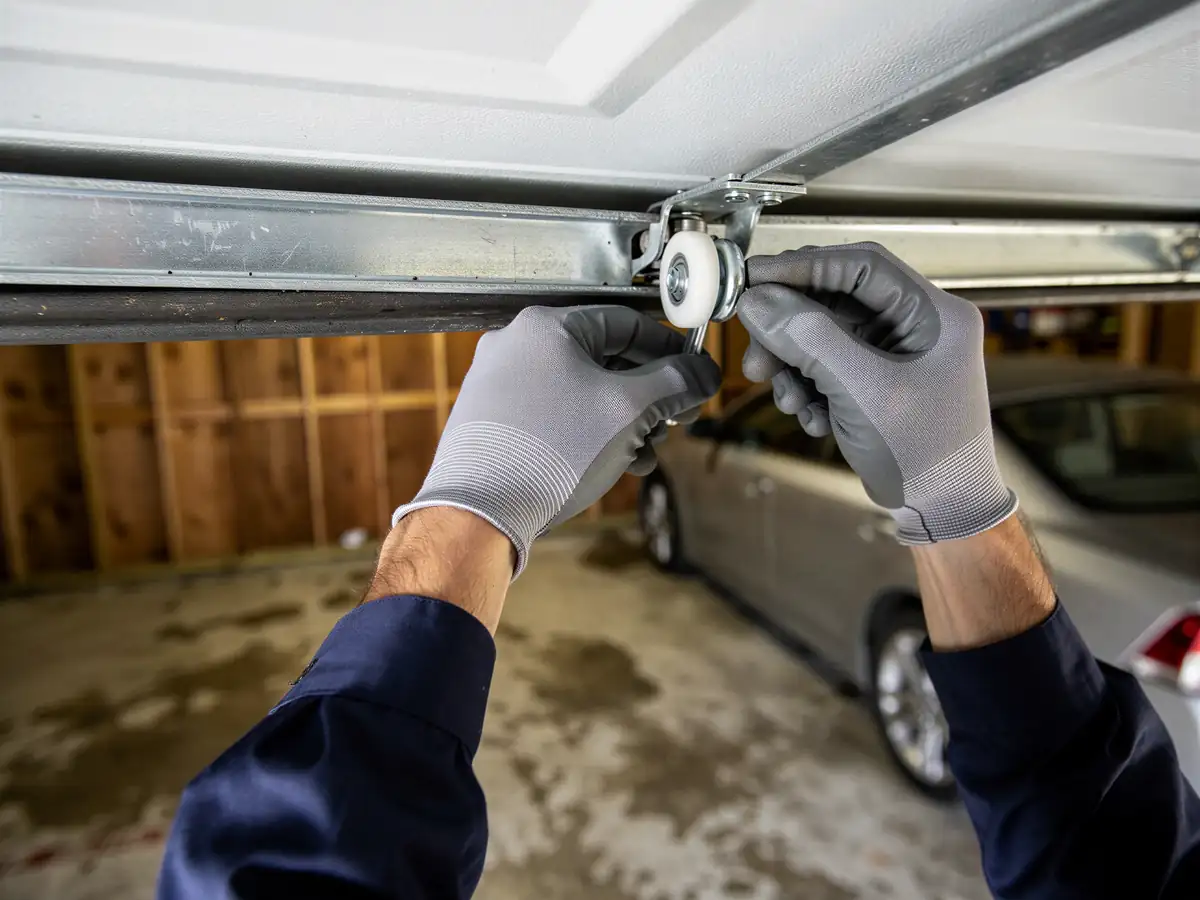
A grinding or popping sound on the way up, especially on colder mornings, usually comes down to a roller or hinge that's worn past lubrication helping. That one's not an emergency, but it becomes one if ignored.
What Causes It Around Here
The service area overall runs from homes built as far back as 1938 up through 2004, with a lot of that stock dating to the 1960s and 70s, but Delafield's own median sits later, around 1987. That later build date matters for failure patterns: steel sectional doors with factory-installed torsion springs and photo-eye sensors became standard around then, which means fewer of the odd side-mounted or single-panel setups we run into on the oldest housing closer to the center of the service area, and more straightforward torsion-spring failures and sensor issues instead.
The climate band for this whole area is classified cold and severe, and that's the other half of it. A steel door's weatherstripping and the grease in a spring's coils both stiffen in a hard freeze, and a cold snap after a few mild days is a common trigger for a spring finally giving out - it was already fatigued, and the cold took the last bit of give out of it. On a household income level that in Delafield runs above the wider area's $108,690 median, we also see more owners replacing a worn opener proactively rather than running it to failure, which shows up as fewer total emergency calls here relative to older, lower-turnover housing nearby.