What the Repair Takes
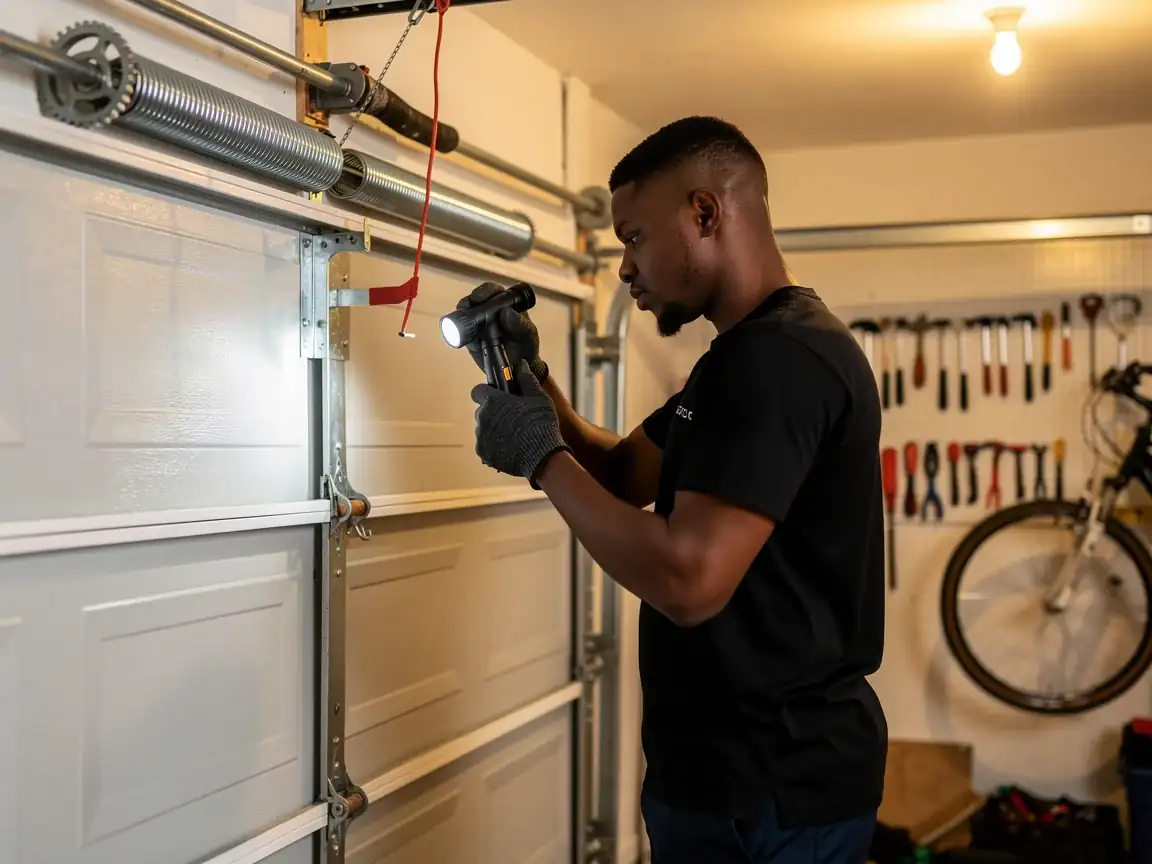
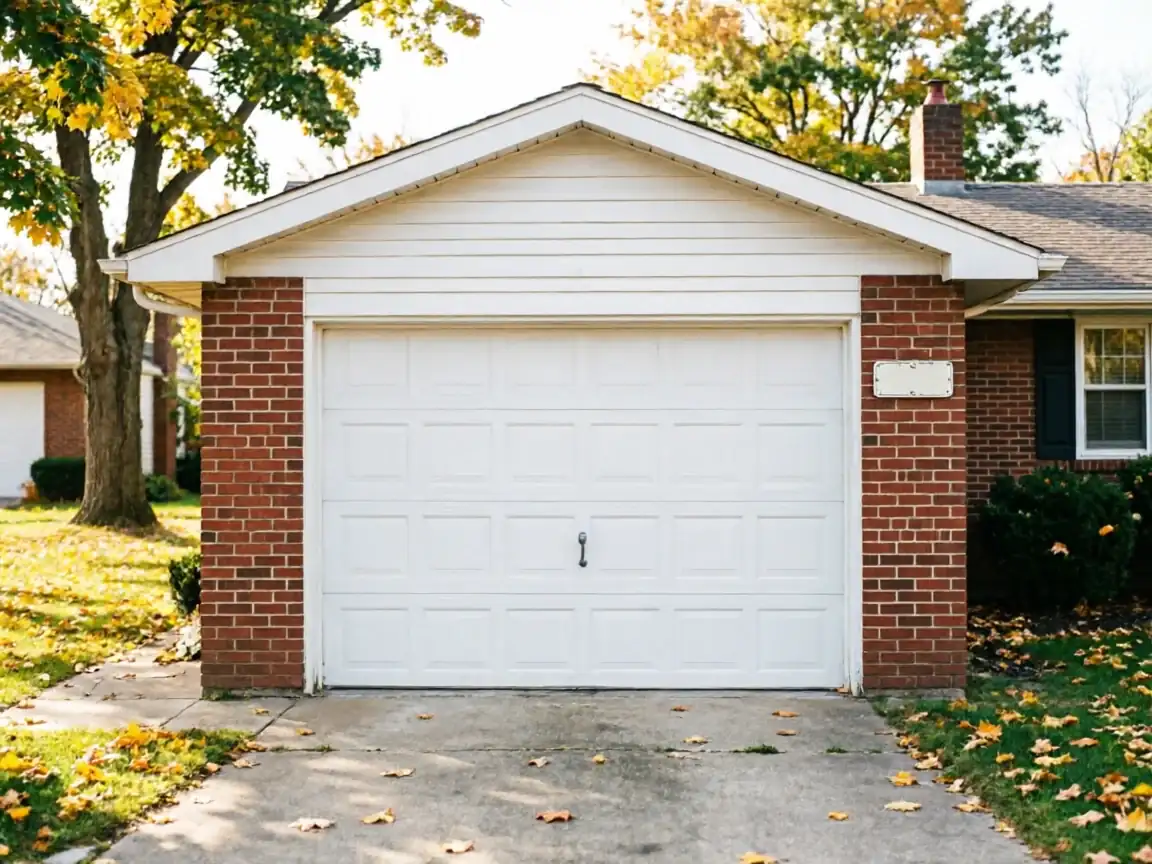
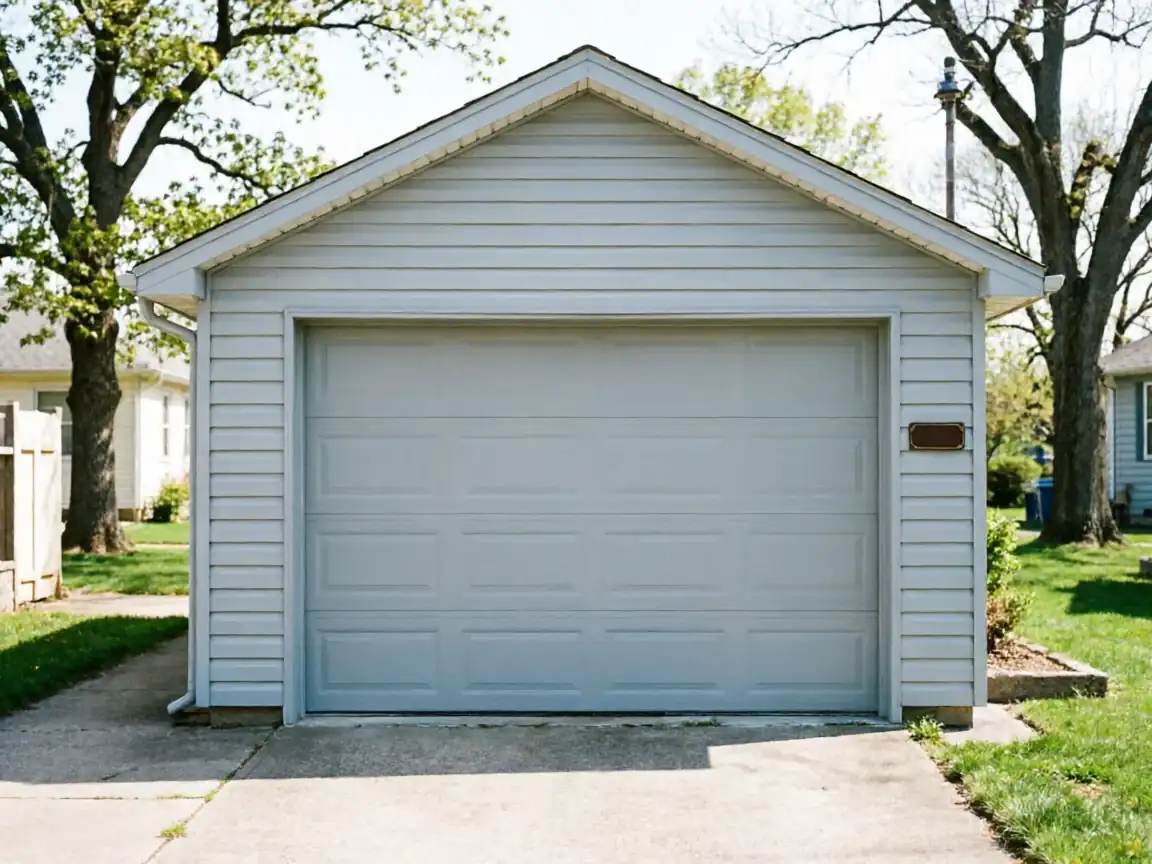
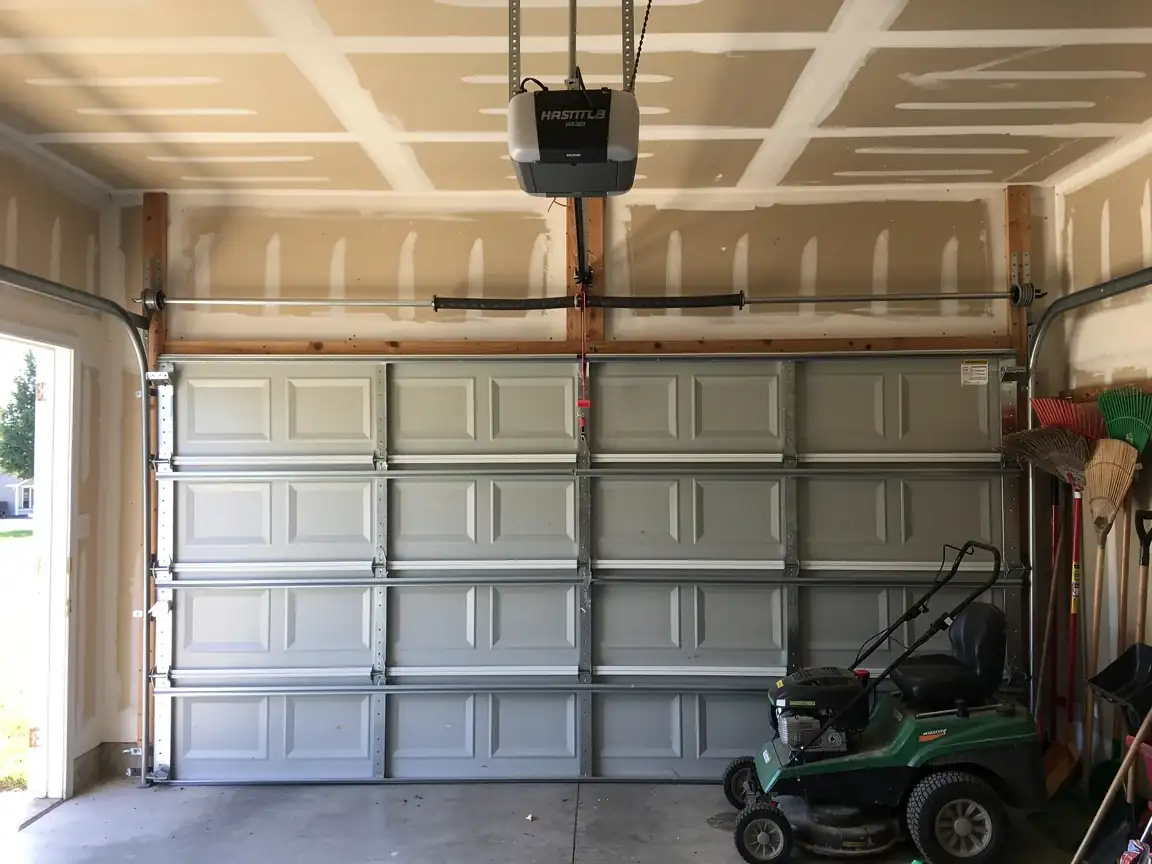
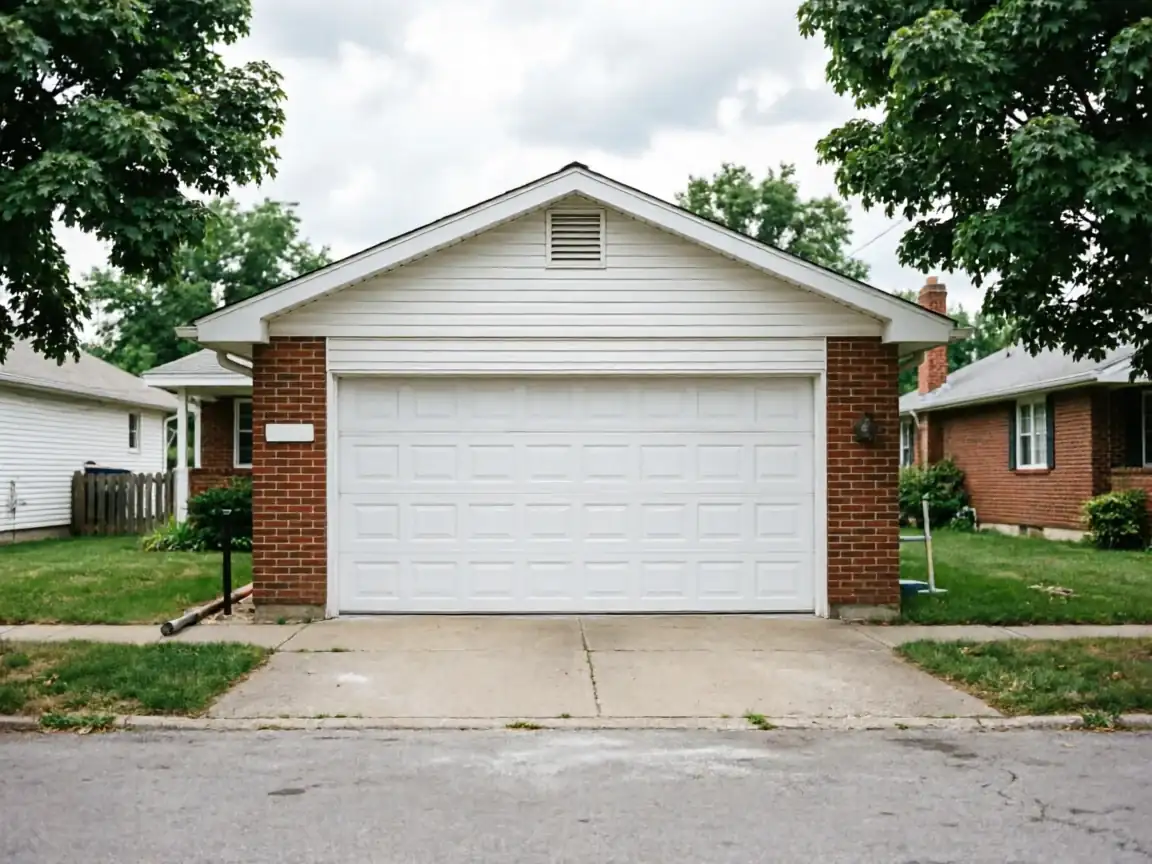
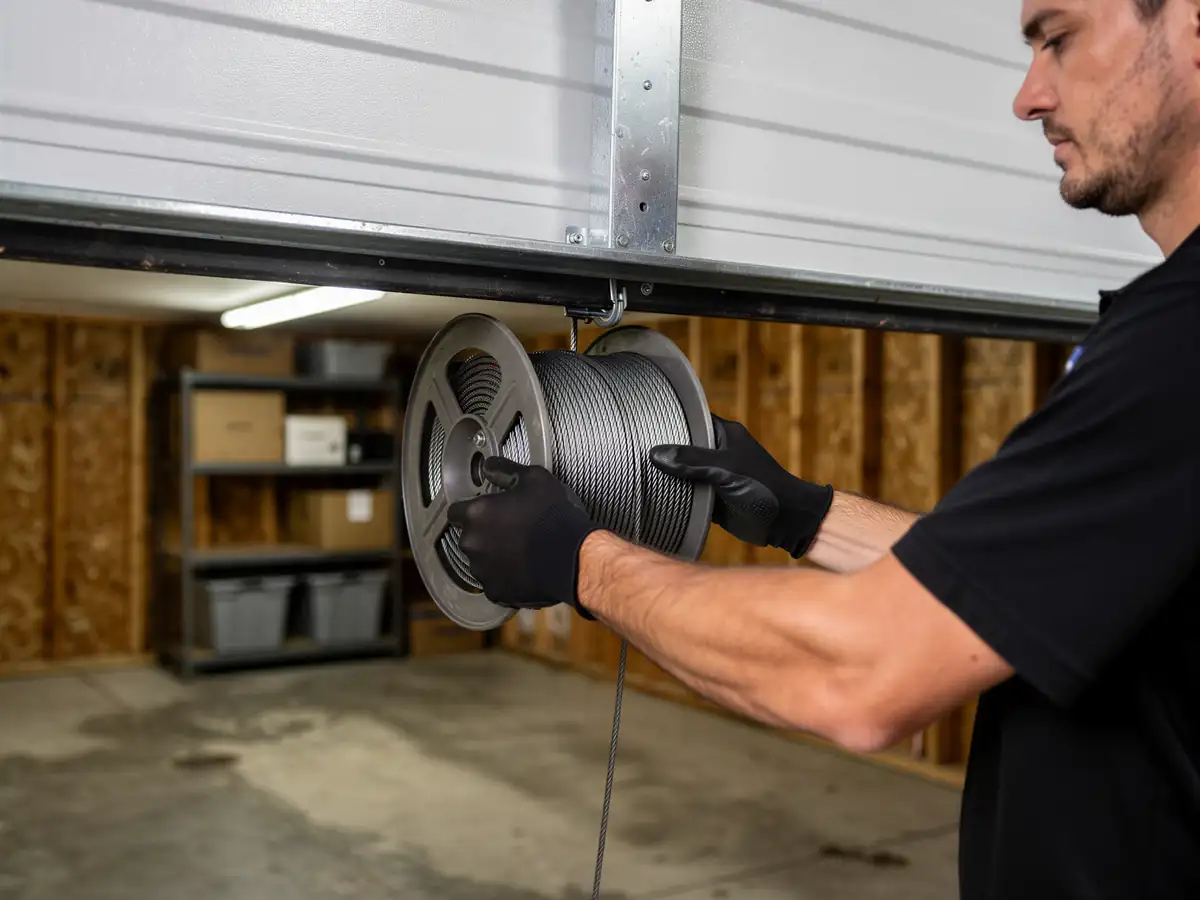
Most garage doors in Wales went up with the house, and the typical build year here lands around 1979. That means you're usually looking at a double-car steel door, two panels wide, running on a torsion or extension spring setup that was standard for the era - galvanized lift cables looped through a drum at each bottom bracket, not the nylon-coated kind you'd find on anything built in the last decade or so. These doors are heavier than what gets installed new today, and the cable has to pull more weight through more rust-prone hardware after 45 years of winters. A proper cable repair means pulling the old cable off the drum, checking the drum itself for grooving, and matching the new cable length and gauge to the door's actual weight - guessing at gauge is how you get a second failure in six months. We don't patch a frayed cable with wire or tape; it comes off and gets replaced as a pair, left and right, even if only one side broke.
What You Are Seeing
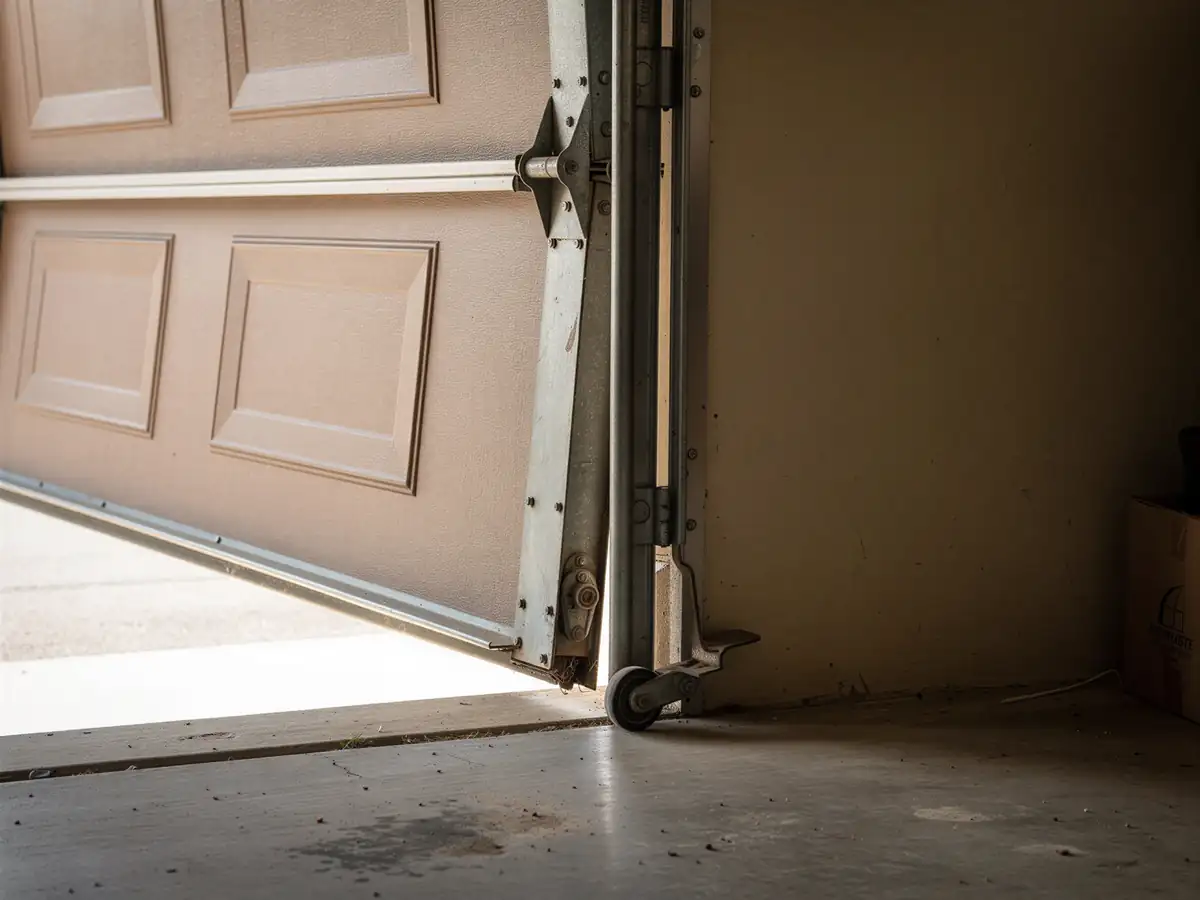
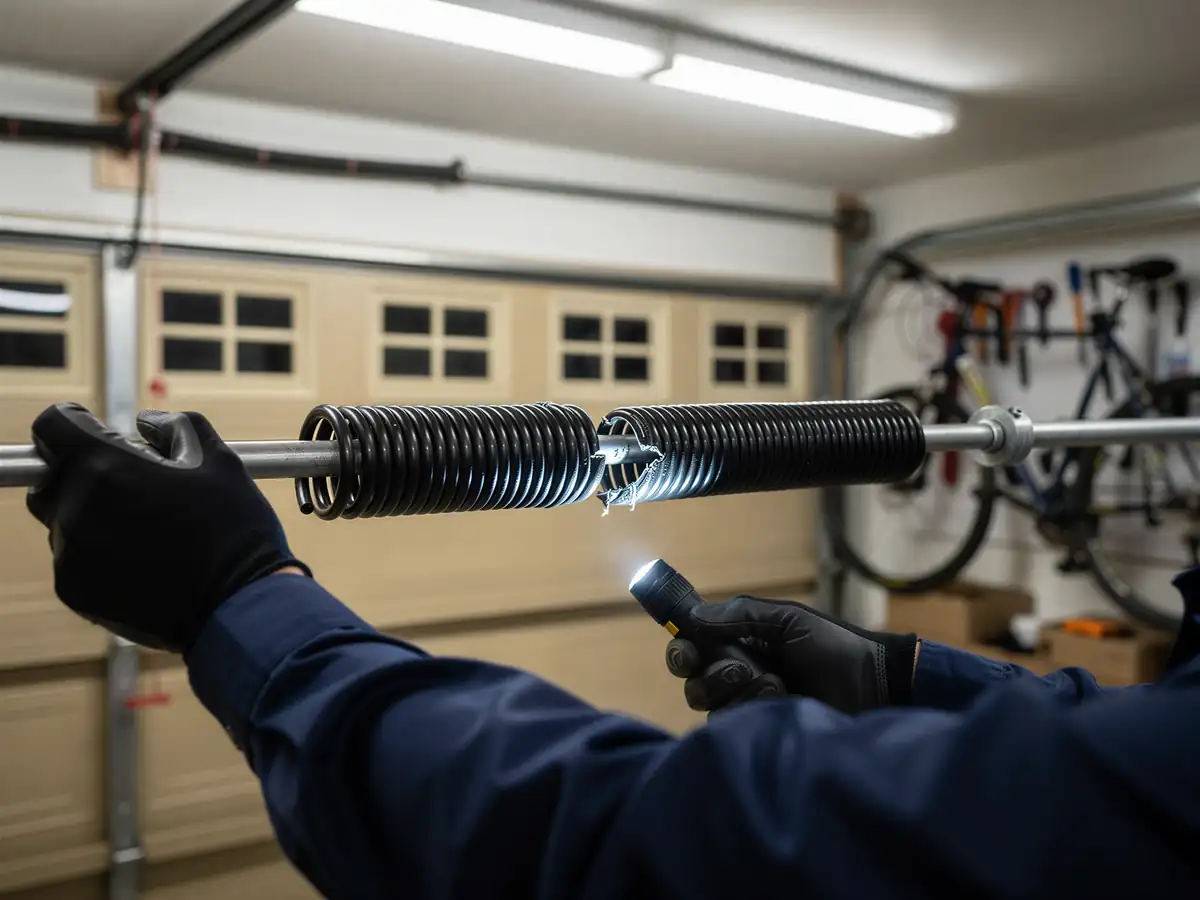
A cable failure on one of these doors usually shows up one of two ways. Either the door drops crooked - one corner lower than the other, sometimes jamming in the track - or it won't move at all because the opener senses the imbalance and locks out. You might hear a snap first, a loud metallic pop as the cable lets go under tension, or you might just notice fraying wire strands curling off the drum before it fully breaks. On the older torsion setups common to this area's 1979-ish housing stock, a broken cable almost always means the spring side took stress it wasn't built for, so don't be surprised if the spring needs a look too. Winters here are cold enough that steel cable gets brittle at the ends where it wraps the drum, and that's the spot that goes first after years of flexing in sub-zero temperatures.
How Long It Takes
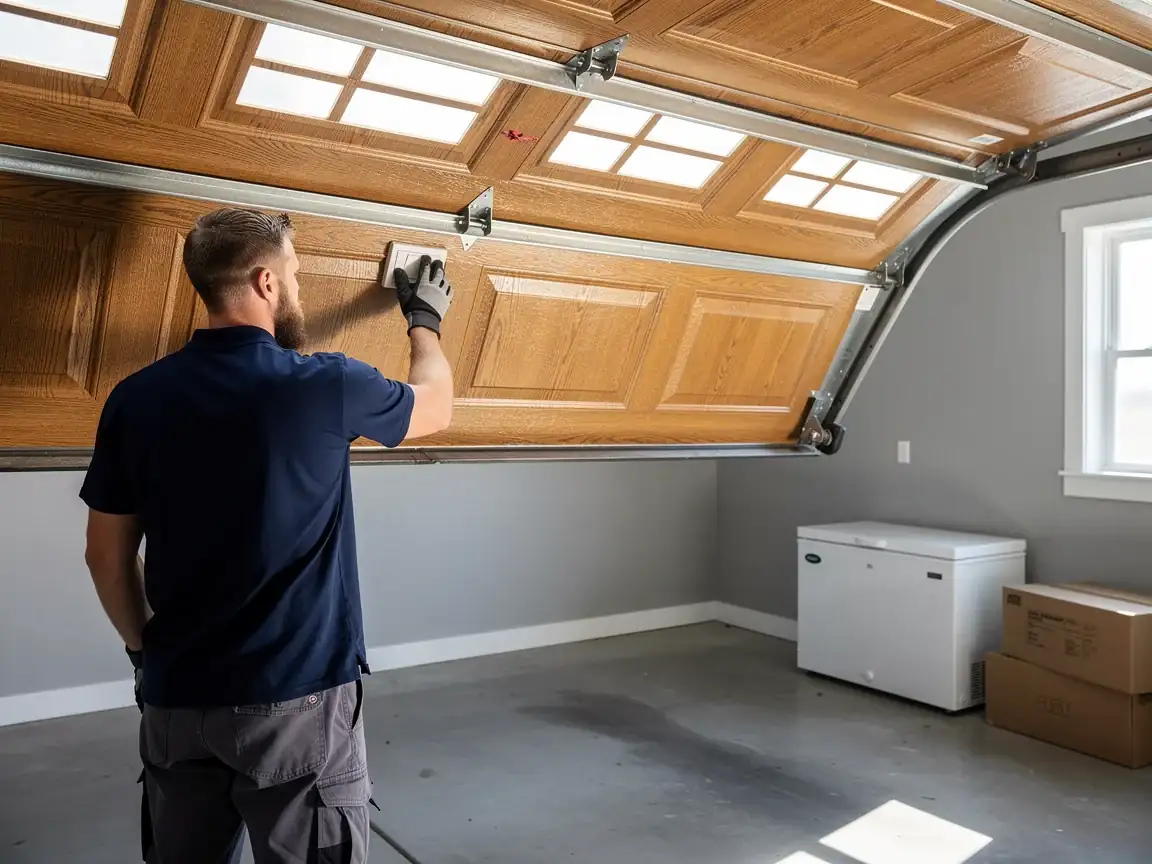
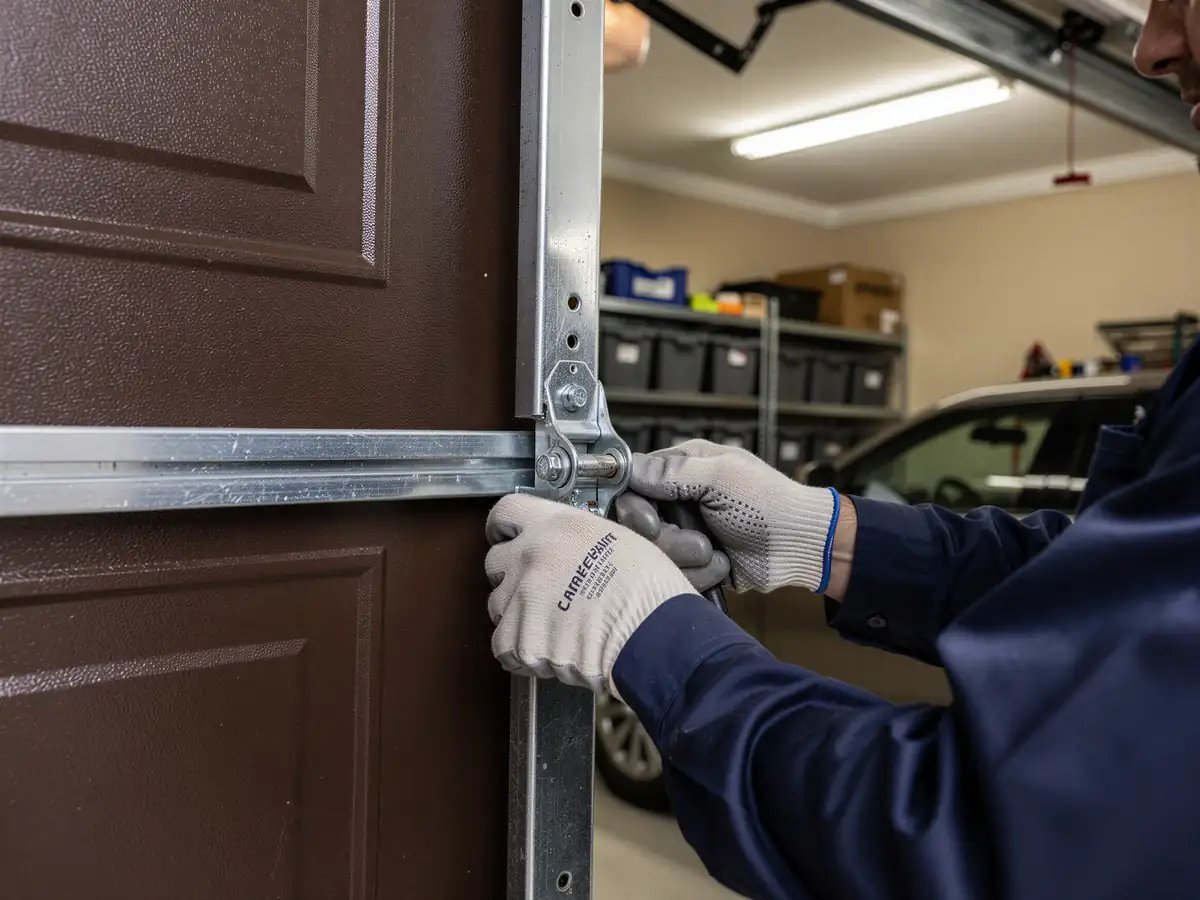
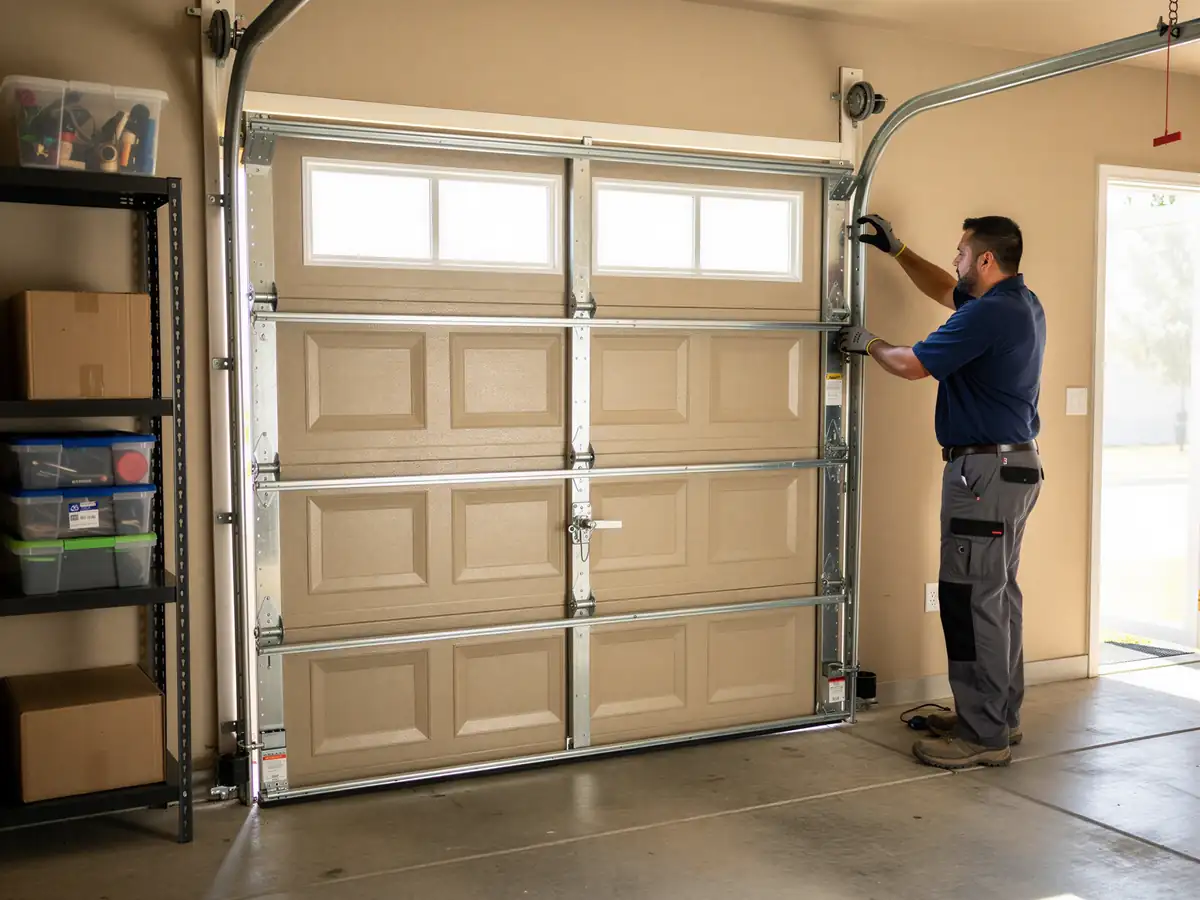
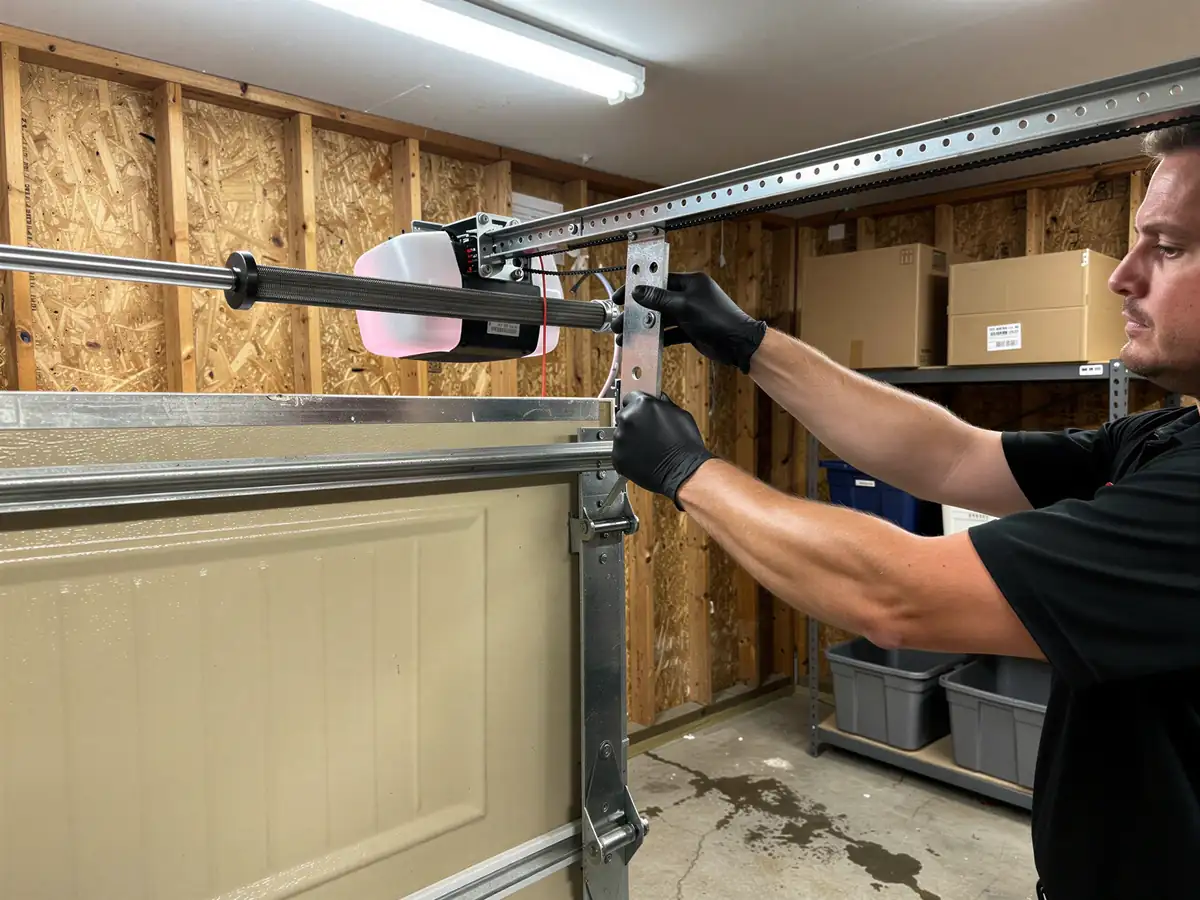
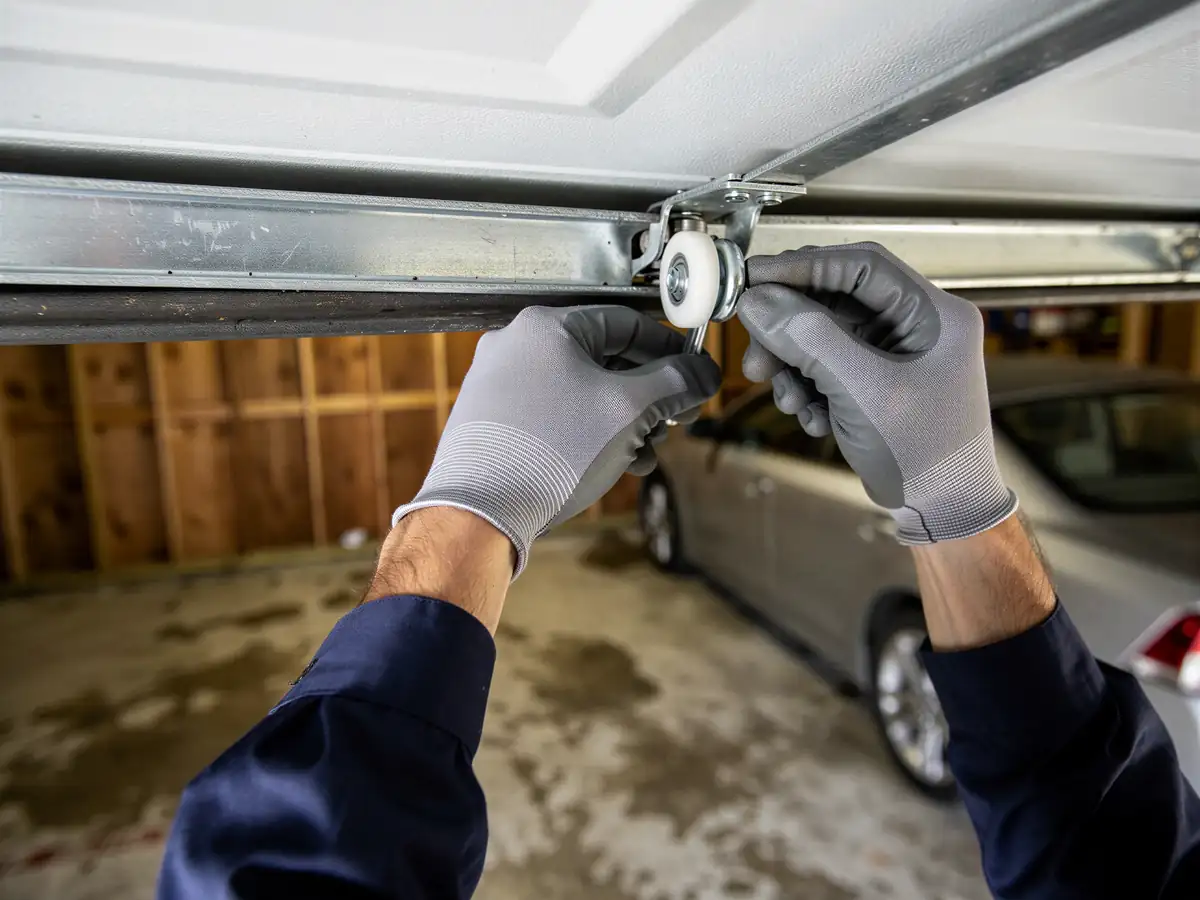
A straightforward two-cable replacement on a double door, once the technician's on site, doesn't take all day - it's a matter of releasing spring tension safely, pulling both old cables, fitting new ones to the drums, and rebalancing the door so it holds at any point when you lift it by hand. Where it runs longer is when the drum or the bottom bracket itself has worn a groove from the old frayed cable, which is common enough on doors from the 1979 range of construction that we check for it as a matter of course. If a bracket needs replacing too, that adds time and a part that isn't always on the truck already, since we stock for the typical job, not the exception.
Where This Job Goes Sideways
Cable repair turns into something bigger when the broken cable has let the door slam down hard enough to bend a track or crack a bottom panel - at that point you're not just replacing cable, you're pulling the door apart further than planned. It also goes sideways when someone's tried a temporary fix, like looping the broken cable back through the drum by hand; that stresses the drum in ways that make it unsafe to just replace cable alone. And honestly, on a door old enough to match the 1979-era housing common around here, if the drums are badly grooved or the springs are original too, sometimes the straight answer is that cable repair alone won't get you a door that holds up - replacing the full spring-and-cable assembly costs less in the long run than fixing one piece at a time. We'll tell you straight if that's where your door is at, rather than billing you twice.