What the Repair Takes
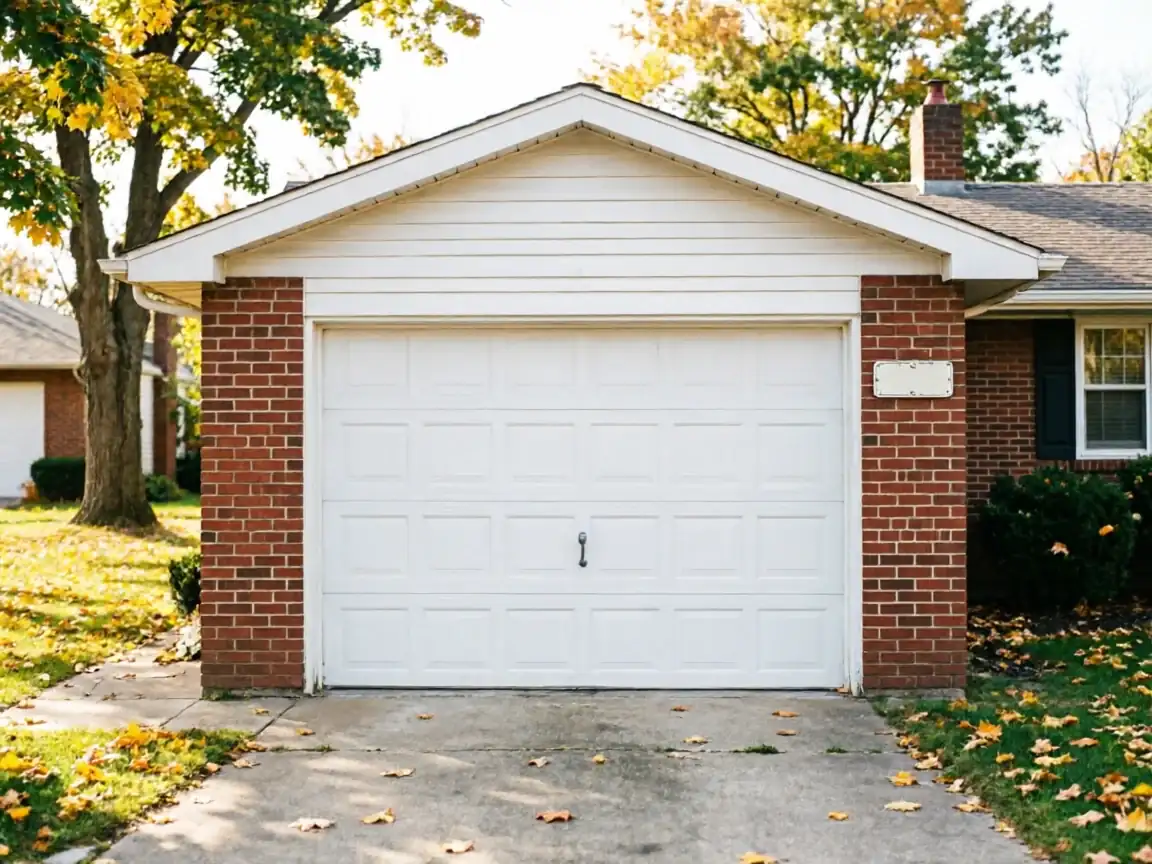
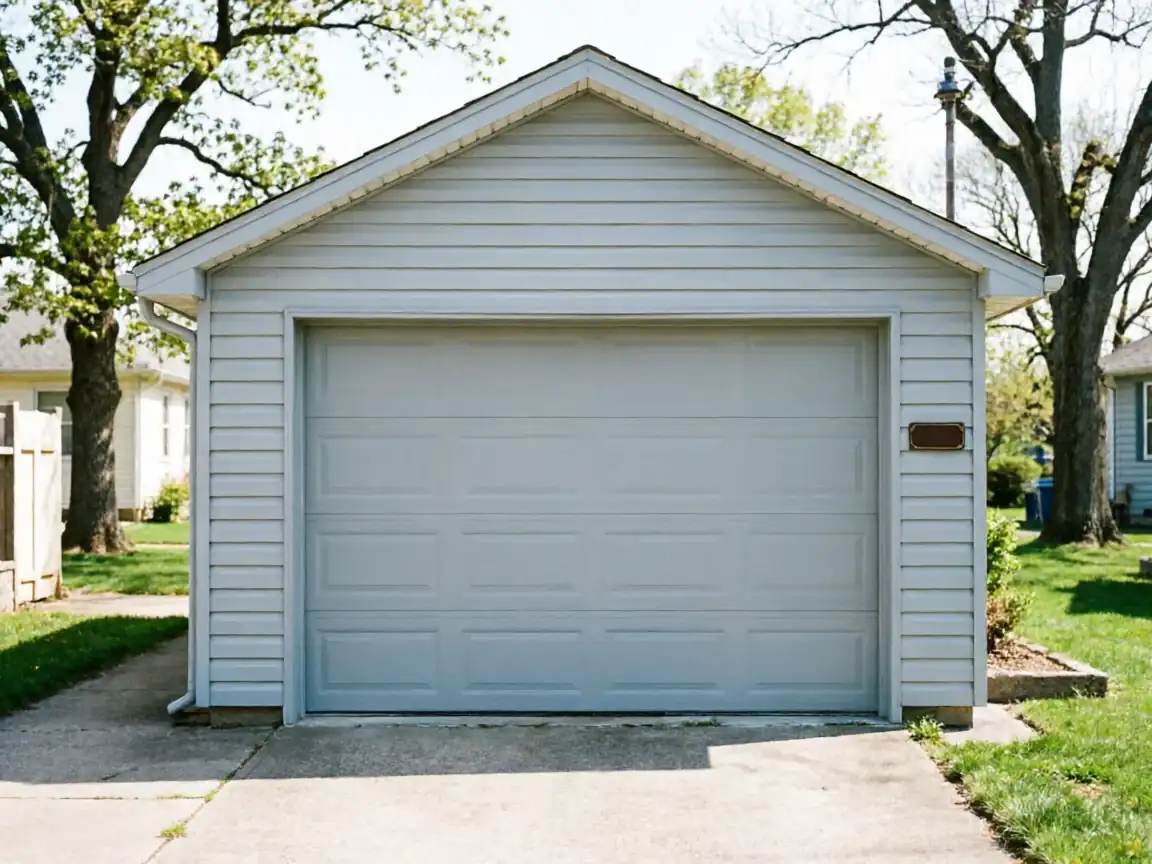
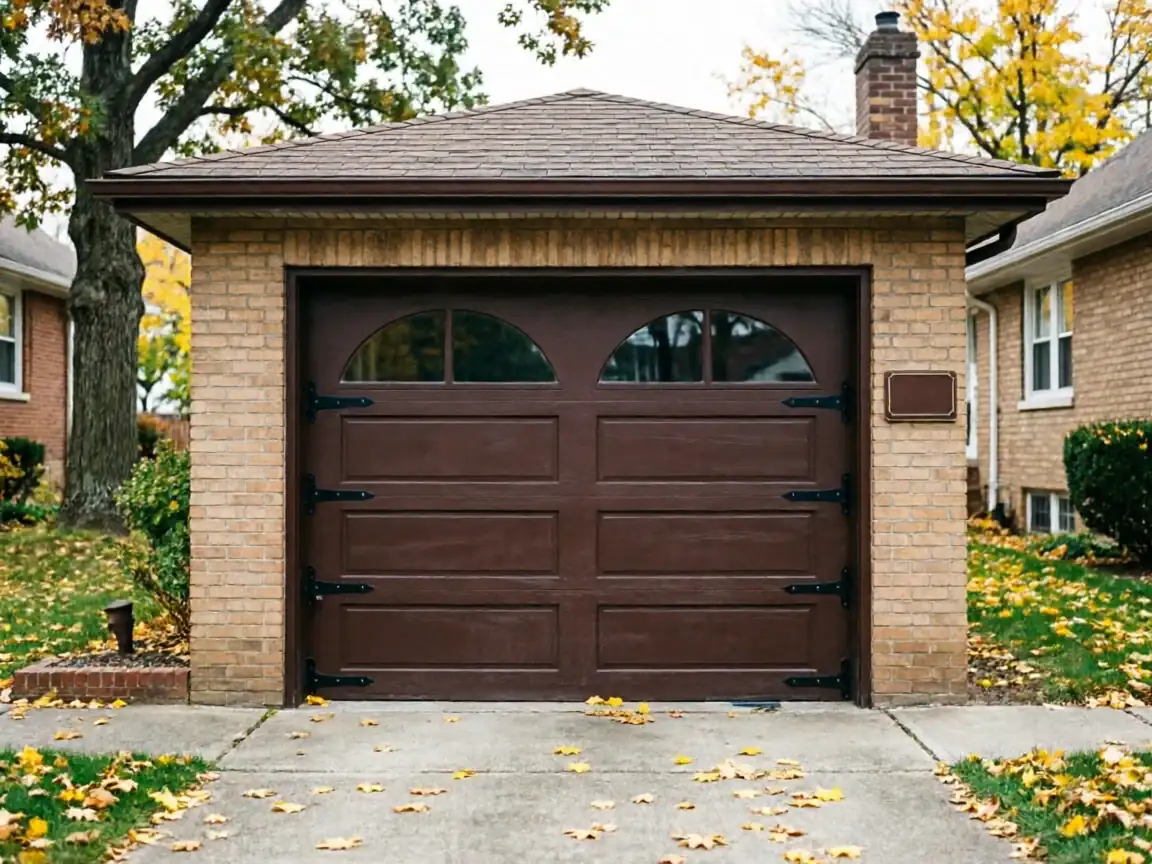
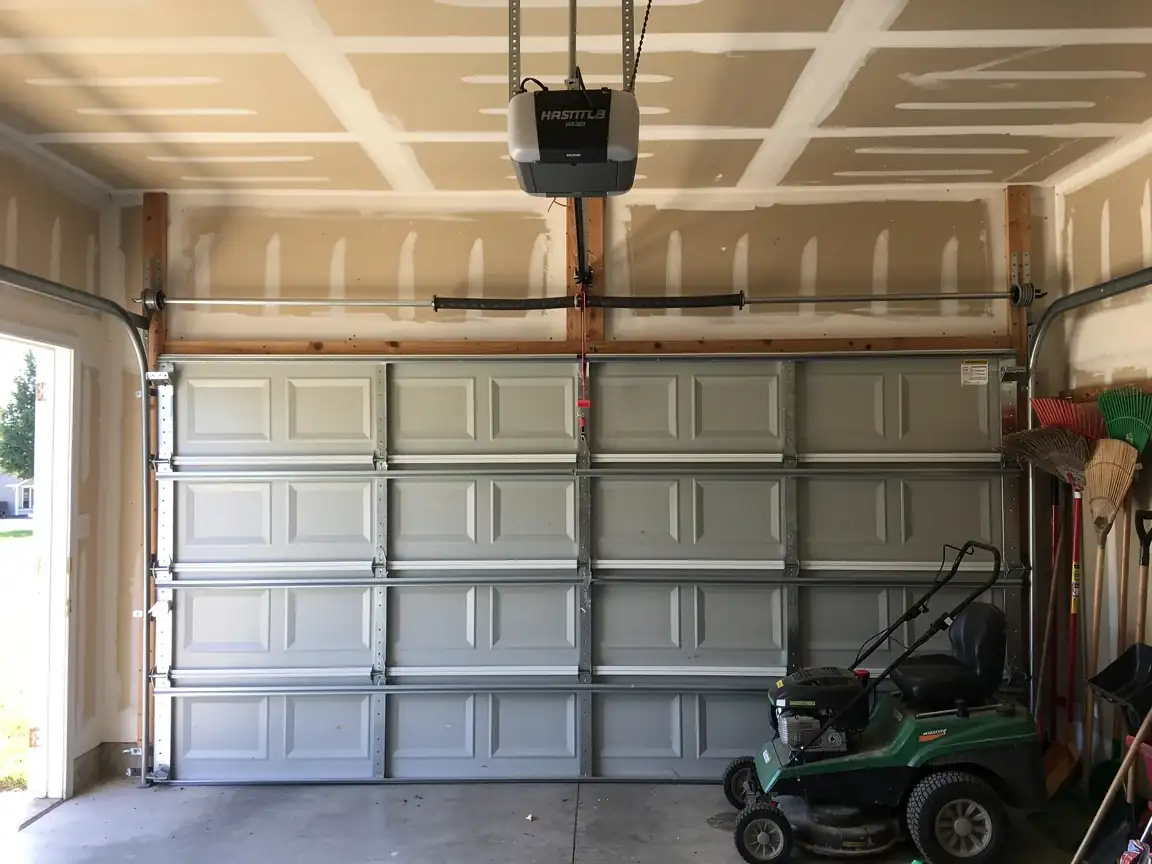
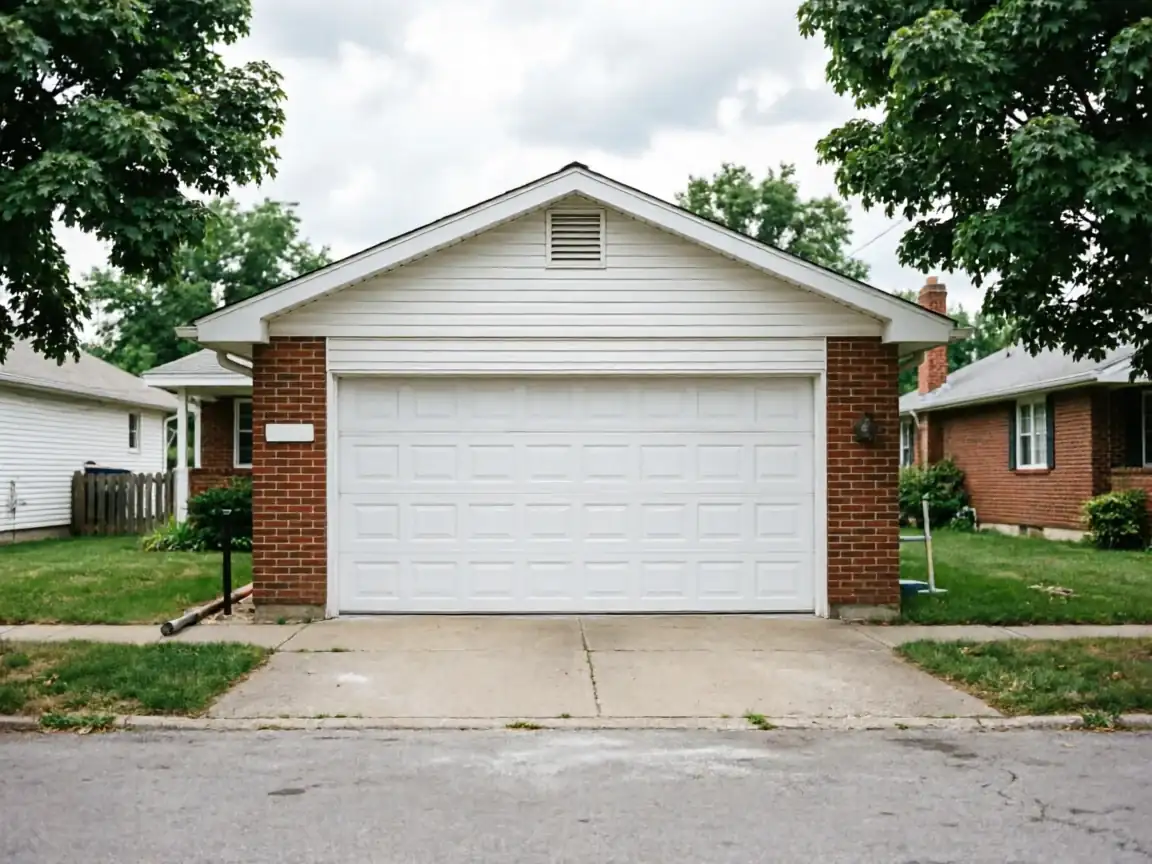
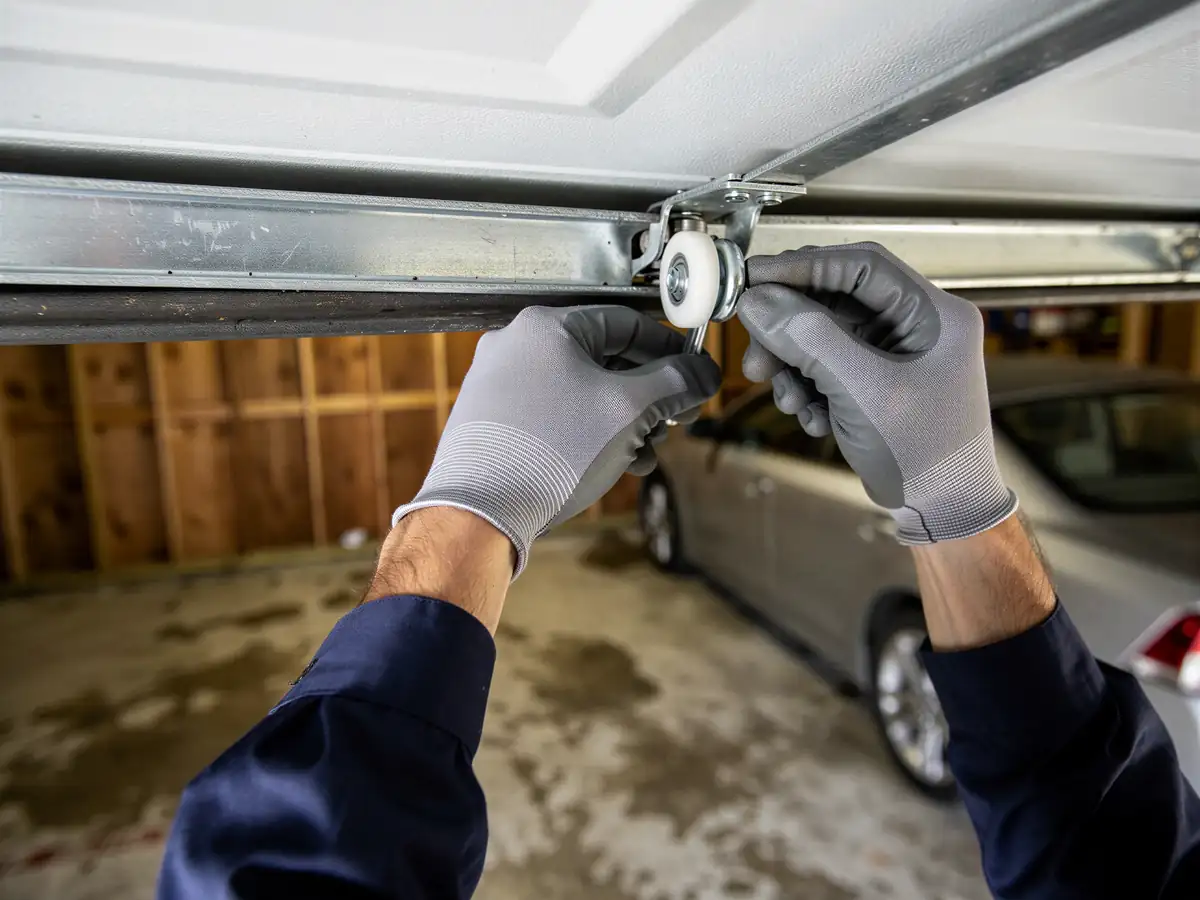
Most houses in Wales went up around 1979, which puts a lot of them right in the middle of that late-70s building push across this part of Waukesha County. Doors from that era were usually steel sectional panels on extension springs mounted along the horizontal track, not the torsion bar setup that's standard on anything built in the last twenty years. That matters for an emergency call: extension spring doors fail differently, and they come apart faster because the hardware holding them is thinner-gauge and the safety cables that are supposed to catch a broken spring are often missing entirely since they weren't required when the door went in. A repair truck coming out for a Wales address needs to bring both torsion and extension spring stock, because you genuinely don't know which one you're walking into until the door's open. Original rollers from that period are usually steel, not nylon, and they've had forty-plus years to wear the track lip round, which throws the door off-balance even before a spring goes. None of that is a Wales-specific defect - it's just what a house built in 1979 came with, and what's still bolted to the header unless somebody's replaced it.
What You Are Seeing
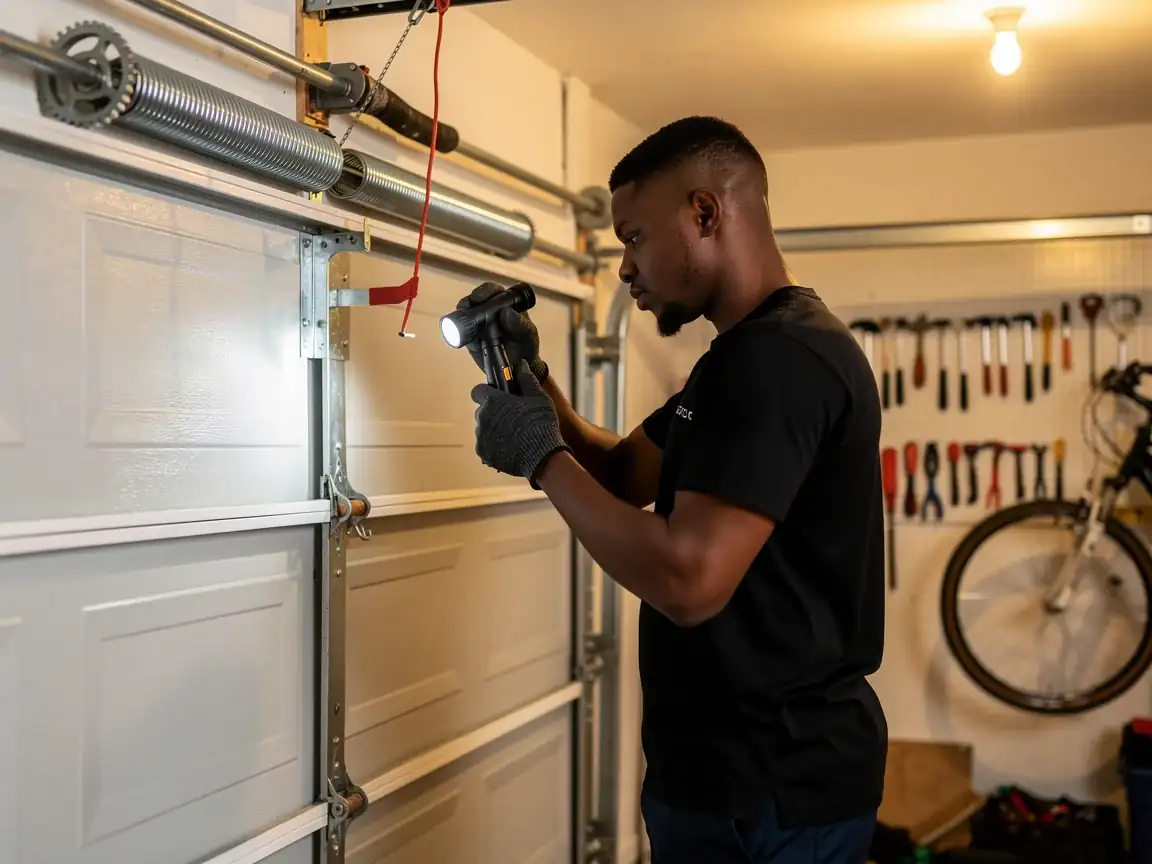
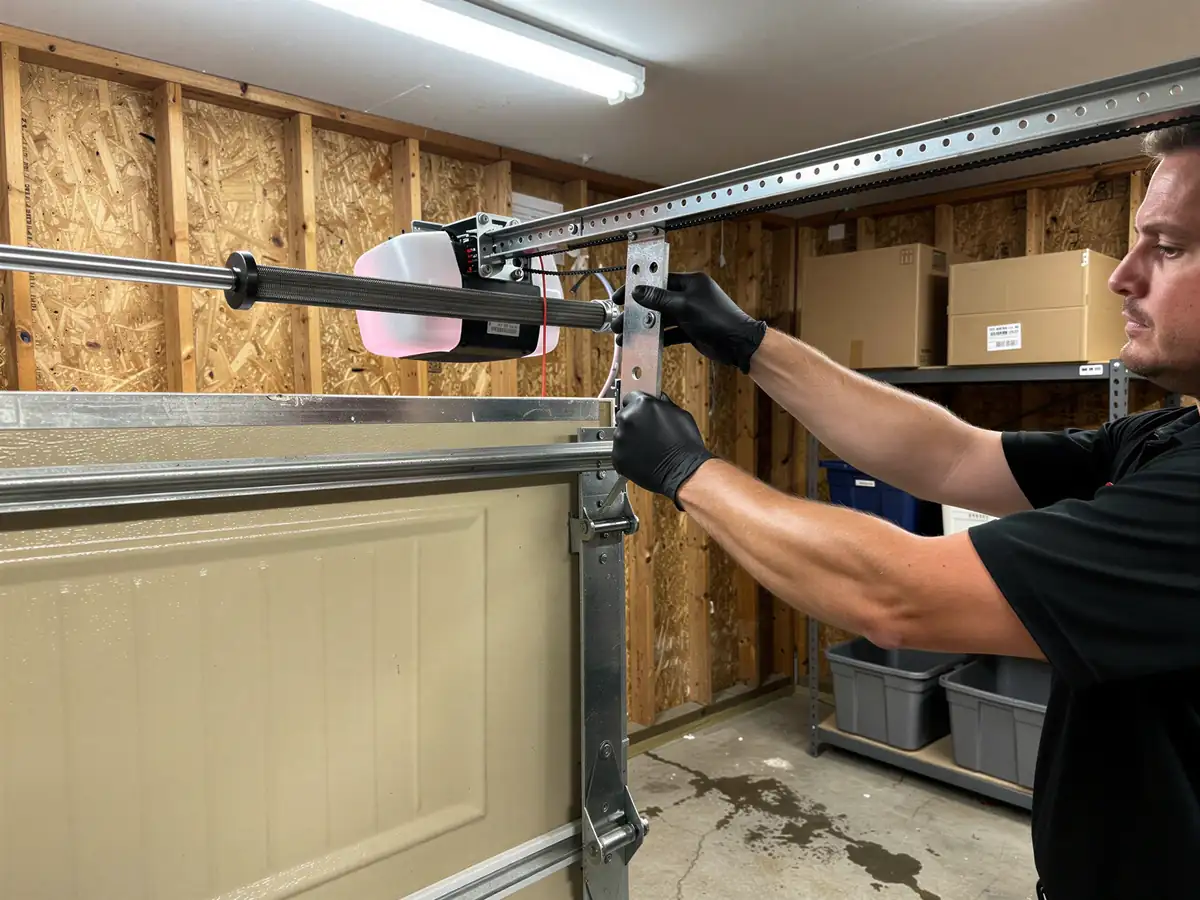
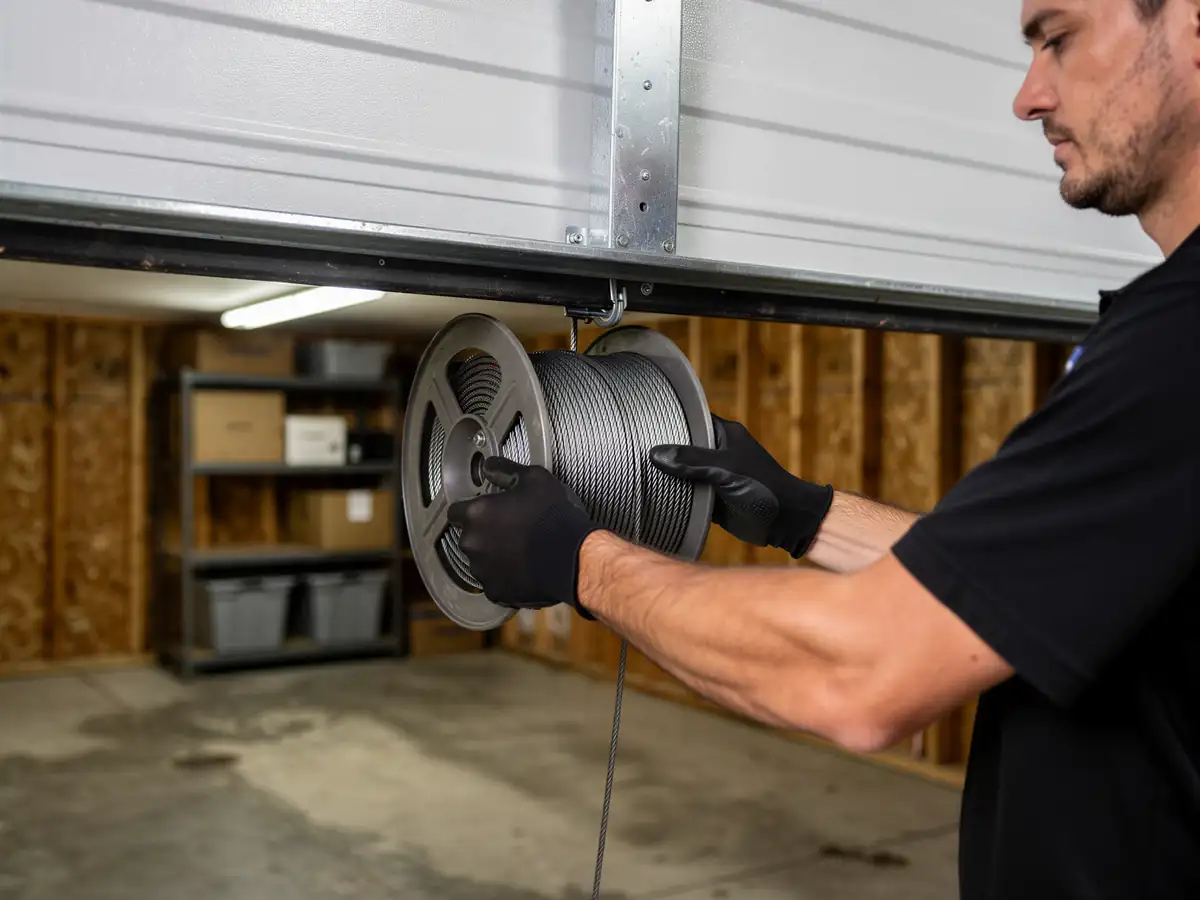
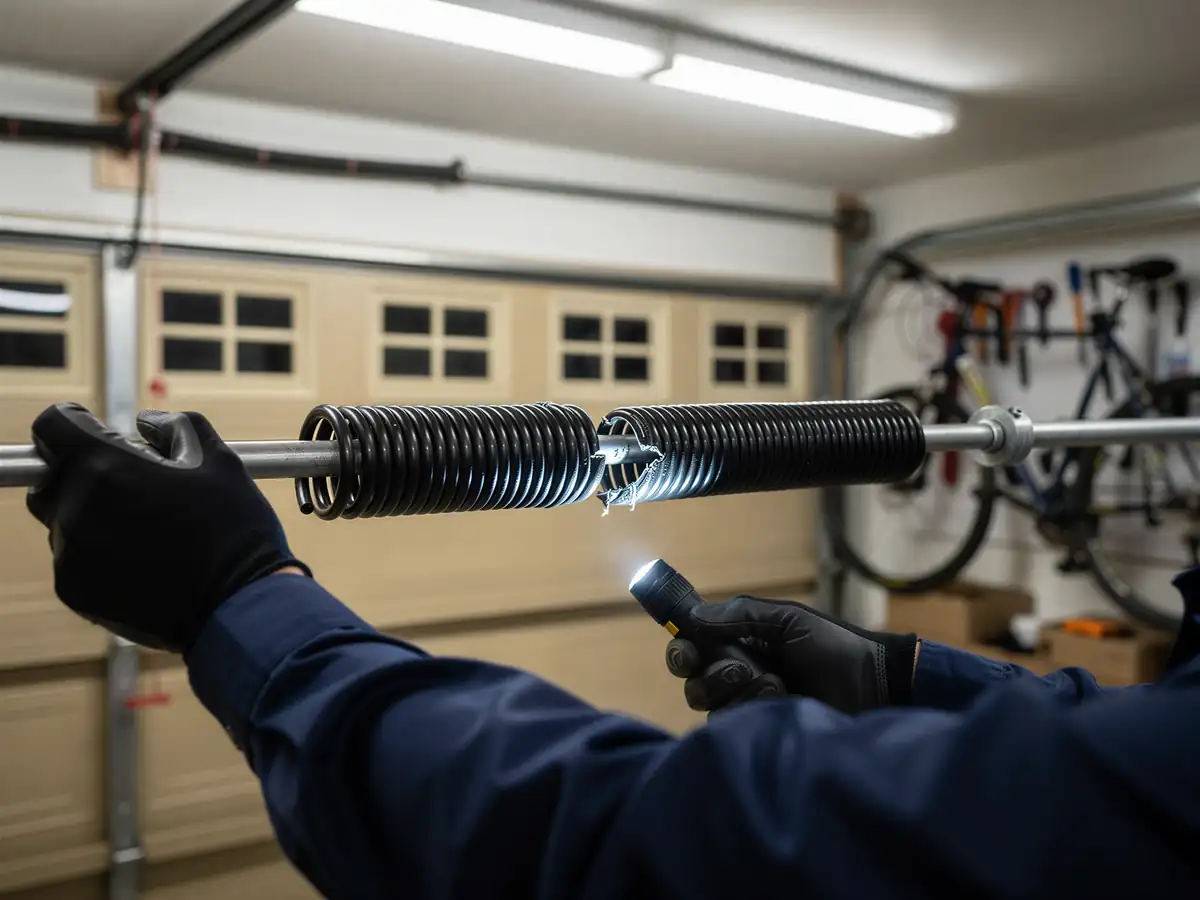
A door that won't lift, or lifts a few inches and stops, usually means a spring has already broken on a house this age - extension springs stretched along the track snap clean rather than just losing tension gradually. If the opener motor runs but the door doesn't move, the issue is almost always the same worn hardware: a cable that's jumped the drum, or a roller seized in a track groove it's been grinding against for decades. Winter is where this shows up hardest. The area sits in a cold climate band with real seasonal severity, and steel springs lose tension and go brittle faster in sustained cold, which is why emergency calls for broken springs cluster in the coldest stretches of the year rather than spreading evenly across twelve months. A door that's suddenly heavy to lift by hand, even with the opener disconnected, is telling you the spring is gone or close to it - don't keep running the opener against that weight, because that's how you burn out a motor on top of a spring job.
How Long It Takes
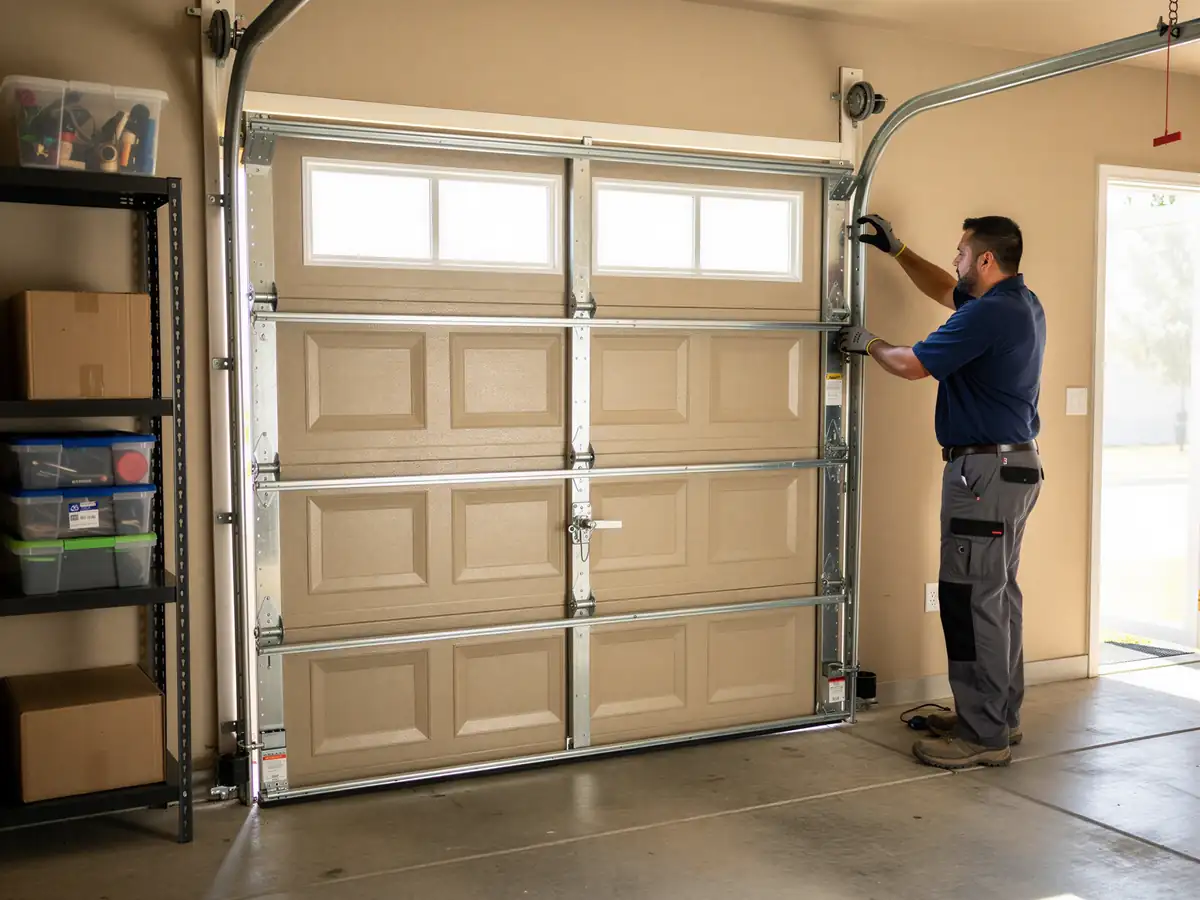
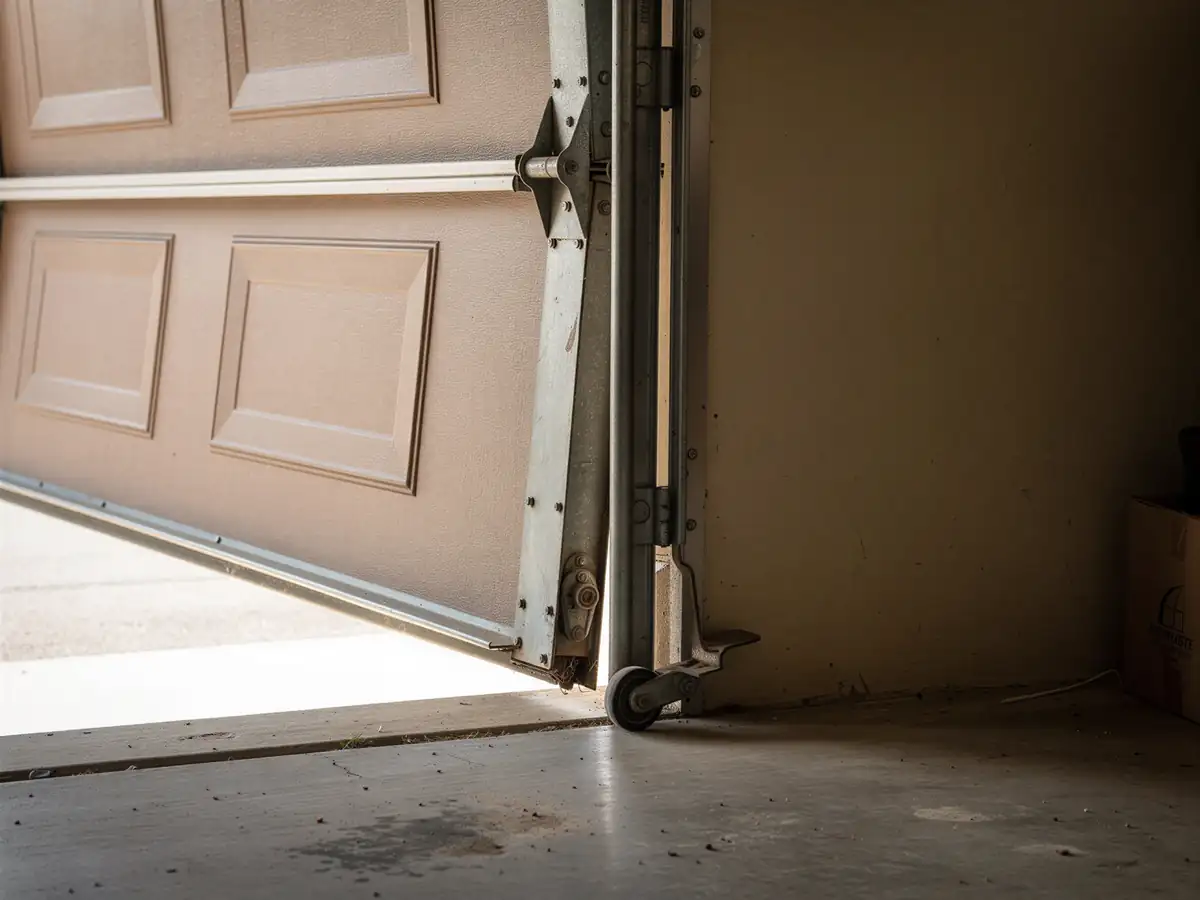
A straightforward spring replacement on a door this age - one broken extension spring, roller and cable in otherwise working shape - is usually the shortest job on the truck. Where it runs long is when the spring break has already damaged something else: a bent track from the door dropping unevenly, a cable that frayed and jumped the drum, or an opener gear stripped from fighting a dead-weight door. On a house built in 1979 that's never had the hardware upgraded, it's common to find more than one worn part once the door's open, because original rollers, cables, and springs were all installed the same year and tend to fail in the same decade. We'd rather tell you that up front than quote a number that only holds if nothing else is wrong.
Where This Job Goes Sideways
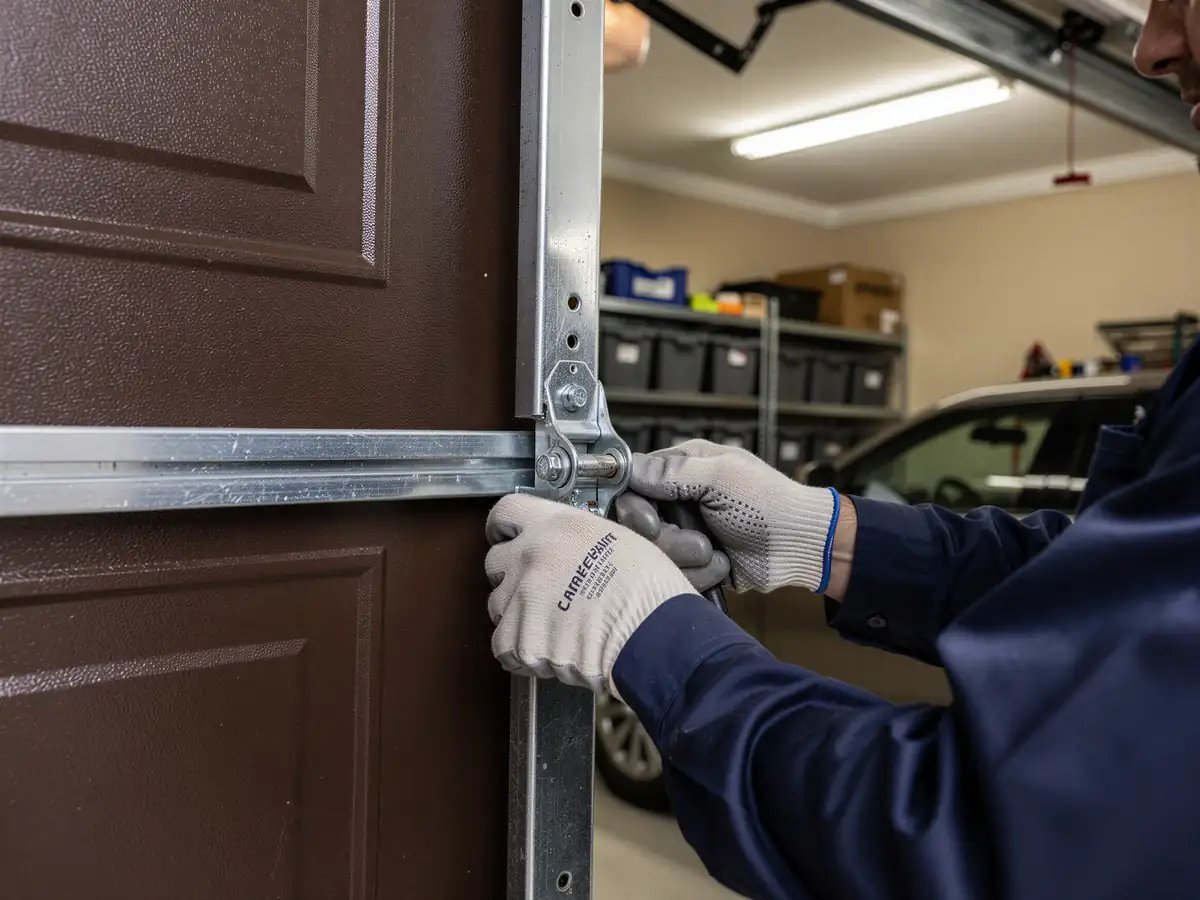
The honest limitation here: if a door's extension spring hardware is original to a 1979 build, we're often not just swapping the broken spring - we're telling you the whole spring-and-cable assembly is past the point where a single-part fix makes sense, because replacing one forty-year-old spring next to one that's about to go is a callback waiting to happen. That's not an upsell, it's just what forty-plus years of steel-on-steel wear looks like once you're inside the door. We also don't carry every obsolete part on the truck - some of the original drums and end bearings from doors this old aren't made anymore, and matching them means a modern equivalent, not a factory part. If a track's badly bent from a door dropping unevenly, straightening it on-site sometimes isn't worth the labor against just replacing the track section. We'll say so rather than charge for a fix that won't hold.